
YOGIC PRACTICES WITH YOGA NIDRA VERSUS YOGIC PRACTICES ALONE FOR OCULAR HEALTH IN SMARTPHONE-ADDICTED COLLEGE STUDENTS: A SINGLE-BLIND RANDOMISED CONTROLLED TRIAL
PRÁCTICAS YÓGUICAS CON YOGA NIDRA VERSUS PRÁCTICAS YÓGUICAS SOLAS PARA LA SALUD OCULAR EN ESTUDIANTES UNIVERSITARIOS ADICTOS AL SMARTPHONE: UN ENSAYO CONTROLADO ALEATORIZADO SIMPLE CIEGO


Praveen Kumar M., C. M. Balasubramaniam, Shailendra Singh, Pawan Deep, Sunil Kumar, Surendra Singh Agraiya, Kushagra Bairagi, Bindiya Rawat, Josyula Tejaswi, Farjana Akter Boby, Karuppasamy Govindasamy
YOGIC PRACTICES WITH YOGA NIDRA VERSUS YOGIC PRACTICES ALONE FOR OCULAR HEALTH IN SMARTPHONE-ADDICTED COLLEGE STUDENTS: A SINGLE-BLIND RANDOMISED CONTROLLED TRIAL
Cultura, Ciencia y Deporte, vol. 21, no. 68, 2026, 10.12800/ccd.v21i68.2625
Universidad Católica San Antonio de Murcia
Praveen Kumar M.
Meenakshi Academy of Higher Education and Research, India
C. M. Balasubramaniam
Meenakshi Academy of Higher Education and Research, India
Shailendra Singh
Lakshmibai National Institute of Physical Education, India
Pawan Deep
GNA University, India
Sunil Kumar
Parul University, India
Surendra Singh Agraiya
Mandsaur University, India
Kushagra Bairagi
Mandsaur University, India
Bindiya Rawat a
Manipal University Jaipur, India
Josyula Tejaswi
Deemed University, India
Farjana Akter Boby
Daffodil International University, Bangladesh
Karuppasamy Govindasamy
Deemed University, India
Received: 23 September 2025
Accepted: 06 May 2026
Abstract: Smartphone addiction among college students is associated with digital eye strain and adverse ocular physiological changes, yet evidence-based interventions remain limited. We aimed to evaluate whether yogic practices combined with yoga nidra provide superior benefits compared with yogic practices alone for improving ocular health in smartphone-addicted college students. We conducted a single-blind, randomised controlled trial between June and October 2024. College students aged 18-25 years with smartphone addiction (Smartphone Addiction Scale-Short Version score ≥31 for males, ≥33 for females) were randomly assigned (1:1) to receive either yogic practices plus yoga nidra (YP+YN; 90 minutes per session) or yogic practices alone (YP; 60 minutes per session), delivered three times weekly for 16 weeks. The primary outcome was visual acuity measured using the Snellen chart. Secondary outcomes included near-point of convergence, accommodative facility, tear film break-up time, intraocular pressure, digital eye strain symptoms, and computer vision syndrome scores. Outcome assessors were masked to group allocation. Of 156 students assessed for eligibility, 120 were randomised to YP+YN (n=60) or YP (n=60). The overall retention rate was 86.7% (104 of 120 participants). Both groups showed significant improvements in visual acuity, but the YP+YN group demonstrated greater improvement (mean difference 0.10 [95% CI 0.07-0.13] vs 0.05 [0.03-0.07]; between-group difference p=.031). All secondary physiological outcomes favoured the YP+YN group, including near-point of convergence (between-group difference p=.007), accommodative facility (p=.012), tear film break-up time (p=.023), intraocular pressure (p=.036), digital eye strain score (p<.001), and computer vision syndrome score (p=.003). No serious adverse events occurred. Yogic practices combined with yoga nidra provide superior benefits compared with yogic practices alone for improving ocular health in smartphone-addicted college students. These findings support the integration of comprehensive yogic interventions into preventive healthcare programmes targeting technology-related health problems.
Keywords: Yoga, relaxation, phone addiction, student.
Resumen: La adicción al teléfono inteligente entre estudiantes universitarios estáa sociada con fatiga visual digital y angustia psicológica; sin embargo, las intervenciones basadas en evidencia siguen siendo limitadas. Nuestro objetivo fue evaluar si las prácticas yóguicas combinadas con yoga nidra ofrecen beneficios superiores en comparación con las prácticas yóguicas solas para mejorar la salud ocular en estudiantes universitarios adictos al teléfono inteligente. Llevamos a cabo un ensayo controlado aleatorizado, simple ciego, entre junio y octubre de 2024. Se seleccionaron estudiantes universita-rios de entre 18 y 25 años con adicción al teléfono inteligente (puntuación ≥31 para hombres, ≥33 para mujeres en la versión corta de la Escala de Adicción al Smartphone), quienes fueron asignados aleatoriamente (1:1) a recibir prácticas yóguicas más yoga nidra (PY+YN; 90 minutos porsesión) o solo prácticas yóguicas (PY; 60 minutos porsesión), tres veces por semana durante 16 semanas. El resultado principal fue la agudeza visual medida con la cartilla de Snellen. Los resultados secun-darios incluyeron el punto cercano de convergencia, la facilidad de acomodación, el tiempo de ruptura de la película lagrimal, la presión intraocular, los síntomas de fatiga visual digital y las puntuaciones del síndrome de visión por computadora. Los evaluadores de los resultados estaban enmascaradosr especto a la asignación de grupos. De los 156 estudiantes evaluados para determinar su elegibili-dad, 120 fueron asignados aleatoriamente a PY+YN (n=60) o PY (n=60). La tasa de retención general fue del 86.7 % (104 de 120 participantes). Ambos grupos mostraron mejoras significativas en la agudeza visual, pero el grupo PY+YN demostró una mayor mejora (diferencia media 0.10 [IC del 95%: 0.07-0.13] frente a 0.05 [0.03-0.07]; diferencia entre grupos p= .031). Todos los resultados fisiológicos secundarios favorecieron al grupo PY+YN, incluyendo el punto cercano de convergencia (diferencia entre grupos p= .007), la facilidad de acomodación (p= .012), el tiempo de ruptura de la película lagrimal (p= .023), la presión intraocular (p= .036), la puntuación de fatiga visual digital (p< .001) y la puntuación del síndrome de visión por computadora (p= .003). No se produjeron eventos adversos graves. Las prácticas yóguicas combinadas con yoga nidra ofrecen beneficios superiores en comparación con las prácticas yóguicas solas para mejorar la salud ocular en estudiantes universitarios adictos al teléfono inteligente. Estos hallazgos respaldan la integración de intervenciones yóguicas integrales en los programas de atenciónpreventiva de la salud dirigidos a problemas de salud relacionados con la tecnología.
Palabras clave: Yoga, relajación, adicción al teléfono, estudiantes.
Introduction
The exponential growth in smartphone usage has created an unprecedented global health challenge, with smartphone addiction now recognised as a significant behavioural disorder affecting millions worldwide (Nawaz, 2023). College students represent a particularly vulnerable population, with prevalence rates of smartphone addiction ranging from 22% to 60% across different countries (Olson et al., 2020). This demographic spends an average of 8-12 hours daily engaged with digital devices, substantially exceeding recommended screen time guidelines and creating a cascade of physiological and psychological health consequences (Olson et al., 2025).
Digital eye strain, also known as computer vision syndrome, has emerged as one of the most prevalent manifestations of excessive screen exposure. The condition encompasses a constellation of ocular and visual symptoms including eye fatigue, dryness, irritation, blurred vision, and accommodation difficulties (Bradford & Melson, 2021). The underlying pathophysiology involves multiple mechanisms: reduced blink rates leading to tear film instability, sustained accommodation causing ciliary muscle spasm, convergence insufficiency from prolonged near work, and blue light exposure potentially affecting retinal health (Antemie et al., 2023; Kaur et al., 2022). Epidemiological studies indicate that 50-90% of individuals with significant digital device exposure experience symptoms of digital eye strain, with severity correlating directly with duration and intensity of screen use (Mataftsi et al., 2023). Beyond ocular manifestations, smartphone addiction is strongly associated with psychological distress, including elevated rates of anxiety, depression, sleep disorders, and reduced academic performance (Ou-Yang et al., 2023). The bidirectional relationship between psychological stress and ocular symptoms further compounds the clinical picture, creating a self-perpetuating cycle of deteriorating health outcomes (Pera, 2020). Traditional interventions for digital eye strain, including artificial tears, computer glasses, and ergonomic modifications, provide only symptomatic relief without addressing underlying behavioural patterns or stress-related components (Sheppard & Wolffsohn, 2018).
Yogic practices represent a potentially transformative approach to addressing technology-related health problems through their demonstrated effects on both physiological and psychological wellbeing (Maheshkumar et al., 2023; Padmavathiet al., 2023). Systematic reviews have established the efficacy of yoga interventions for reducing stress, anxiety, and depression while improving various aspects of physical health (Archana et al., 2024; Prashanth et al., 2024). Specific to ocular health, preliminary studies suggest that yogic practices, particularly eye exercises (trataka) and pranayama (breathing techniques), may improve visual acuity, accommodation, and convergence function (Boopalan et al., 2025).
Yoga nidra, often termed "yogic sleep," represents a distinct practice involving systematic relaxation while maintaining conscious awareness. This guided meditation technique induces a hypnagogic state characterised by profound physical relaxation accompanied by heightened mental awareness (Vanitha et al., 2018). Neurophysiological studies demonstrate that yoga nidra practice is associated with increased alpha wave activity, reduced cortisol levels, and enhanced parasympathetic nervous system activation (Gonmei et al., 2025; Ragavee et al., 2024; Ravi et al., 2024). These neurobiological changes suggest that yoga nidra may provide additional therapeutic benefits beyond those achieved through physical yogic practices alone, particularly for stressrelated conditions.
Despite growing interest in yoga-based interventions for technology-related health problems, rigorous clinical trials examining their efficacy remain scarce. Previous studies have been limited by small sample sizes, lack of appropriate control groups, short intervention periods, and inadequate outcome measures. Furthermore, no previous research has specifically examined whether the addition of yoga nidra to conventional yogic practices provides incremental benefits for individuals with smartphone addiction and associated symptoms.
The theoretical framework underlying our intervention is based on the understanding that smartphone addiction and digital eye strain represent complex conditions requiring multifaceted therapeutic approaches. Physical yogic practices (asanas) may directly address muscular tension and postural abnormalities associated with prolonged device use, while breathing techniques (pranayama) can modulate autonomic nervous system function (Abirami et al., 2024; Prashanth et al., 2024). The addition of yoga nidra may provide deeper stress reduction and facilitate recovery from the chronic hyperarousal state characteristic of technology addiction (Moszeik et al., 2022). Given the escalating public health impact of smartphone addiction and the limitations of existing interventions, there is an urgent need for evidence-based, holistic approaches that address both the physiological and psychological dimensions of technology-related health problems. We therefore conducted this randomised controlled trial to evaluate whether yogic practices combined with yoga nidra provide superior benefits compared with yogic practices alone for improving ocular health and physiological wellbeing in smartphone-addicted college students.
Materials and Methods
Study Design
We conducted a randomized controlled trial to evaluate the efficacy of yogic practices with and without yoga nidra on physiological and psychological variables among smartphone addicted college students. The study was conducted between June 2024 and October 2024 in Udumalpet city, Tamil Nadu, India. This trial is reported following the Consolidated Standards of Reporting Trials (CONSORT) 2010 guidelines for parallel group randomised trials, and the yoga intervention is described in accordance with the CLARIFY (Check Listst Andardising the Reporting of Interventions for Yoga) guidelines (Moonaz et al., 2021, Ward et al., 2022).
Participants
College students aged 18-25 years with smartphone addiction were recruited through convenience sampling from colleges in Udumalpet city. Smartphone addiction was identified using the Smartphone Addiction Scale-Short Version (SAS-SV) with a cutoff score of ≥31 for males and ≥33 for females. Written informed consent was obtained from all participants prior to enrollment. Ethical approval was obtained from the Institutional Ethics Committee (IEC No. YR-2024-05-18).
Sample Size
The sample size was calculated based on a previous study by Pal et al. (2022), using visual acuity as the primary outcome. With a two-sided significance level of α = 0.05 and statistical power of 1-β = 0.80, a minimum of 48 participants per group was required to detect a clinically meaningful between-group difference. Accounting for an anticipated dropout rate of approximately 20%, we planned to recruit 60 participants per group, yielding a total sample of 120 participants (Pal et al., 2022).
Randomization and Masking
Eligible participants were randomly assigned (1:1) to either the yogic practices with yoga nidra group (YP+YN) or yogic practices alone group (YP) using computer-generated random numbers (Figure 1). Allocation concealment was ensured using sequentially numbered opaque sealed envelopes. The outcome assessors were blinded to group allocation, but participants and yoga instructors could not be blinded due to the nature of the intervention.
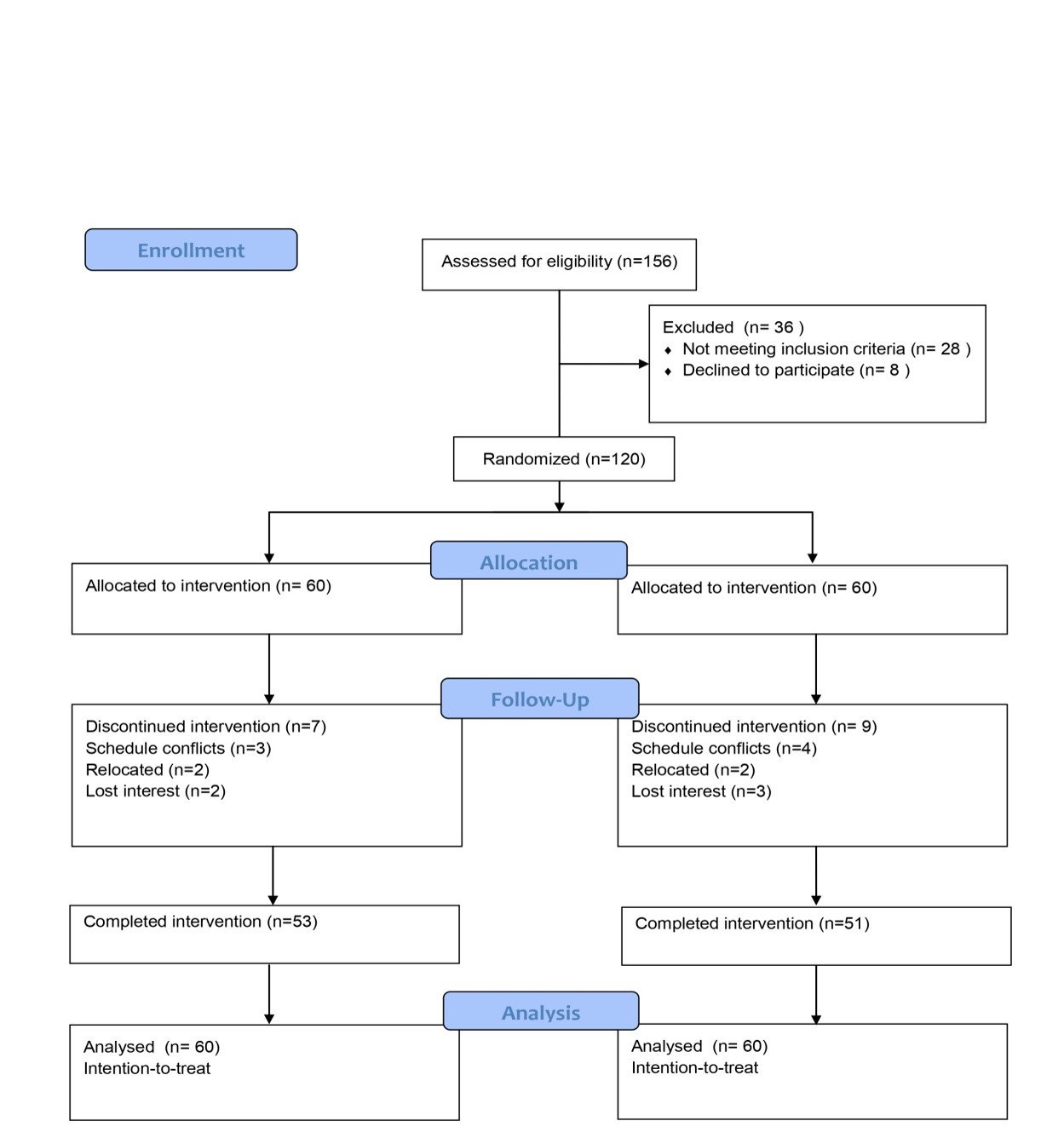
Figure 1
Study Flowchart
Procedure
Baseline assessments were conducted for all participants including demographics, anthropometric measurements, smartphone usage patterns, visual acuity, and physiological parameters. The YP+YN group received yogic practices followed by yoga nidra for 90 minutes per session, while the YP group received only yogic practices for 60 minutes per session. Both interventions were delivered three days per week for 16 weeks (48 sessions in total) by certified yoga instructors.
Yogic Practices Protocol
The yogic practices protocol for both groups included:
-
Loosening exercises (pawanamukthasana series - 10 minutes).
-
Eye exercises (5 minutes).
-
Suryanamaskar (3 sets - 10 minutes).
-
Asanas: Trikonasana, Ardha Kati Chakrasana, Padahastasana, Vakrasana, Ardha Matsyendrasana, Ushtrasana, Janu Sirasasana, TriyankaBujangasana, Dhanurasana, Navasana (25 minutes).
-
Pranayama: Nadi Sodhan pranayama, Bhramari pranayama (5 minutes).
-
Maha mudra (5 minutes).
The YP+YN group additionally received yoga nidra for 30 minutes following the yogic practices.
Yoga Intervention Details
The yoga intervention was based on traditional Hatha yoga and was delivered by two certified yoga instructors, each holding a master’s degree in yoga (MSc Yoga) with a minimum of five years of teaching experience. Sessions were conducted in a dedicated, well-ventilated yoga hall at the respective colleges with standardised conditions (ambient temperature, quiet environment, yoga mats provided). The intervention was delivered as group sessions with 15-20 participants per batch, three days per week (Monday, Wednesday, and Friday) for 16 weeks (48 sessions total). Each session in the YP group lasted 60 minutes; each session in the YP+YN group lasted 90 minutes (60 minutes of yogic practices followed by 30 minutes of guided yoga nidra). Participants were not assigned home practice. Attendance was recorded at each session; participants who attended fewer than 75% of sessions (i.e., <36 of 48 sessions) were considered non-adherent. The mean attendance rate was 82.3% (39.5 of 48 sessions) in the YP+YN group and 80.1% (38.5 of 48 sessions) in the YP group. Intervention fidelity was monitored through periodic observation by a senior yoga faculty member using a structured checklist, and no protocol deviations were recorded.
Assessment of Outcomes
Primary Outcome
Visual acuity was assessed using the standardized Snellen chart at a testing distance of 6 meters under controlled illumination conditions. Participants were seated with proper head positioning and instructed to read the smallest line of letters they could distinguish clearly, first with both eyes together, then monocularly for each eye. Visual acuity was recorded in decimal notation, where 1.0 represents normal 20/20 vision, with higher values indicating better visual performance and lower values representing reduced acuity (Kniestedt & Stamper, 2003).
Secondary Outcome
Near-point of convergence (NPC) was measured using the RAF rule to assess the closest distance for maintaining single binocular vision. Participants maintained focus on an approaching target until diplopia occurred, with measurements recorded in centimeters. Normal values range from 6-10 cm, with higher values indicating convergence insufficiency associated with prolonged near work (Maples & Hoenes, 2007).
Intraocular pressure (IOP) was assessed using non-contact tonometry, measuring pressure via calibrated air pulses directed at the central cornea. Three measurements per eye were averaged and recorded in mmHg. Normal IOP ranges from 10-21 mmHg, with changes reflecting alterations in ocular circulation (Kim & Caprioli, 2018).
Accommodative facility (AF) utilized ±2.00 diopter flipper lenses to evaluate rapid focus changes between distant and near targets. Participants alternated focus through positive and negative lenses while maintaining clear vision of a near chart at 40 cm. Results were expressed as cycles per minute (cpm), with normal values exceeding 11 cpm for individuals under 30 years (Adler et al., 2018).
Tear film breakup time (TBUT) employed fluorescein strips to assess tear film stability. Following dye instillation, the time from blink to first dry spot appearance was recorded in seconds using cobalt blue illumination. Normal TBUT exceeds 10 seconds, with lower values indicating dry eye syndrome commonly associated with digital device usage (Nichols et al., 2002).
Computer Vision Syndrome Questionnaire (CVS-Q) evaluated subjective eye strain symptoms through 16 items addressing frequency and intensity of symptoms including eye fatigue, dryness, blurred vision, and associated discomfort. Participants rated symptoms on a 6-point Likert scale, with total scores ranging from 0-80 and higher scores indicating greater symptom severity (Seguí et al., 2015).
Digital Eye Strain Scale (DESS) assessed the severity of digital device-related ocular symptoms using a validated 15-item questionnaire. The scale evaluates symptoms including eye dryness, excessive tearing, blurred vision, double vision, difficulty focusing, increased blink rate, eye pain, eye heaviness, photophobia, burning sensation, foreign body sensation, itching, excessive squinting, colored halos around objects, and other visual disturbances. Each symptom is rated on a 5-point Likert scale (0 = no symptoms, 1 = mild, 2 = moderate, 3 = severe, 4 = very severe), with total scores ranging from 0-60. Higher DESS scores indicate more severe digital eye strain symptoms, with the scale demonstrating good reliability and validity for assessing treatment outcomes in digital device users (Barata et al., 2025).
Statistical Analysis
Data were analyzed using SPSS version 26.0. Normality of data was checked using the Shapiro-Wilk test. Demographic characteristics were compared using independent t-tests for continuous variables and chi-square tests for categorical variables. For outcome measures, we used paired t-tests to analyze within-group changes and independent t-tests to analyze between-group differences. For non-normally distributed data, we used Wilcoxon signedrank test and Mann-Whitney U test respectively. Analysis was performed on an intention-to-treat basis, with missing data handled using the last observation carried forward method. p<.05 was considered statistically significant.
Results
Participant Flow and Baseline Characteristics
A total of 156 students were screened for eligibility, of whom 120 met the inclusion criteria and were randomized to either YP+YN group (n=60) or YP group (n=60). During the 16-week intervention period, seven participants dropped out from the YP+YN group and nine from the YP group, resulting in 53 and 51 participants completing the study in the respective groups (Figure 1). The over all retention rate was 86.7%. Reasons for drop out included schedule conflicts, relocating to another city, and loss of interest.
The baseline demographic and clinical characteristics of the participants are presented in Table 1. The groups were comparable at baseline with no significant differences in age, gender distribution, BMI, smartphone usage time, screen time, or baseline outcome measures.
Baseline Demographic and Clinical Characteristics of Participants
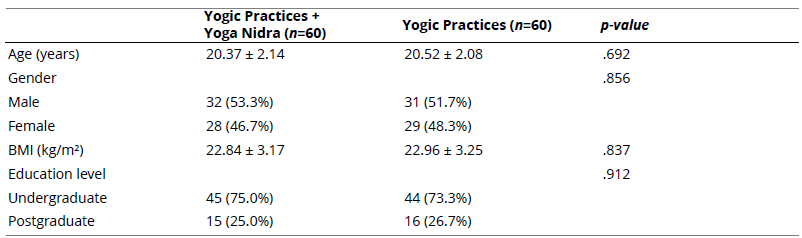
Note. Data are presented as mean ± SD or n (%). BMI = bodymassindex.
Primary Outcome: Visual Acuity
Both groups showed significant improvement in visual acuity from baseline to post-intervention, with the YP+YN group demonstrating greater improvement compared to the YP group (Table 2). The mean visual acuity in the YP+YN group improved from 0.86 ± 0.11 to 0.96 ± 0.08 (p<.001), while in the YP group, it improved from 0.85 ± 0.12 to 0.90 ± 0.09 (p<.001). The between-group difference was statistically significant (p=.031).
Changes in Visual Acuity From Baseline to Post-Intervention

Note. Data are presented as mean ± SD. YP+YN = YogicPractices + Yoga Nidra. YP = YogicPractices. CI = Confidence Interval.
Secondary Physiological Outcomes
All physiological parameters related to ocular health showed significant improvements in both groups, with greater improvements observed in the YP+YN group compared to the YP group (Table 3).
Changes in Physiological Variables From Baselineto Post-Intervention
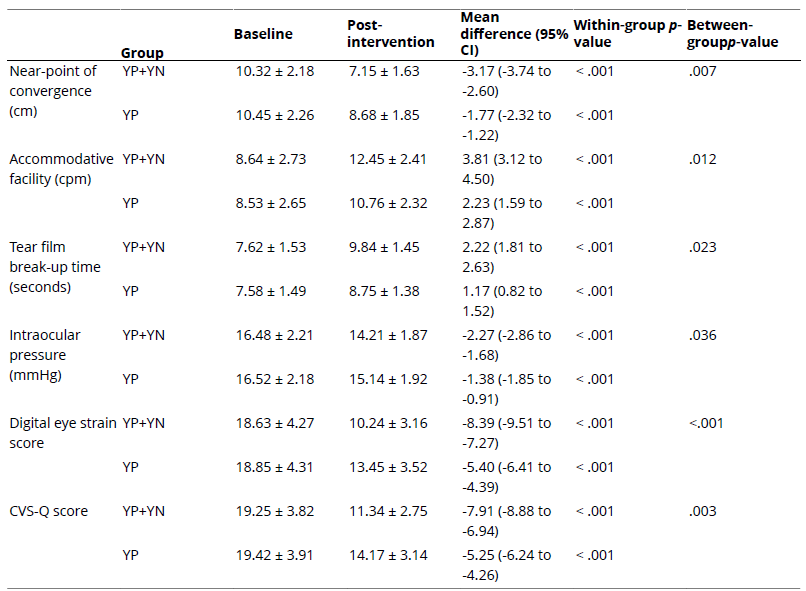
Note. Data are presented as mean ± SD. YP+YN = YogicPractices + Yoga Nidra. YP = Yogic Practices. CI = Confidence Interval. cpm = cycles per minute. CVS-Q = Computer Vision SyndromeQuestionnaire.
The near-point of convergence improved significantly in bothgroups, withthe YP+YN groupshowing a greaterimprovement (from 10.32 ± 2.18 cm to 7.15 ± 1.63 cm; p<.001) comparedtothe YP group (from 10.45 ± 2.26 cm to 8.68 ± 1.85 cm; p<.001). The between-group difference was statistically significant (p=.007).
Adverse Events
No serious adverse events were reported during the study period. Minor adverse events included temporary muscles or eness in the initial weeks of yoga practice (YP+YN: n=8; YP: n=7) and milddizziness during yoga nidra (YP+YN: n=3). All adverse events resolved spontaneously with outrequiring medical intervention.
Discussion
This randomised controlled trial demonstrates that yogic practices combined with yoga nidra provide superior benefits compared with yogic practices alone for improving ocular health and physiological wellbeing in college students with smartphone addiction. The addition of yoga nidra to a comprehensive yogic practices programme resulted in significantly greater improvements in visual acuity, all measured ocular physiological parameters, and digital eye strain symptoms.
Primary Findings
Our primary finding that visual acuity improved more substantially in the YP+YN group (0.10) compared with the YP group (0.05) has important clinical implications. This magnitude of improvement represents a meaningful enhancement in visual function that could significantly impact daily activities, particularly for individuals spending extensive time on digital devices. The between-group difference of 0.05, while numerically modest, is clinically relevant given the baseline impairment in this population.
The superior improvements in near-point of convergence, accommodative facility, and tear film breakup time in the YP+YN group suggest that yoga nidra provides additional benefits beyond those achieved through physical yogic practices alone. The improvement in near-point of convergence by 3.17 cm in the YP+YN group represents a substantial enhancement in binocular vision function, addressing one of the key deficits associated with prolonged digital device use.
A previous study demonstrated that yoga ocular exercises significantly reduce eye fatigue symptoms among undergraduate optometry students engaged in prolonged near and intermediate visual tasks. After six weeks of intervention, participants in the exercise group showed a marked and statistically significant improvement in their eye fatigue scores (p =.003), while the control group experienced a significant increase in symptoms (p = .044). These findings suggest that regular practice of yoga ocular exercises enhances the efficiency of the extraocular muscles, providing a simple, therapeutic, and nonpharmacologic approach to alleviate eye fatigue and associated asthenopic symptoms commonly reported in nonpresbyopic individuals (Gupta & Aparna, 2020).
The findings of another study suggest that regular yoga practice may help reduce excessive smartphone use and promote better sleep quality among university students. Students who engaged in yoga for 90 minutes daily, six days a week, over an average of nearly 30 months, reported significantly lower smartphone addiction scores and fewer nocturnal interruptions due to phone use compared to their non-yoga counterparts. Interestingly, while the non-yoga group reported slightly longer sleep durations, their sleep was more frequently disturbed. However, both groups showed no significant differences in their beliefs about wellbeing. These results highlight yoga's potential as an effective, nonpharmacological strategy to manage addictive behaviors and improve sleep hygiene in young adults (Pal et al., 2022).
The enhanced benefits observed with the addition of yoga nidra likely relate to its unique neurophysiological effects. Yoga nidra induces a hypnagogic state characterised by deep relaxation while maintaining conscious awareness, which has been associated with increased alpha wave activity and reduced sympathetic nervous system activation (Deshmukh, 2023). This profound relaxation response may facilitate greater recovery of the visual system from digital eye strain by reducing accommodative spasm and improving tear film stability through enhanced parasympathetic tone. Smartphone addiction negatively impacts physical and psychosocial health, contributing to behavioral disorders. Yoga offers a holistic approach to digital detox by enhancing self-regulation, emotional balance, and physical wellbeing. It may serve as an effective intervention to manage and reduce smartphone dependency (Putchavayala et al., 2022). Our findings have several important clinical implications. First, they support the integration of yoga nidra into comprehensive interventions for digital eye strain, particularly in populations with high screen exposure. The 90-minute session duration for the combined intervention, while longer than the 60-minute yogic practices alone, remains feasible for implementation in university and workplace settings.
The substantial improvements in all measured parameters suggest that both interventions could serve as effective non-pharmacological treatments for smartphone-related ocular symptoms. However, the superior efficacy of the combined approach indicates that yoga nidra adds meaningful therapeutic value beyond physical yogic practices alone.
From a public health perspective, these findings are particularly relevant given the increasing prevalence of digital eye strain among young adults. The high retention rate (86.7%) suggests good acceptability of both interventions, supporting their potential for broader implementation in preventive healthcare programmes.
Strengths and Limitations
Strengths of our study include the randomised controlled design, comprehensive assessment of physiological outcomes, high retention rate, and use of validated measurement tools. The 16-week intervention period allowed sufficient time for meaningful physiological adaptations, while the intention-to-treat analysis preserves the benefits of randomisation.
Several limitations warrant consideration. First, the single-blind design was unavoidable given the nature of the interventions, potentially introducing bias in self-reported outcomes. However, the use of objective physiological measures for primary and key secondary outcomes minimises this concern. Second, the study population was limited to college students in a single geographical region, which may limit generalisability to other populations or cultural contexts.
Third, we did not include a control group receiving no intervention, as ethical considerations made it inappropriate to withhold potentially beneficial treatment from individuals with smartphone addiction and associated symptoms. However, the comparison between two active interventions provides clinically relevant information about the added value of yoga nidra.
Finally, our follow-up was limited to immediate post-intervention assessment, preventing evaluation of long-term sustainability of benefits. Future research should include extended follow-up periods to assess maintenance of improvements and determine optimal intervention duration.
Future Research Directions
Several areas warrant further investigation. Long-term follow-up studies are needed to determine the durability of benefits and identify factors associated with sustained improvement. Research examining dose-response relationships could inform optimal intervention protocols, particularly regarding the frequency and duration of yoga nidra sessions.
Mechanistic studies using neuroimaging and physiological monitoring during yoga nidra practice could provide insights into the neurobiological pathways underlying the observed benefits. Such research could inform the development of more targeted interventions and identify biomarkers predictive of treatment response.
Finally, economic evaluations comparing the cost-effectiveness of combined yogic interventions with conventional treatments for digital eye strain would inform healthcare policy decisions and support broader implementation of evidence-based yoga interventions.
Conclusions
This study provides robust evidence that yogic practices combined with yoga nidra offer superior benefits compared with yogic practices alone for improving ocular health and physiological wellbeing in college students with smartphone addiction. The findings support the clinical utility of comprehensive yogic interventions for addressing the growing public health challenge of technology-related health problems. Healthcare providers, educators, and policymakers should consider integrating evidence-based yogic interventions into preventive and therapeutic programmes targeting digital eye strain and ocular health outcomes.
Ethics Committee Statement
The study was conducted in accordance with the Declaration of Helsinki and was approved by the Ethics Committee of Meenakshi Academy of Higher Education & Research (MAHER), Chennai, India (approval number: MMCH&RI/PhD/13/Jan/23, date of approval: January 2023).
Conflict of Interest
Authors have no conflict of interest.
Funding
None.
Authors' Contribution
Conceptualization, Praveen Kumar M and C. M. Balasubramaniam; Methodology, Shailendra Singh; Software, Pawan Deep; Validation, Sunil Kumar, Surendra Singh Agraiya and Kushagra Bairagi; Formal Analysis, Bindiya Rawat and Josyula Tejaswi; Investigation, Farjana Akter Boby; Resources, Karuppasamy Govindasamy; Data Curation, Pawan Deep; Writing – Original Draft, Praveen Kumar M; Writing – Review & Editing, Farjana Akter Boby and Karuppasamy Govindasamy; Visualization, Sunil Kumar; Supervision, C. M. Balasubramaniam, Josyula Tejaswi and Karuppasamy Govindasamy; Project Administration, Karuppasamy Govindasamy; Funding Acquisition, C. M. Balasubramaniam. All authors have read and agreed to the published version of the manuscript.
Data Availability Statement
The data that support the findings of this study are available on reasonable request from the corresponding author, Bindiya Rawat (bindiya.rawat@jaipur.manipal.edu). The data are not publicly available due to privacy and ethical restrictions.
References
Abirami, M., Venugopal, V., Sangavi, S. A., Lakshmi, K. S., Baskaran, K., & Maheshkumar, K. (2024). Immediate effect of Bhastrika Pranayama on cerebral hemodynamics in patient with depression: A case report. Brain Behavior and Immunity Integrative, 6, 100056. https://doi.org/10.1016/j.bbii.2024.100056
Adler, P., Scally, A. J., & Barrett, B. T. (2018). Test-retest reproducibility of accommodative facility measures in primary school children. Clinical & Experimental Optometry, 101(6), 764–770. https://doi.org/10.1111/cxo.12691
Antemie, R. G., Samoilă, O. C., & Clichici, S. V. (2023). Blue Light-Ocular and Systemic Damaging Effects: A Narrative Review. International Journal of Molecular Sciences, 24(6), 5998. https://doi.org/10.3390/ijms24065998
Archana, R., Maheshkumar, K., & Selvi, G. T. (2024). Impact of Yoga and Meditation on Immune System – A Systematic Review and Meta-Analysis. South Eastern European Journal of Public Health, 25(1), 2454–2463. https://doi.org/10.70135/seejph.vi.2431
Barata, M. J., Aguiar, P., Grzybowski, A., Lança, C., & Moreira-Rosário, A. (2025). Validation of Binocular Vision and Ocular Surface Assessment Tools in Digital Eye Strain Syndrome: The DESIROUS Study. Journal of Personalized Medicine, 15(5), 168. https://doi.org/10.3390/jpm15050168
Boopalan, D., Prabu, A., Vanamoorthy, M. K., Vijayakumar, V., Ravi, P., Kasi, M., & Kuppusamy, M. (2025). Yoga therapy for eye health and disease: A scoping review. European Journal of Integrative Medicine, 73, 102427. https://doi.org/10.1016/j.eujim.2024.102427
Bradford, C. A., & Melson, A. T. (2021). Ocular Complaints, Disease, and Emergencies in the General Medical Setting. The Medical Clinics of North America, 105(3), 409–423. https://doi.org/10.1016/j.mcna.2021.02.002
Deshmukh, V. D. (2023). The Electroencephalographic Brainwave Spectrum, Mindful Meditation, and Awareness: Hypothesis. International Journal of Yoga, 16(1), 42–48. https://doi.org/10.4103/ijoy.ijoy_34_23
Gonmei, L., Swathi K., Archana P., & Vanitha, S. (2025). Effect of Yoga Nidra on Women’s Health: A Narrative Review. Journal of Ayurveda and Integrated Medical Sciences, 10(2), 273–279. https://doi.org/10.21760/jaims.10.2.38
Gupta, S. K., & Aparna, S. (2020). Effect of Yoga Ocular Exercises on Eye Fatigue. International Journal of Yoga, 13(1), 76–79. https://doi.org/10.4103/ijoy.IJOY_26_19
Kaur, K., Gurnani, B., Nayak, S., Deori, N., Kaur, S., Jethani, J., Singh, D., Agarkar, S., Hussaindeen, J. R., Sukhija, J., & Mishra, D. (2022). Digital Eye Strain- A Comprehensive Review. Ophthalmology and Therapy, 11(5), 1655–1680. https://doi.org/10.1007/s40123-022-00540-9
Kim, J. H., & Caprioli, J. (2018). Intraocular Pressure Fluctuation: Is It Important? Journal of Ophthalmic & Vision Research, 13(2), 170–174. https://pmc.ncbi.nlm.nih.gov/articles/PMC5905311/
Kniestedt, C., & Stamper, R. L. (2003). Visual acuity and its measurement. Ophthalmology Clinics of North America, 16(2), 155–170. https://doi.org/10.1016/s0896-1549(03)00013-0
Maheshkumar, K., Silambanan, S., Kantipudi, S. J., Sathianathan, R., & Padmavathi, R. (2023). Development and Validation of Yoga Protocol for Patients with Depression. Annals of Neurosciences, 30(2), 96–99. https://doi.org/10.1177/09727531221127766
Maples, W. C., & Hoenes, R. (2007). Near point of convergence norms measured in elementary school children. Optometry and Vision Science: Official Publication of the American Academy of Optometry, 84(3), 224–228. https://doi.org/10.1097/OPX.0b013e3180339f44
Mataftsi, A., Seliniotaki, A. K., Moutzouri, S., Prousali, E., Darusman, K. R., Adio, A. O., Haidich, A.-B., & Nischal, K. K. (2023). Digital eye strain in young screen users: A systematic review. Preventive Medicine, 170, 107493. https://doi.org/10.1016/j.ypmed.2023.107493
Moonaz, S., Nault, D., Engel, L., Cramer, H., & Ward, L. (2021). CLARIFY 2021: explanation and elaboration of the Delphi-based guidelines for the reporting of yoga research. BMJ Open, 11(8), e045812. https://doi.org/10.1136/bmjopen-2020-045812
Moszeik, E. N., Von Oertzen, T., & Renner, K. H. (2022). Effectiveness of a short Yoga Nidra meditation on stress, sleep, and well-being in a large and diverse sample. Current Psychology, 41(8), 5272–5286. https://doi.org/10.1007/s12144-020-01042-2
Nawaz, S. (2023). Rethinking classifications and metrics for problematic smartphone use and dependence: Addressing the call for reassessment. Computers in Human Behavior Reports, 12, 100327. https://doi.org/10.1016/j.chbr.2023.100327
Nichols, J. J., Nichols, K. K., Puent, B., Saracino, M., & Mitchell, G. L. (2002). Evaluation of tear film interference patterns and measures of tear break-up time. Optometry and Vision Science: Official Publication of the American Academy of Optometry, 79(6), 363–369. https://doi.org/10.1097/00006324-200206000-00009
Olson, J. A., Sandra, D. A., Colucci, É. S., Bikaii, A. A., Nahas, J., Chmoulevitch, D., Raz, A., & Veissière, S. P. L. (2020). Smartphone addiction is increasing across the world: A meta-analysis of 24 countries [Preprint]. https://doi.org/10.31234/osf.io/fsn6v
Olson, J. A., Sandra, D. A., Veissière, S. P. L., & Langer, E. J. (2025). Sex, Age, and Smartphone Addiction Across 41 Countries. International Journal of Mental Health and Addiction, 23(2), 937–945. https://doi.org/10.1007/s11469-023-01146-3
Ou-Yang, Q., Liu, Q., Song, P.-Y., Wang, J.-W., & Yang, S. (2023). The association between academic achievement, psychological distress, and smartphone addiction: A cross-sectional study among medical students. Psychology, Health & Medicine, 28(5), 1201–1214. https://doi.org/10.1080/13548506.2022.2148697
Padmavathi, R., Kumar, A. P., Dhamodhini, K. S., Venugopal, V., Silambanan, S., Maheshkumar, K., & Shah, P. (2023). Role of yoga in stress management and implications in major depression disorder. Journal of Ayurveda and Integrative Medicine, 14(5), 100767. https://doi.org/10.1016/j.jaim.2023.100767
Pal, S., Sharma, S. K., Singhal, A., & Telles, S. (2022). Smartphone Excessive Use, Sleep, and Beliefs about Well-being in University Students who Practice Yoga Compared with Those with No Experience of Yoga. Indian Journal of Community Medicine: Official Publication of Indian Association of Preventive & Social Medicine, 47(2), 292–295. https://doi.org/10.4103/ijcm.ijcm_601_21
Pera, A. (2020). The Psychology of Addictive Smartphone Behavior in Young Adults: Problematic Use, Social Anxiety, and Depressive Stress. Frontiers in Psychiatry, 11. https://doi.org/10.3389/fpsyt.2020.573473
Prashanth, S., Nalini, V., Maheshkumar, K., Thanalakshmi, J., & Priyanka, S. (2024). Effects of yoga on sleep quality among the geriatric population: Systematic review and meta-analysis. Brain Behavior and Immunity Integrative, 6, 100058. https://doi.org/10.1016/j.bbii.2024.100058
Prashanth, S., Nalini, V., Priyanka, S., Thanalakshmi, J., Subbulakshmi, V., Amalraj, A., & Maheshkumar, K. (2024). Effect of mind sound resonance technique on physiological and psychological parameters among geriatric population: A structured study protocol for a randomized controlled trial. International Journal of Clinical Trials, 11(3), 224–230. https://doi.org/10.18203/2349-3259.ijct20242005
Putchavayala, C. K., Singh, D., &Sashidharan, R. K. (2022). A perspective of yoga on smartphone addiction: A narrative review. Journal of Family Medicine and Primary Care, 11(6), 2284–2291. https://doi.org/10.4103/jfmpc.jfmpc_1765_21
Ragavee, S., Prashanth, S., Priyanka, S., & Maheshkumar, K. (2024). Immediate effect of Yoga Nidra (a yogic relaxation) on cardio-autonomic function in hypertensive patients: A case report. Journal of Indian System of Medicine, 12(4), 188–191. https://doi.org/10.4103/jism.jism_44_24
Ravi, P., Boopalan, D., Manickam, A., Vijayakumar, V., & Kuppusamy, M. (2024). Yoga Nidra as an Adjunctive Therapy in Idiopathic Intracranial Hypertension: A Case Study. Integrative and Complementary Therapies, 30(4), 166–169. https://doi.org/10.1089/ict.2024.72904.mk
Seguí, M. M., Cabrero-García, J., Crespo, A., Verdú, J., & Ronda, E. (2015). A reliable and valid questionnaire was developed to measure computer vision syndrome at the workplace. Journal of Clinical Epidemiology, 68(6), 662–673. https://doi.org/10.1016/j.jclinepi.2015.01.015
Sheppard, A. L., & Wolffsohn, J. S. (2018). Digital eye strain: Prevalence, measurement and amelioration. BMJ Open Ophthalmology, 3(1), e000146. https://doi.org/10.1136/bmjophth-2018-000146
Vanitha, A., V., Pandiaraja, M., Maheshkumar, K., & Venkateswaran, S.T. (2018). Effect of yoga nidra on resting cardiovascular parameters in polycystic ovarian syndrome women. National Journal of Physiology, Pharmacy and Pharmacology, 8(9), 1505. https://doi.org/10.5455/njppp.2018.8.0411112082018
Ward, L., Nault, D., Cramer, H., & Moonaz, S. (2022). Development of the CLARIFY (CheckListstAndardising the Reporting of Interventions for Yoga) guidelines: a Delphi study. BMJ Open, 12(1), e054585. https://doi.org/10.1136/bmjopen-2021-054585
Author notes
a Correspondence: Bindiya Rawat, bindiya.rawat@jaipur.manipal.edu
Additional information
Short title: Effect of Yogic Practices on Smartphone-Related Ocular Symptoms
How to cite this article: Praveen Kumar, M., Balasubramaniam, C. M., Singh, S., Deep, P., Kumar, S., Agraiya, S. S., Bairagi, K., Rawat, B., Tejaswi, J., Boby, F. A., & Govindasamy, K. (2026). Efficacy of yogic practices with and without yoga nidra for smartphone addiction-related ocular symptoms in college students: A randomised controlled trial. Cultura, Ciencia y Deporte, 21(68), 2625. https://doi.org/10.12800/ccd.v21i68.2625


