
RELATIVE AGE EFFECT ON THE MEN'S (1962-2022) AND WOMEN'S (1991-2023) FIFA WORLD CUPS: ANALYSIS BY SEX, SPORTING OUTCOME AND CONFEDERATION
EFECTO RELATIVO DE LA EDAD EN LAS COPAS DEL MUNDO DE LA FIFA MASCULINA (1962-2022) Y FEMENINA (1991-2023): ANÁLISIS POR SEXO, RESULTADO DEPORTIVO Y CONFEDERACIÓN


Carlos F. Martínez-Benítez, Juan D. Ávila-Martínez, Boryi A. Becerra-Patiño, Diego A. Rada-Perdigón, José Pino-Ortega
RELATIVE AGE EFFECT ON THE MEN'S (1962-2022) AND WOMEN'S (1991-2023) FIFA WORLD CUPS: ANALYSIS BY SEX, SPORTING OUTCOME AND CONFEDERATION
Cultura, Ciencia y Deporte, vol. 21, no. 67, 2026, 10.12800/ccd.v21i67.2366
Universidad Católica San Antonio de Murcia
Carlos F. Martínez-Benítez
Universidad Pedagógica Nacional, Colombia
Juan D. Ávila-Martínez
Universidad Pedagógica Nacional, Colombia
Boryi A. Becerra-Patiño a
Universidad Pedagógica Nacional, Colombia
Diego A. Rada-Perdigón
Universidad Pedagógica Nacional, Colombia
José Pino-Ortega
University of Murcia, España
Received: 02 December 2024
Accepted: 29 June 2025
Abstract: The objectives of this study were three: i) analyze the RAE of the elite soccer players who played in the FIFA World Cup between 1962 and 2022 for men and 1991 until 2023 for women; ii) check if there are differences between the distributions by date of birth of the players about the phase reached in the World Cup; iii) analyze the RAE according to the different confederations. The differences between the observed and expected distributions were analyzed using the Chi-square adjustment goodness test and Odds ratio. The dates of birth of 9.064 male athletes and 3.580 female athletes were evaluated. These findings are related to those of the present study, where it has also been determined that there is a significant RAE for 11 of the 15 men's world championships and 7 of the nine women's world championships analyzed that resulted in championships. As for the analysis by the teams that obtained a significant RAE, it was determined that of the 14 teams that have been champions or runners-up in the men's and women's World Cups, only the teams of England for men and Norway, Sweden, and the United States for women turned out to be significant for the champion. For the analysis of the RAE according to confederation, it has been determined that there is only two significant RAE for the champion team (CONCACAF and CAF), three for the runner-up teams (AFC, CONCACAF and CAF) and three for the third place (AFC, CONCACAF, CONMEBOL).
Keywords: Birth quartile, relative age effect, football, sex differences.
Resumen: Los objetivos de este estudio fueron tres: i) analizar el RAE de los futbolistas de élite que disputaron la Copa Mundial de la FIFA entre 1962 y 2022 para los hombres y 1991 hasta 2023 para las mujeres; ii) comprobar si existen diferencias entre las distribuciones por fecha de nacimiento de los jugadores sobre la fase alcanzada en la Copa Mundial; iii) analizar el RAE según las diferentes confederaciones. Las diferencias entre las distribuciones observadas y esperadas se analizaron mediante la prueba de bondad de ajuste Chi-cuadrado y Odds ratio. Se evaluaron las fechas de nacimiento de 9.064 atletas masculinos y 3.580 atletas femeninas. Estos resultados están relacionados con los del presente estudio, en el que también se ha determinado que existe un RAE significativo para 11 de los 15 campeonatos del mundo masculinos y 7 de los 9 campeonatos del mundo femeninos analizados que resultaron campeones. En cuanto al análisis según los equipos que obtuvieron un RAE significativo, se determinó que de los 14 equipos que han sido campeones o subcampeones en los mundiales masculinos y femeninos, sólo los equipos de Inglaterra para los hombres y Noruega, Suecia y Estados Unidos para las mujeres resultaron significativos para el campeón. Para el análisis del RAE según confederación, se ha determinado que sólo hay dos RAE significativos para el equipo campeón (CONCACAF y CAF), tres para los equipos subcampeones (AFC, CONCACAF y CAF) y tres para el tercer puesto (AFC, CONCACAF, CONMEBOL).
Palabras clave: Cuartil de nacimiento, efecto de la edad relativa, fútbol, diferencias de sexo.
Introduction
The study of the relative age effect (RAE) is a topic of study that generates great interest in the community of sports sciences (Doyle & Bottomley, 2018; Huertas et al., 2019). It has been studied in recent decades, and in recent years, it has transcended the barrier of a single sport such as soccer and has been applied to other sports (de la Rubia et al., 2020; de la Rubia et al., 2021; Pino-Ortega et al., 2020; Smith et al., 2018) and particular contexts, as shown by the study on the bibliometric analysis of the RAE in the last nine years, leaving even more field to explore (Becerra-Patiño et al., 2024). From the constant search for elements and tools to obtain better results in sports, the RAE is known for its impact on the identification and early selection of sports talents in childhood and youth stages (Ávila-Martínez et al., 2024; Bilgiç & Işın, 2023; Figueiredo et al., 2022; Silva Junior et al., 2015), athletes are organized into groups according to their quarter of birth, these groups are called quartiles (Q), according to the above, there are 4 groups of birth or remove them in a calendar year, the first goes from January to March (Q1), the second from April to June (Q2), the third from July to September and the fourth and last goes from October to December (Q4), the RAE argues that, athletes born in the first quartiles of the year (Q1-Q2), take advantage of their temporal biological advantage over their peers born in the last quartiles of the year (Q3-Q4), giving rise to this well-known phenomenon in sport (Agricola et al., 2024).
Historically, in soccer, players have been grouped by their year of birth (Musch & Grandin, 2001); however, despite the apparent equality that this generates, the fact that within a calendar year, there are 12 months is forgotten, and between one or several months there may be a significant difference about the biological maturation of the player (Teixeira et al., 2022; Wattie et al., 2015), this in comparison with other players born in other months, mainly in the first of the year (Massa et al., 2014). Players of the same chronological age vary substantially in the state of maturation at the time of being selected (Peña-González et al., 2022); depending on the time of year, specific events occur in their development, generating that some have better expressions of different physical abilities, such as strength, speed and endurance, (Romero-García et al., 2023), at first glance, a more portentous somatotype, that is, greater weight, height and muscle mass generates that the final selection decisions are influenced by morphofunctional factors, those players who possess better physical abilities in soccer are what prevail in the top teams in different age categories (Bujnovky et al., 2019), in addition to the above, the study by Romann et al., (2020), mentions that even a small age difference of a few months could exert a significant effect on the selection of talents.
The Relative Age Effect (RAE) was identified early on as a significant factor in the selection and progression of athletes. One of the pioneering studies that conceptually addressed this phenomenon was developed by Barnsley et al. (1992), who analyzed the birth dates of players from the 1990 World Cup in Italy, and the 1989 U-17 World Cup in Saudi Arabia and the 1989 U-20 World Cup in Scotland. The findings revealed a higher proportion of players born in the first half of the year, this effect being particularly pronounced in the U-17 and U-20 categories, this underlines how the RAE plays a leading role in the selection of players in the formative stages, where differences in maturation can decisively influence performance opportunities (Ruscello et al., 2023), While RAE is well documented in youth sport due to selection biases based on physical maturity, its persistence or evolution at the professional level is less clear, raising questions about the sustainability of these initial advantages. The scientific literature has generated various findings showing the scope and limitations of RAE as players progress to professional performance, recent studies, however, have identified complexities and some inconsistencies when analyzing the effect of RAE at senior levels, it has been hypothesized that RAE could even generate a disadvantage for some players in the long term and negatively affect professional success (Kelly et al., 2023). Furthermore, specific negative implications for “relatively” young players in these categories have been pointed out, such as an increased dropout rate and limitation of their selection opportunities (Bolckmans et al., 2023; Morganti et al., 2023), this suggests that, although RAE is a dominant factor in youth selection, its dynamics and consequences are transformed in the context of professional soccer. In addition, negative implications have been identified for "relatively" young players, such as the increase in the dropout rate and the limitation of selection opportunities (Bolckmans et al., 2023; Morganti et al., 2023). This phenomenon has been widely studied in male players in recent decades with solid results (Andrew et al., 2022; Helsen et al., 2012), however, in the present study an unprecedented analysis is made, comparing the RAE with sex (male and female), sports outcome and confederation, not to mention, that a large number of the investigations cited are descriptive and cross-sectional in nature, contrary situation in the present study, whose nature is retrospective and longitudinal.
On the other hand, research proposals, such as the one led by Bezuglov et al. (2023), show some relevant data, where 18,429 players were evaluated, 30.9% were born in the first trimester, 25.7% in the second, 23.8% in the third and 19.6% in the fourth, thus, the number of players born in Q1 was lower in the less competitive leagues, and decreases, depending on the quality of the competition, again contrary to the present research since it is developed in the contexts of the FIFA World Cup with the best teams in the world.
It was observed that a high percentage of players born in Q1 are in the top 50 classified of UEFA and its ten best soccer leagues, competing in the most prestigious (European) championships (Yagüe et al., 2018), where at the same time, the RAE was less pronounced in the teams that participate in championships of lower competitive level.
Research related to the RAE in soccer has been developed in several countries, including Italy. Brustio et al. (2018) identified that the distribution of the young people's birth dates showed an overrepresentation of athletes born in the first semester of the year (quartile 1 = Q1 and quartile 2 = Q2). This trend is maintained, but to a lesser extent, in the senior teams of Serie A. Concluding that, in the context of Italian football, relatively older players are more likely to be selected by elite teams, added to this, in Spain, they show a precise percentage down of those born in Q4 concerning those born in Q1, where at the end of the season a higher percentage of players born in Q1 of the year is observed in the teams with better results at the end of the season (Yagüe et al., 2020; Yagüe et al., 2023). However, in Luxembourg, the birth data of 11377 youth football players, 396 players (3.48%), and 10,981 players (96.52%) of 103 football clubs of the Luxembourg Football Federation were taken, concluding that the RAE is insignificant in Luxembourg youth football. The selection criteria for open-door players can explain this applied in small countries, which can be considered an environmental limitation that reduces the RAE (Simon et al., 2022), inviting the development of research related to this type of specific context and population.
A comparison has also been made between Europe and South America, seeking to reveal the effect and prevalence of RAE in the two soccer contexts; 6,448 subjects from 225 teams were analyzed, 115 from UEFA and 110 from CONMEBOL, according to the results presented, a highly significant relative age effect (RAE) is observed in the participation of soccer players at the overall level and by confederations. In the overall analysis (“TOTAL”), the distribution of players by birth quartile is significantly different from that expected by chance (χ 2 = 257.37, gl = 3, p < 0.001), with an effect size of 0.19, this disparity is quantified in an Odds Ratio (OR) of 1.88 (95% CI: 1.70-2.09) when comparing the first quartile (Q1) to the fourth quartile (Q4), indicating that players born in Q1 are almost twice as likely to be represented as those in Q4. When comparing confederations, UEFA as well as CONMEBOL show a persistence of this phenomenon, for UEFA, the association is equally significant (χ 2 = 94.94, gl = 3, p < 0.001), with an OR of 1.95 (95% CI: 1.76-2.17) for Q1 vs. Q4, suggesting that a player born in the first trimester is approximately twice as likely to be selected as one from the last trimester, however, in CONMEBOL, the OR is even more pronounced, presenting a highly significant association (χ2 = 169.89, gl = 3, p < 0.001) and an OR of 2.47 (95% CI: 2.22-2.72) when comparing Q1 with Q4; meaning that in the South American context, soccer players born in the first quartile are almost 2.5 times more likely to be included in the samples analyzed than those born in the fourth quartile, highlighting an even greater effect magnitude in this region. These data underscore that SAR is not only a predominant factor in soccer, but that its impact may vary geographically, requiring specific attention in sport development systems.
Even recent studies have studied the RAE on the Women's World Cup (Becerra-Patiño & Escorcia-Clavijo, 2023; Ribeiro et al., 2024), finding that the effect is less significant in women, but due to the exponential development, it is essential to supervise the talent selection and development program to prevent impacts that may arise as a result of the RAE, seeking to generate an awareness process for coaches and technical staffs (Fuhre et al., 2022; Till & Baker, 2020), to avoid sport desertion and, at the same time, guarantee equal opportunities for players (Hill & Sotiriadou, 2016; Leyhr et al., 2021). However, in the selection process of male soccer players, there is a predominance of the RAE, as already mentioned studies have proposed, when selecting a player based solely on his physical advantages, talents with technical, cognitive, creative, and resolutive potential remain in the process, leaving excluded players with great talent (Calegari et al., 2023), therefore, practical strategies such as the application of Biobanding (Lüdin et al., 2022; Towlson & Cumming, 2022), or better known as “biological banding grouping” in sport is an organizational strategy in youth sport that consists of grouping athletes based on their biological maturation status (biological age) rather than their chronological age (date of birth), in addition to raising awareness of professionals involved in the process of athlete identification, recruitment and development (Cumming et al., 2017; Towlson et al., 2022) to mitigate the impact of RAE and promote fairer sporting environments.
Given that perspective, the objectives of this study were three; i) analyze the RAE in the elite soccer players of the FIFA World Cup between 1962 and 2022 for men and 1991 until 2023 for women; ii) check if there are differences between the distributions by date of birth of the players about the phase reached in the World Cup and iii) analyze the RAE according to the different confederations. The central hypothesis of the present study considered that the RAE could vary in response to gender, the final classification achieved, and the confederations to which the different football teams belong.
Material and Methods
Study Design
This research is retrospective and descriptive with a cross-sectional design (O'Donoghue, 2010).
Participants
A total of 9.064 male athletes and 3.580 female athletes (n = 12.644) were evaluated, corresponding to 88 participating teams in 25 world tournaments (9 female and 16 male).
Protocol
The birth dates, playing positions, and national teams of the players who participated in the FIFA Men´s World Cup from 1962 to 2022 and FIFA Women´s Cup from 1991 to 2023 in their respective age categorie adult were collected from the official FIFA website (https://www.fifa.com/womens-football/). The national teams were subdivided according to their continental football confederations, including AFC - Asian Football Confederation in Asia and Australia, CAF - Confédération Africaine de Football in Africa, CONCACAF - Confederation of North, Central America and Caribbean Association Football, CONMEBOL - South American Football Confederation in South America, OFC - Oceania Football Confederation in Oceania, and UEFA - Union of European Football Associations in Europe.
The birth months were grouped into different quartiles, where each quarter is represented by a quartile (Q). The quartile distribution is referenced by months, so the first quartile represents the months between January (Q1), the second quartile covers the months from April to June (Q2), the third quartile considers the months from July to September (Q3), and finally, the fourth quartile represents the months from October to December (Q4) (Bezuglov et al., 2023). All data were recorded in Microsoft® Excel for further analysis.
Statistical Analysis
The variables were recorded in two observation units based on the data from the World Cup. The birth date was recorded for each player, and for each team, the match balance, points generated, and performance. The working variables included the players' age at the start of the World Cup, birth quartile, matches played, matches won, matches drawn, matches lost, total points, goals scored, goals conceded, goal difference, and performance, as well as the position achieved in the World Cup. Characterization was made using frequency tables, measures of central tendency (mean and median), measures of dispersion (standard deviation), and positional measures (extremes and quartiles). Two-way and three-way contingency tables were also used. For inferential analysis, independence tests were conducted for two-way and three-way classification contingency tables. Chi-square goodness-of-fit tests and Odds ratios were used to analyze the differences between expected and observed distributions in birth months by age quartiles. Finally, the position achieved was modeled using ordinal logistic models (James et al., 2013). The following p-values were established (*p < 0.05) (**p < 0.01). All analyses were performed using RStudio version 4.1.0 (Chan, 2018).
Results
The birth dates of 12.644 footballers were evaluated, of which 3.580 were women, and 9,064 were men. Figure 1 details players' distribution by birth year according to birth quartile and in response to gender.
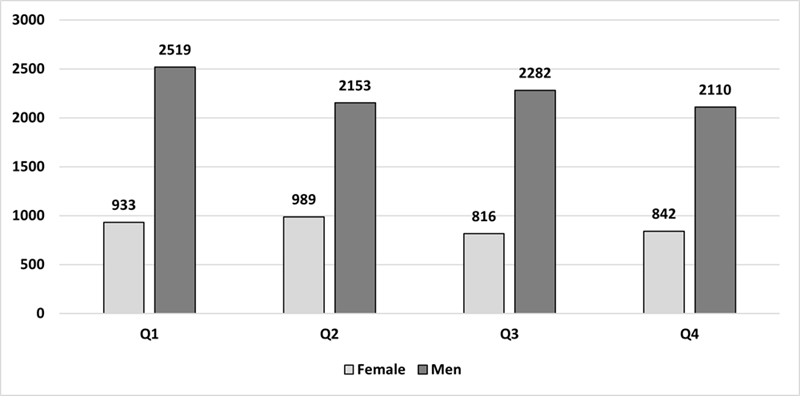
Figure 1
Distribution for Age Quartiles by Quartile (Q) of Athletes who Competed in the Women's Soccer World Cups Between 1991 and 2023 and the Men's Soccer World Cups Between 1962 and 2022 for the Senior Category
The distribution of the players who have competed in the World Cups on the continent shows a greater number of athletes born in the first two quartiles (52.15%). On the other hand, the most significant number of players who have participated on behalf of UEFA prevailed in Q1, while for female players, those born in Q2 prevailed (Table 1).
Distribution for Age Quartiles by (Q) for the Men's and Women's Soccer World Cups for the Senior Category About the Confederation
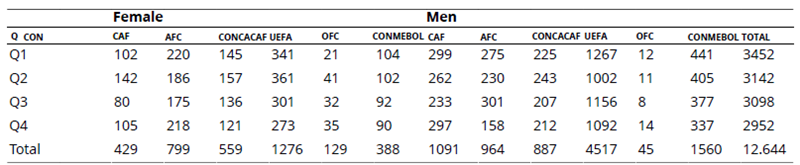
Note. Q: Quartile; CON: Confederation; CAF: Confederation African Football; AFC: Asian Football Confederation; CONCACAF: Confederation of North American, Central American and Caribbean Football; UEFA: Union of European Football Federations; OFC: Oceania Football Confederation; CONMEBOL: South American Football Confederation.
The analysis by sex details that there is only a significant RAE for third place in the Women's World Cup (Table 2).
For the inferential analysis, it is evident that there are statistically significant differences between the distribution of the birth quartiles for the teams that have been champions in the men's World Cup, except the 1974, 1978, 1990, 2006 and 2014 World Cups. runners-up and third place are significant RAE (p = 0.00) for 11 of the 16 world championships. The only World Cup where no differences were found for the first three places was for the 1974 World Cup (Table 3).
For the Women's World Cup, there are significant RAE (p = 0.00) for the champion teams in 7 of the 9 World Cups, in the runners-up in 8 of the 9 World Cups and 6 of the 9 World Cups for those who took third place (Table 4).
Distribution of Date of Birth by Quartile (Q) and Position Occupied in the Men's 1962-2022 and Women's 1991-2023 World Cups in Response to Sex
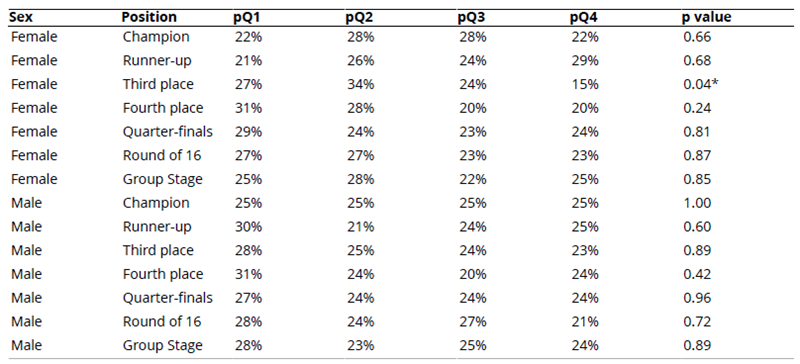
Note. There are significant differences (p < 0.05*).
Distribution of Date of Birth by Quartile (Q) and Position Occupied in the Men's Soccer World Cups 1962-2022
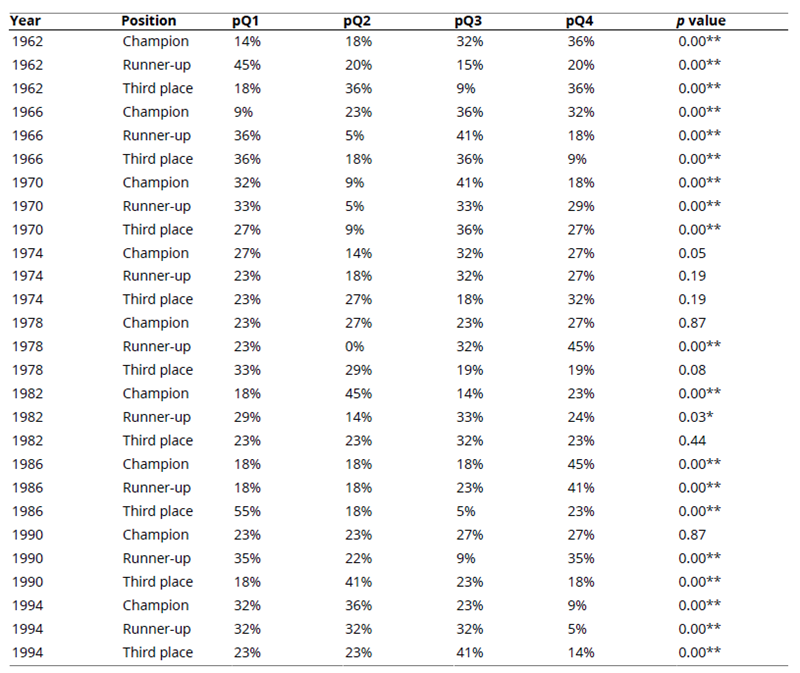
Distribution of Date of Birth by Quartile (Q) and Position Occupied in the Men's Soccer World Cups 1962-2022
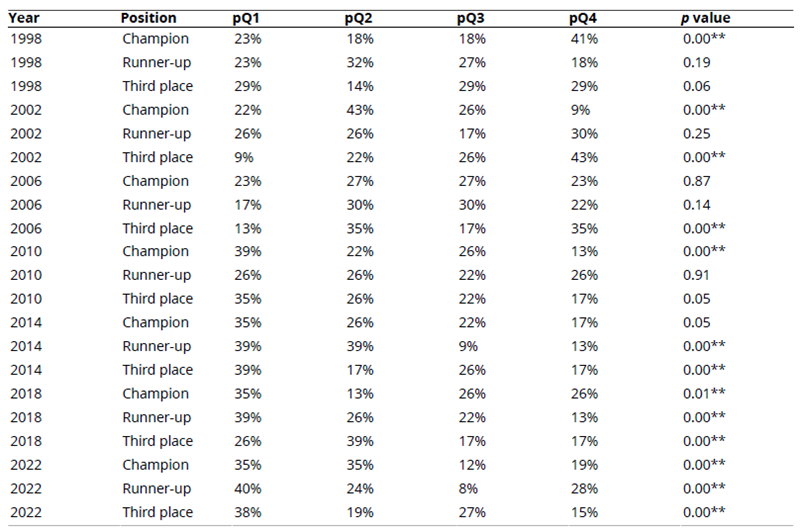
Note. There are significant differences (p < 0.05*), very significant differences (p < 0.01**).
Distribution of Date of Birth by Quartile (Q) and Position Occupied in the Women´s Soccer World Cups 1991-2023
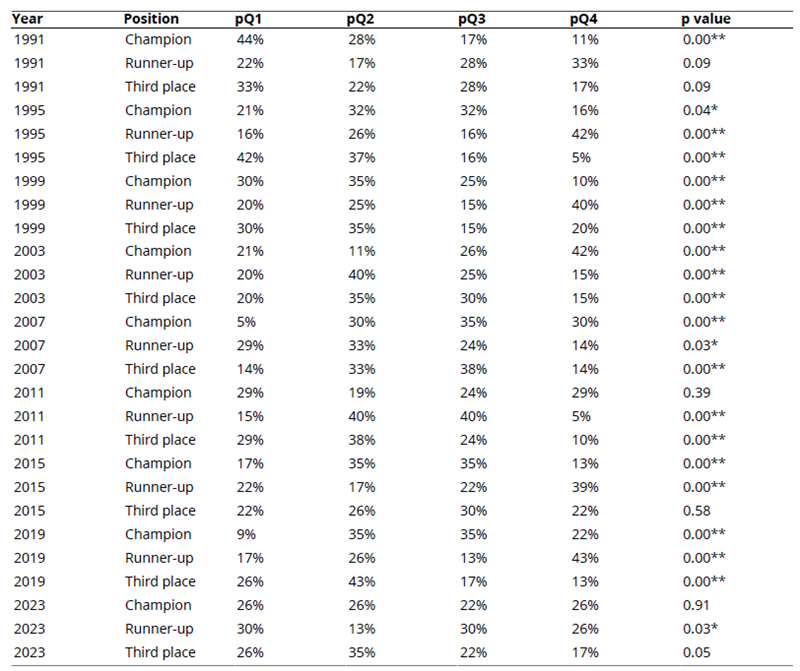
Note. There are significant differences (p < 0.05*), very significant differences (p < 0.01**).
The analysis of the teams that have been champions or runners-up in the Men's and Women's World Cups details how England, Norway and the United States found significant differences. Significant RAE were determined for the teams that were runners-up for 8 teams. Brazil, France, Germany, Holland and Spain do not show significant differences (Table 5).
Of the teams occupying the top four places in the Women's World Cups, 78% of the champion teams, 89% of the runners-up teams, 67% of the third-place teams, and 78% of the teams that remain in fourth place and do not follow a uniform distribution, while the runner-up is the one with the most significant variability on average. For the champion teams, 78% do not follow a uniform distribution, with the players from Q4 being the ones who express 62% higher than the players from Q1 (1.62 ± 1.80), which shows that in certain World Cups, there is a more significant number of players born in Q1 and others in Q4. Meanwhile, for the Men's World Cup, the first four places also do not follow a normal distribution, with fourth place (81%) and champion (75%) showing the most significant difference (Table 6).
The distribution of Birth quartiles, the positions occupied in the men's and women's World Cups, and the continent of the participating teams reveals that there is a significant RAE for the champions only for CONCACAF, runners-up for the AFC and CONCACAF, and third place for the AFC, CONCACAF, and CONMEBOL. Likewise, it is striking that UEFA has no RAE for any of the positions occupied in the Men's and Women's World Cups (Table 7).
Distribution of Date of Birth by Quartile (Q) and Position Occupied in the Men's 1962-2022 and Women's Football World Cups 1991-2023 in Response to the National Team That Occupied the Championship or Runners-up
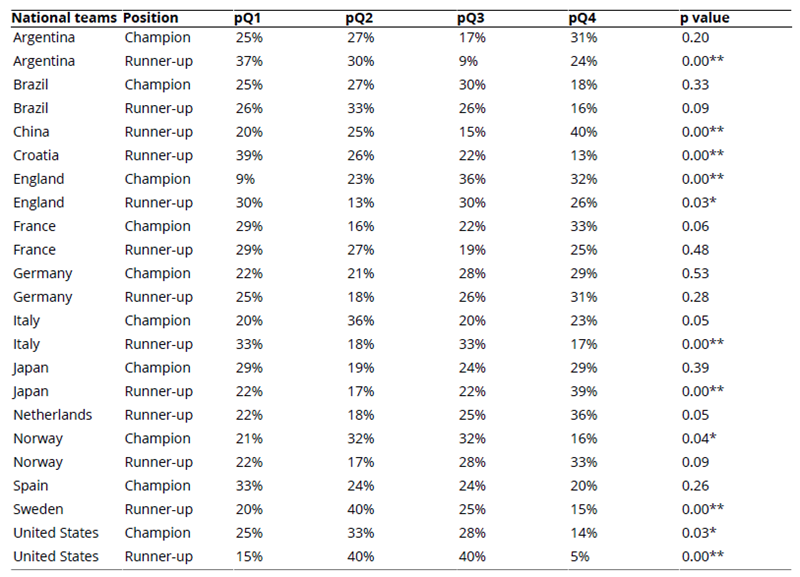
Note. There are significant differences (p < 0.05*), very significant differences (p < 0.01**).
Percentage Distribution of the RAE of the Players who Competed in the Women's and Men's Soccer World Cup in Response to the Result Achieved
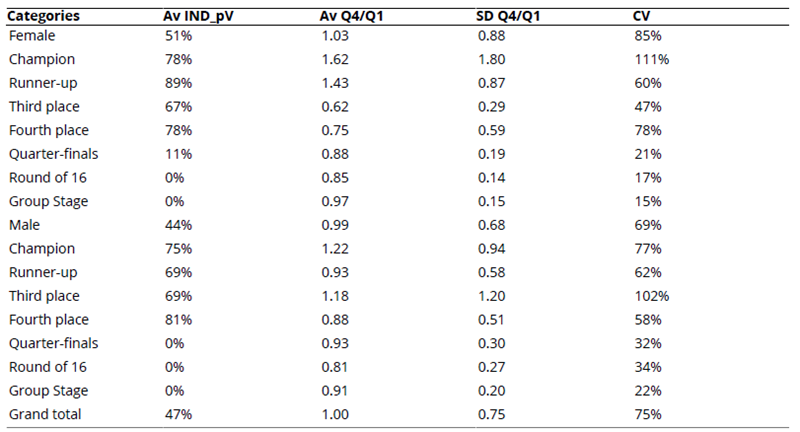
Note. Av: Average; SD: Standard deviation; CV: Coefficient of variation.
Distribution of Date of Birth by Quartile (Q) and Position Occupied in the Men's 1962-2022 and Women's Football World Cups 1991-2023 in Response to the Continent
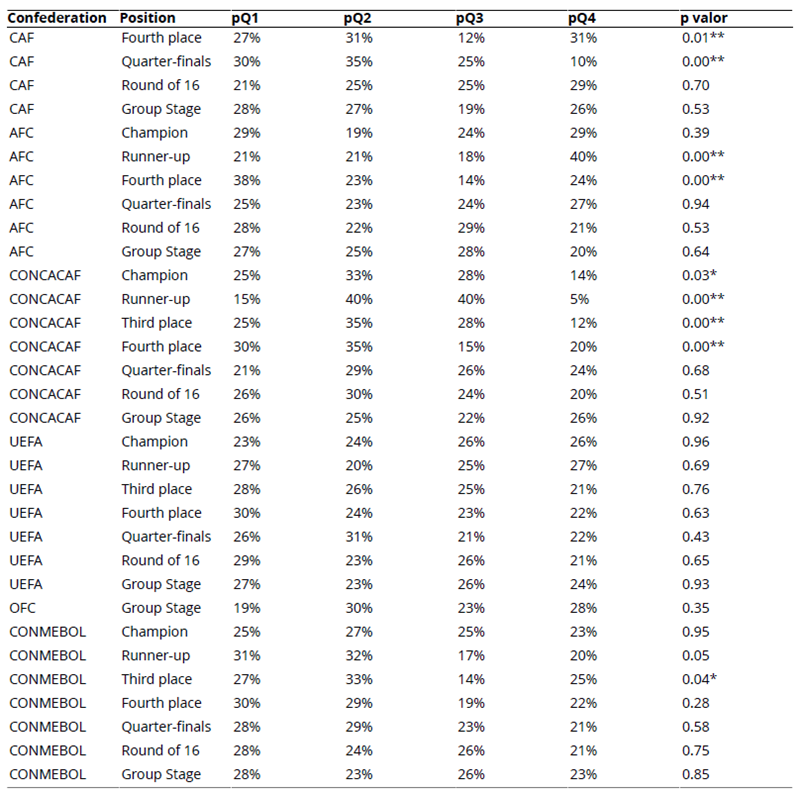
Note. M: male; F: Female; OR: Odds ratio; CAF: Confederation African Football; AFC: Asian Football Confederation; CONCACAF: Confederation of North American, Central American and Caribbean Football; UEFA: Union of European Football Federations; OFC: Oceania Football Confederation; CONMEBOL: South American Football Confederation.
There are significant differences (p < 0.05*), very significant differences (p < 0.01**).
Controlling for the sex of the World Cup, in all cases, by increasing one percentage point in the proportion of players, the possibility of achieving a higher position compared to not achieving it decreases by 9% (Q1), 7% (Q2), 7% (Q3) and 8% (Q4), compared to the possibility of achieving a higher position compared to not achieving it when there is no increase of one percentage point. However, these values are not statistically significant. According to the OR for each of the age quartiles, it is observed that when considering all the World Cups and increasing by one percentage point the proportion of players in quartile 1 (for example), the possibility of achieving a higher position Compared to not achieving it, it increases by 46% (Table 8).
Odds Ratios With 95% Confidence Intervals: Distribution of Birth Dates Between Quarters and Their Relationship With Sports Results and Gender
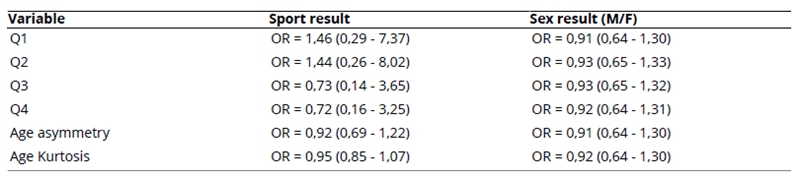
Table 9 indicates the odds ratios of being able to obtain a higher position compared to not obtaining a higher position. For the analysis by confederation, the possibility of achieving a higher position compared to not achieving it for CONCACAF increases by 157% compared to the possibility of achieving a higher position compared to not achieving it for CAF significantly. In the case of UEFA, the possibility of achieving a higher position compared to not achieving it increases by 589% compared to the possibility of achieving a higher position compared to not achieving it for CAF significantly. A similar result was obtained for CONMEBOL, where the possibility of achieving a higher position compared to not achieving it increased by 534% when compared to the possibility of achieving a higher position compared to not achieving it for CAF significantly. No significant differences were observed for AFC or OFC.
Odds Ratios With 95% Confidence Intervals: Distribution of Dates of Birth Between Quarters and Their Relationship With Sports Results and the Sports Confederation

Note. M: male; F: Female; OR: Odds ratio; CAF: Confederation African Football; AFC: Asian Football Confederation; CONCACAF: Confederation of North American, Central American and Caribbean Football; UEFA: Union of European Football Federations; OFC: Oceania Football Confederation; CONMEBOL: South American Football Confederation.
Discussion
The objectives of this study were: the objectives of this study were three: i) to analyze the RAE in the elite soccer players of the FIFA World Cup between 1962 and 2022 for men and 1991 until 2023 for women; ii) to check if there are differences between the distributions by date of birth of the players about the phase reached in the World Cup; and iii) to analyze the RAE according to the different confederations.
Our results do not suggest statistically significant differences in World Cups when analyzed by sex. Only a significant RAE was found for the teams that have taken third place. For the analysis by the phase reached in the World Cups, significant RAE was found for the Men's World Cup for the teams that occupied the first three places, being the 1974 World Cup the only one that did not show statistically significant differences, while 1962, 1996, 1970, 1982, 1986, 1994, 2018 and 2022 showed statistically significant differences for the first three places. For the analysis of the Women's World Cup, significant RAE (p = 0.01) were also found on average for the teams that were within the first three places, being the world championships of 1995, 1999, 2003, 2007, and 2019 those that showed statistically significant differences for the first three places in each of the World Cups.
The study developed by Williams (2010) that the RAE investigated in the FIFA U-17 World Cup revealed that there is a higher percentage of players who were born in Q1 (40%), and the lowest was in Q4 (16%). These results are not related to those of the present study, where it has been determined that in the adult category, there is a homogeneous distribution of players born in Q1 (27%), followed by Q3 (25.17%), Q2 (23.75%) and, finally, Q4 (23.27%). Meanwhile, for the women's world championships, there is a higher percentage of players born in Q2 (27.62%), followed by Q1 (26.06%), Q4 (23.51%), and, finally, Q3 (22.79%). Likewise, other results where the RAE has been investigated have concluded that the effect is more noticeable in U-17 male players and similar, although with a weaker effect on U-20 male players, while, in Senior male players, the RAE is not constantly presented in the World Cups (Pedersen et al., 2022). In the present study in the analysis of the senior men's World Cups between 1962 and 2022, it has been determined that in response to the first three places reached in the tournament, there is a significant RAE in 14 of the 15 world championships analyzed (p < 0.05), where only in 1974 a significant RAE was not found (p > 0.05).
Some of the results should be familiar to readers because they have been presented in other studies, mainly in the U-17 tournaments and the RAE in the senior men's world championship developed in 2014 (Steingröver et al., 2017) where it has been reported that distributions of variable dates of birth have been found between the different confederations. However, the present study tried to analyze the general panorama of the RAE at the highest level of football by studying 12,644 players, corresponding to 88 teams participating in 25 world tournaments (9 women and 16 men). In that sense, when studying the RAE according to the teams that have reached the first two places in the men's and women's Senior World Cups, it has been detailed that of the 14 national teams, the RAE is significant in only 9. These findings demonstrate that the RAE can influence sports performance (de la Rubia et al., 2020), so it is necessary to continue determining this effect in other studies that analyze other variables associated with the specificity of sports (García-Rubio et al., 2022).
The study developed by Becerra-Patiño & Escorcia-Clavijo (2023) has determined that in the senior category women's world championships, there is a significant RAE in the teams that were champions (p = 0.03), being in turn, these champion teams the ones with the highest average age. These findings are related to those of the present study, where it has also been determined that there is a significant RAE for 11 of the 15 men's world championships and 7 of the nine women's world championships analyzed that resulted in championships. In the same way, in the analysis of the RAE and the success defined by the final classification in the World Cup, no statistical differences were reported (p > 0.05) of the teams that played the group stage against the different elimination phases (Ribeiro et al., 2024). However, by investigating in depth the relationship between the RAE and the final team classifications, it has been reported that there are statistically significant differences (p < 0.05) (Augste & Lames, 2011). In the present study, it has been determined that there is a significant RAE for those teams that remain champions, runners-up, or in third place. However, if you compare the result obtained by the confederation, this effect is only significant for CONCACAF in the first four places (Champion, runner-up, third and fourth place), CONMEBOL for third place, CAF for fourth place and quarterfinals and, finally, the AFC for fourth place. These results suggest that sports performance also responds to other processes, such as the quality of training (Baker et al., 2009), the psychosocial assistance of athletes (Ericsson, 2014), game intelligence, tactical and psychological skills (Figueiredo et al., 2019; Votteler & Höner, 2017; Williams et al., 2020).
For the analysis of the RAE according to confederation, it has been determined that there is only two significant RAE for the champion team (CONCACAF and CAF), three for the runner-up teams (AFC, CONCACAF and CAF) and three for the third place (AFC, CONCACAF, CONMEBOL). Likewise, the other confederations do not suggest statistically significant differences. Against this, the study developed by Ribeiro et al. (2024) reveals that by analyzing the RAE by confederations, it is determined that the players of the AFC, OFC, and UEFA did show a significant RAE, while the players of AFC and CONMEBOL did not show a significant RAE. These data are not related to the findings of the present study and also respond to the fact that the analysis of the present study related the RAE by grouping women's and male world championships, while the study by Ribeiro et al. (2024) analyzed only the U-17, U-20 and Senior women's World Cups.
Another study that evaluated the RAE and the analysis by continent concluded that between 1997-and 2007 the African region showed a reverse RAE where players born in Q4 prevailed, while, for the rest of the confederations, the RAE was significant for all players born in Q1 (Williams, 2010) and where the players of the AFC, CONCACAF, OFC and UEFA showed a significant RAE, while the players of the CAF and CONMEBOL did not show a significant RAE. By comparing these results with the positions reached in the Men's and Women's World Cups, it has been determined that for the CAF, there is only a significant RAE for the fourth place and the quarterfinals; for the AFC, the RAE prevails for the runner-up and the fourth place, the CONCAFAF expresses significant RAE for the first four places reached (Champion, Runner-up, third and fourth place). At the same time, for CONMEBOL, there is only a significant RAE in third place. It is also striking that there is no significant RAE for UEFA in any of the positions reached and the OFC for the group stage. Case contrary to what was found in the study developed by (Romann & Fuchslocher, 2013), where it was determined that there is a significant RAE in Europe (UEFA) and North and Central America (CONCACAF), although it should be noted that this study was carried out with U-17 players.
Various investigations have overseen investigating the RAE, including analysis of variables such as age, sex, level of play, position reached, confederation, etc., which represents that different time frames identify differences in the RAE (Pedersen et al., 2022). To date, no study has been found that analyzes the RAE in the men's and senior women's World Cups through the position reached and the teams that occupied those first three places (Champion, runner-up, and third place). These results lead to reviewing the different mechanisms that are used for the study of the RAE, looking for strategies consistent with the selection of the players who, in the end, end up representing their countries in the highest competitions and that is linked to the study and constant evaluation of growth and maturity (Till et al., 2022), as well as other biolabeling strategies that do not exclusively consider the age of the athletes to reduce the RAE (Helsen et al., 2021). By this, the present study has determined that curiously, for the analysis of the RAE in the 14 teams that have been champions or runners-up in the men's (1962-2022) and women's (1991-2023) World Cups, only 9 of them have a significant RAE, where this effect prevails for the teams that are runners-up and where for the champion it turns out to be significant only for the champion teams of the Women's World Cups (Norway, Sweden, United States). Therefore, it is necessary to have a more in-depth discussion on the different mechanisms used for the study of the RAE, which, in turn, demands the need to continue exploring this effect in women's football (Ribeiro et al., 2024). Likewise, there are other strategies, such as altering or rotating the annual cut-off date to create alternatives that allow other ways of grouping athletes (Sierra-Díaz et al., 2017), as well as the analysis of their anthropometric attributes, internal reforms of football academies, competitive regulations, evaluation of biological maturity and the stage of development of athletes, among others (Heilmann et al., 2024).
Conclusions
For the women's World Cups, there is an overrepresentation of players born in Q2 and Q1 and a minor in Q4 and Q3, while for the players who participated in the men's World Cups, it was higher for Q1 and Q3 and lower for Q2 and Q4.
The analysis in relation to the confederation determined that there is no significant RAE for the qualifying rounds in any of the men's and women's World Cups. However, for the elimination rounds, there is a significant RAE in the first four places for CONCACAF, AFC for second and fourth place, third place for CONMEBOL, and fourth place and quarterfinals for CAF. Finally, no significant RAE was found for UEFA.
The analysis conducted of the top level of soccer in the World Cups in this research can help coaches and the Sports Science community to identify strategies that help favor the long-term development of soccer players by considering other variables beyond the effect that the RAE can produce.
Limitations
The most important limitation of our study is the retrospective and transversal design, which does not allow us to understand the longitudinal of the RAE on the different athletes who participated in the men's and women's World Cups. Likewise, although all the Women's World Cups were considered, the players of the World Cups between 1930 and 1958 were left out of the analysis. Another limitation is the absence of information about the state of maturation, which can provide valuable information to understand the RAE more clearly. This study did not consider the RAE in response to the positioning within the field of play.
There are other limitations associated with the inclusion of players who reached the elite level, but no analysis is presented on how many may have been excluded due to RAE at earlier stages, as well as on the effect of uncontrolled variables such as biological maturation, minutes played during the tournament and other individual performance statistics.
Ethics Committee Statement
Since this study uses retrospective data, we do not have and do not consider that it requires ethics committee approval.
Conflict of Interest
The authors do not declare any conflict of interest.
Funding
This research was not funded.
Authors' Contribution
Conceptualization C.F.M.-B.; J.D.A.-M., B.A.B.-P. & D.A.R.-P.; Methodology C.F.M.-B.; J.D.A.-M., B.A.B.-P. & D.A.R.-P.; Validation B.A.B.-P., D.A.R.-P. & J.P.O.; Formal Analysis C.F.M.B.; B.A.B.-P. & J.P.O.; Investigation C.F.M.-B.; J.D.A.-M. & B.A.B.-P.; Resources C.F.M.-B.; J.D.A.-M. & B.A.B.-P.; Data Curation B.A.B.-P., D.A.R.-P. & J.P.O; Writing – Original Draft C.F.M.-B.; J.D.A.-M., B.A.B.-P., D.A.R.-P.; Writing – Review & Editing B.A.B.-P., D.A.R.-P. & J.P.O.; Visualization C.F.M.B-., J.D.A.-M., B.A.B.-P., D.A.R.-P. & J.P.O.-U.; Supervision B.A.B.-P.; Project Administration B.A.B.-P.; Funding Acquisition B.A.B.-P. All authors have read and agree with the published version of the manuscript.
Data Availability Statement
Data available upon request to the corresponding author at babecerrap@pedagogica.edu.co
References
Agricola, A., Polách, M., Valek, T., Nykodým, J., & Zháněl, J. (2024). The relative age effect of participants in the world junior tennis finals in 2012–2016. Retos, 51, 955-961. https://doi.org/10.47197/retos.v51.99664
Andrew, M., Finnegan, L., Datson, N., & Dugdale, J. H. (2022). Men are from quartile one, women are from? Relative age effect in European soccer and the influence of age, success, and playing status. Children, 9(11), 1747. https://doi.org/10.3390/children9111747
Augste, C., & Lames, M. (2011). The relative age effect and success in German elite U-17 soccer teams. Journal Sports Science, 29(9), 983–987. https://doi.org/10.1080/02640414.2011.574719
Ávila-Martínez, J. D., Castro-Malaver, M. A., Becerra-Patiño, B. A., Varón-Murcia, J., Cárdenas-Contreras, S., & Pino-Ortega, J. (2024). Gender differences for the relative age effect on physical skills and emotional intelligence in child volleyball and soccer athletes. Journal of Functional Morphology and Kinesiology, 9(4), 244. https://doi.org/10.3390/jfmk9040244
Baker, J., Schorer, J., Cobley, S., Bräutigam, H., & Büsch, D. (2009). Gender, depth of competition and relative age effects in team sports. Asian Journal Exercise & Sports Science, 6(1), 1–7.
Barnsley, R. H., Thompson, A., & Legault, P. (1992). Family planning: Football style. The relative age effect in football. International Review for the Sociology of Sport, 27(1), 77-87. https://doi.org/10.1177/101269029202700105
Becerra-Patiño, B. A., & Escorcia-Clavijo, J. B. (2023). Effect of relative age in the FIFA Women's World Cup U-20 and senior elite categories: differences in playing positions and obtained results. Journal of Physical Education and Sport, 23(3), 613-621. https://doi.org/10.7752/jpes.2023.03076
Becerra-Patiño, B.A., Varon Murcia, J.J., Cardenas Contreras, S., Castro Malaver, M.A., & Ávila Martínez, J.D. (2024). Scientific production on the relative age effect in sport: Bibliometric analysis of the last 9 years (2015-2023). Retos, 52, 623–638. https://doi.org/10.47197/retos.v52.101944
Bezuglov, E., Morgans, R., Butovskiy, M., Emanov, A., Shagiakhmetova, L., Pirmakhanov, B., Waśkiewicz, Z., & Lazarev, A. (2023). The relative age effect is widespread among European adult professional soccer players but does not affect their market value. PLoS One, 18(3), e0283390. https://doi.org/10.1371/journal.pone.0283390
Bilgiç, M., & Işın, A. (2023). Embarking on a journey: A bibliometric analysis of the relative age effect in sport science. German Journal of Exercise and Sport Research, 53(3), 325-332. https://doi.org/10.1007/s12662-021-00792-w
Bolckmans, S., Perquy, K., Starkes, J. L., Memmert, D., & Helsen, W.F. (2023). The relationships between relative age effect, personality constructs and achievement level in soccer. Frontiers in Sports and Active Living, 5, 1226599. https://doi.org/10.3389/fspor.2023.1226599
Brustio, P. R., Lupo, C., Ungureanu, A. N., Frati, R., Rainoldi, A., & Boccia, G. (2018). The relative age effect is larger in Italian soccer top-level youth categories and smaller in Serie A. PLoS One, 13(4), e0196253. https://doi.org/10.1371/journal.pone.0196253
Bujnovky, D., Maly, T., Ford, K.R., Sugimoto, D., Kunzmann, E., Hank, M., & Zahalka, F. (2019). Physical fitness characteristics of high-level youth football players: Influence of playing position. Sports, 7(2), 46. https://doi.org/10.3390/sports7020046
Calegari, E., da Silva Leite Cardoso, F., Dias Alhadas, R., & da Costa, I. T. (2023). O efeito da idade relativa nas Copas do Mundo FIFA Feminina (1991-2023) e masculina (1990-2022). Revista Brasileira de Futebol, 16(2), 57-70. https://rbf.ufv.br/index.php/RBFutebol/article/view/413
Chan B. K. C. (2018). Data Analysis Using R Programming. Advances in Experimental Medicine and Biology, 1082, 47–122. https://doi.org/10.1007/978-3-319-93791-5_2
Cumming, S.P., Lloyd, R.S., Oliver, J.L., Eisenmann, J.C., & Malina, R.M. (2017). Bio-banding in sport: applications to competition, talent identification, and strength and conditioning of youth athletes. Strength and Conditioning Journal, 39(2), 34-47. https://doi.org/10.1519/SSC.0000000000000281
de la Rubia, A., Lorenzo-Calvo, J., & Lorenzo, A. (2020). Does the Relative Age Effect Influence Short-Term Performance and Sport Career in Team Sports? A Qualitative Systematic Review. Frontiers in Psychology, 11, 1947. https://doi.org/10.3389/fpsyg.2020.01947
de la Rubia, A., Lorenzo, A., Bjørndal, C.T., Kelly, A.L., García-Aliaga, A., & Lorenzo-Calvo, J. (2021). The relative age effect on competition performance of Spanish international handball players: A longitudinal study. Frontiers in Psychology, 12, 673434. https://doi.org/10.3389/fpsyg.2021.673434
Doyle, J.R., & Bottomley, P.A. (2018). Relative age effect in elite soccer: More early-born players, but no better valued, and no paragon clubs or countries. PLoS One, 13(2), e0192209. https://doi.org/10.1371/journal.pone.0192209
Ericsson, K. A. (2014). The road to excellence: The acquisition of expert performance in the arts and sciences, sports, and games (1st ed.). Psychology Press.
Figueiredo, A. J., Coelho-E-Silva, M. J., Cumming, S. P., & Malina, R. M. (2019). Relative age effect: Characteristics of youth soccer players by birth quarter and subsequent playing status. Journal of Sports Sciences, 37(6), 677–84. https://doi.org/10.1080/02640414.2018.1522703
Figueiredo, L. S., de Castro Ribeiro, L., de Oliveira Castro, H., De Conti Teixeira Costa, G., de Souza Gomes, L. M., & de Souza Fonseca, F. (2022). Market value of Brazilian soccer players that played 2020 series A and B of the Brazilian championship: An analysis based on quarters of birth and playing position. Motriz. Revista de Educacao Fisica, 28, e10220002822. https://doi.org/10.1590/S1980-6574202200002822
Fuhre, J., Øygard, A., & Saether, S.A. (2022). Coaches' criteria for talent identification of youth male soccer players. Sports, 10(2), 14. https://doi.org/10.3390/sports10020014
García-Rubio, J., García-Vallejo, A., Arenas-Pareja. M. L. Á., López-Sierra, P., & Ibáñez, S. J. (2022). From junior to elite in Soccer: Exploring the Relative Age Effect and Talent Selection in Spanish youth national teams. Children, 9(10), 1543. https://doi.org/10.3390/children9101543
Heilmann, F., Kuhlig, A., & Stoll, O. (2024). Relative age effects in German youth A and B men's soccer teams: Survival of the fittest? Frontiers in Sports and Active Living, 6, 1432605. https://doi.org/10.3389/fspor.2024.1432605
Helsen, W. F., Baker, J., Michiels, S., Schorer, J., van Winckel, J., & Williams, A. M. (2012). The relative age effect in European professional soccer: Did ten years of research make any difference? Journal of Sports Sciences, 30(15), 1665-1671. https://doi.org/10.1080/02640414.2012.721929
Helsen, W.F., Thomis, M., Starkes, J. L., Vrijens, S., Ooms, G., MacMaster, C., & Towlson, C. (2021). Leveling the playing field: A new proposed method to address relative age-and maturity-related bias in soccer. Frontiers in Sports and Active Living, 3, 24. https://doi.org/10.3389/fspor.2021.635379
Hill, B., & Sotiriadou, P. (2016). Coach decision-making and the relative age effect on talent selection in football. European Sport Management Quarterly, 16(3), 292–315. https://doi.org/10.1080/16184742.2015.1131730
Huertas, F., Ballester, R., Gines, H. J., Hamidi, A. K., Moratal, C., & Lupiáñez, J. (2019). Relative age effect in the sport environment. Role of physical fitness and cognitive function in youth soccer players. International Journal of Environmental Research and Public Health, 16(16), 2837. https://doi.org/10.3390/ijerph16162837
James, G., Witten, D., Hastie, T., & Tibshirani, R. (2013). An introduction to statistical learning. Springer.
Kelly, A.L., Finnegan, L., Till, K., & Smith, K.L. (2023). Talent identification and development in youth soccer. A Guide for researchers and practitioners (1st ed.). Routledge.
Leyhr, D., Bergmann, F., Schreiner, R., Mann, D., Dugandzic, D., & Höner, O. (2021). Relative age-related biases in objective and subjective assessments of performance in talented youth soccer players. Frontiers in Sports and Active Living, 3, 664231. https://doi.org/10.3389/fspor.2021.664231
Lüdin, D., Donath, L., Cobley, S., & Romann, M. (2022). Effect of bio-banding on physiological and technical-tactical key performance indicators in youth elite soccer. European Journal of Sport Science, 22(11), 1659-1667. https://doi.org/10.1080/17461391.2021.1974100
Massa, M., Costa, E. C., Moreira, A., Thiengo, C. R., de Lima, M. R., Marquez, W. Q., & Aoki, M. S. (2014). The relative age effect in soccer: A case study of the São Paulo Football Club. Revista Brasileira de Cineantropometria e Desempenho Humano. 16(4), 399-405. https://doi.org/10.5007/1980-0037.2014v16n4p399
Morganti, G., Kelly, A. L., Apollaro, G., Pantanella, L., Esposito, M., Grossi, A., & Ruscello, B. (2023). Relative age effects and the youth-to-senior transition in Italian soccer: The underdog hypothesis versus knock-on effects of relative age. Science and Medicine in Football, 7(4), 406-412. https://doi.org/10.1080/24733938.2022.2125170
Musch, J., & Grandin, S. (2001). Unequal competition as an impediment to personal development: A review of the relative age effect in sport. Developmental Review, 21(2), 147-167. https://doi.org/10.1006/drev.2000.0516
O’Donoghue, P. (2010). Research Methods for Sports Performance Analysis (1st ed.). Routledge.
Pedersen, A. V., Aune, T. K., Dalen, T., & Lorås, H. (2022). Variations in the relative age effect with age and sex, and over time-Elite-level data from international soccer world cups. PLoS One, 17(4), e0264813. https://doi.org/10.1371/journal.pone.0264813
Peña-González, I., Javaloyes, A., Cervelló, E., & Moya-Ramón, M. (2022). The maturity status but not the relative age influences elite young football players' physical performance. Science and Medicine in Football, 6(3), 309-316. https://doi.org/10.1080/24733938.2022.2053338
Pino-Ortega, J., Gómez-Carmona, C. D., Nakamura, F. Y., & Rojas-Valverde, D. (2020). Setting kinematic parameters that explain youth basketball behavior: Influence of relative age effect according to playing position. Journal of Strength and Conditioning Research, 36(3), 820–826. https://doi.org/10.1519/JSC.0000000000003543
Ribeiro, E., Barreira, J., Carraco, D., Galatti, L., Götze, M., Cal, C. (2024). The relative age effect in under-17, under-20, and adult elite female soccer players. Science and Medicine in Football, 8(2), 153-160. https://doi.org/10.1080/24733938.2022.2164608
Romann, M., & Fuchslocher, J. (2013). Influences of player nationality, playing position, and height on relative age effects at women’s under-17 FIFA World Cup. Journal of Sports Sciences, 31(1), 32–40. https://doi.org/10.1080/02640414.2012.718442
Romann, M., Rüeger, E., Hintermann, M., Kern, R., & Faude, O. (2020). Origins of relative age effects in youth football- A nationwide analysis. Frontiers in Sports and Active Living, 2, 591072. https://doi.org/10.3389/fspor.2020.591072
Romero-García, D., Vaquero-Cristóbal, R., Albaladejo-Saura, M., Esparza-Ros, F., & Martínez-Sanz, J. M. (2023). Influence of biological maturation status on kinanthropometric characteristics, physical fitness and diet in adolescent male handball players. Applied Sciences. 13(5), 3012. https://doi.org/10.3390/app13053012
Ruscello, B., Morganti, G., Apollaro, G., Saponara, A., Esposito, M., Marcelli, L., Filetti, C., Porta, M., Grossi, A., & Pantanella, L. (2023). Relative age effect in Italian soccer: A cultural issue in talent management? The Journal of Sports Medicine and Physical Fitness, 63(1), 136–143. https://doi.org/10.23736/S0022-4707.22.13663-7
Sierra-Díaz, M. J., González-Víllora, S., Pastor-Vicedo, J. C., & Serra-Olivares, J. (2017). Soccer and relative age effect: A walk among elite players and young players. Sport, 5(1), 5. https://doi.org/10.3390/sports5010005
Silva Junior, C. J., Palma, A., Aureliano Imbiriba, L., Ribeiro Assis, M., & Marques Barbosa, M. A. (2015). Relationship between relative age effect and physical characteristics of young soccer players. Cultura, Ciencia y Deporte, 10(30), 227–233. https://doi.org/10.12800/ccd.v10i30.591
Simon, C., Carson, F., Faber, I. R., & Hulsdunker, T. (2022). Low prevalence of relative age effects in Luxembourg’s male and female youth football. PLoS One, 17(8), e0273019. https://doi.org/10.1371/journal.pone.0273019
Smith, K.L., Weir, P.L., Till, K., Romann, M., & Cobley, S. (2018). Relative age effects across and within female sport Contexts: A systematic review and meta-analysis. Sports Medicine, 48(6), 1451-1478. https://doi.org/10.1007/s40279-018-0890-8
Steingröver, C., Wattie, N., Baker, J., Helsen, W.F., & Schorer, J. (2017). Geographical variations in the interaction of relative age effects in youth and adult elite soccer. Frontiers in Psychology, 8, 278. https://doi.org/10.3389/fpsyg.2017.00278
Teixeira, J. E., Alves, A. R., Ferraz, R., Forte, P., Leal, M., Ribeiro, J., Silva, A. J., Barbosa, T. M., & Monteiro, A. M. (2022). Effects of chronological age, relative age, and maturation status on accumulated training load and perceived exertion in young sub-elite football players. Frontiers in Psychology, 13, 832202. https://doi.org/10.3389/fphys.2022.832202
Till, K., & Baker, J. (2020). Challenges and [possible] solutions to optimizing talent identification and development in sport. Frontiers in Psychology, 11, 664. https://doi.org/10.3389/fpsyg.2020.00664
Till, K., Lloyd, R. S., McCormack, S., Williams, G., Baker, J., Eisenmann, J.C., & Piacentini, M.F. (2022). Optimising long-term athletic development: An investigation of practitioners’ knowledge, adherence, practices and challenges. PLoS One, 17(1), e0262995. https://doi.org/10.1371/journal.pone.0262995
Towlson, C., & Cumming, S.P. (2022). Bio-banding in soccer: Past, present, and future. Annals of Human Biology, 49(7-8), 269-273. https://doi.org/10.1080/03014460.2022.2129091
Towlson, C., MacMaster, C., Gonçalves, B., Sampaio, J., Toner, J., MacFarlane, N., Barrett, S., Hamilton, A., Jack, R., Hunter, F., Stringer, A., Myers, T., & Abt, G. (2022). The effect of bio-banding on technical and tactical indicators of talent identification in academy soccer players. Science and Medicine in Football, 5(3), 280-292. https://doi.org/10.1080/24733938.2020.1862419
Votteler, A., & Höner, O. (2017). Cross-sectional and longitudinal analyses of the relative age effect in German youth football. German Journal of Exercise and Sport Research, 47(3), 194–204. https://doi.org/10.1007/s12662-017-0457-0
Wattie, N., Schorer, J., Baker, J. (2015). The relative age effect in sport: A developmental systems model. Sports Medicine, 45(1), 83–94. https://doi.org/10.1007/s40279-014-0248-9
Williams J.H. (2010). Relative age effect in youth soccer: Analysis of the FIFA U17 World Cup competition. Scandinavian Journal of Medicine & Science in Sports, 20(3), 502-508. https://doi.org/10.1111/j.1600-0838.2009.00961.x
Williams, A. M., Ford, P. R., & Drust, B. (2020). Talent identification and development in soccer since the millennium. Journal of Sports Sciences, 38(11-12), 1199–210. https://doi.org/10.1080/02640414.2020.1766647
Yagüe, J. M., de la Rubia, A., Sánchez-Molina, J., Maroto-Izquierdo, S., & Molinero, O. (2018). The relative age effect in the 10 best leagues of male professional football of the Union of European Football Associations (UEFA). Journal of Sports Science & Medicine, 17(3), 409–416. https://jssm.org/volume17/iss3/cap/jssm-17-409.pdf
Yagüe, J. M., Molinero, O., Alba, J. Á., & Redondo, J. C. (2020). Evidence for the relative age effect in the Spanish professional soccer league. Journal of Human Kinetics, 73, 209–218. https://doi.org/10.2478/hukin-2019-0145
Yagüe, J. M., Salguero, A., Villegas, A., Sánchez-Molina, J., & Molinero, O. (2023). The relative age effect in the two professional men's football leagues in Spain. Journal of Sports Science and Medicine, 22(4), 700-706. https://doi.org/10.52082/jssm.2023.700
Author notes
a Correspondence: Boryi Alexander Becerra-Patiño, babecerrap@pedagogica.edu.co
Additional information
Short title: Relative Age Effect on the Men's (1962-2022) and Women's (1991-2023) FIFA World Cups
Cómo citar el artículo: Martínez-Benítez, C. F., Ávila-Martínez, J. D., Becerra-Patiño, B., Rada-Perdigón, D., & Pino-Ortega, J. (2026). Relative age effect on the men's (1962-2022) and women's (1991-2023) FIFA World Cups. Cultura, Ciencia y Deporte, 21(67), 2366. https://doi.org/10.12800/ccd.v21i67.2366


