
JENSEN’S GOVERNANCE PROBLEM REVISITED BY THE RELATIVE AGE EFFECT ON SPANISH FOOTBALL
EL PROBLEMA DE GOBERNANZA DE JENSEN REVISITADO POR EL EFECTO DE LA EDAD RELATIVA EN EL FÚTBOL ESPAÑOL


Jose Torres-Pruñonosa, Pablo Burillo, Álvaro Fernández-Luna, Benito Pérez-González
JENSEN’S GOVERNANCE PROBLEM REVISITED BY THE RELATIVE AGE EFFECT ON SPANISH FOOTBALL
Cultura, Ciencia y Deporte, vol. 20, no. 66, 2025, 10.12800/ccd.v20i66.2334
Universidad Católica San Antonio de Murcia
Jose Torres-Pruñonosa aa
Universidad Internacional de la Rioja, España
Pablo Burillo
Universidad Europea de Madrid, España
Álvaro Fernández-Luna
Universidad Europea de Madrid, España
Benito Pérez-González
Universidad Internacional de la Rioja, España
Received: 10 october 2024
Accepted: 27 march 2025
Abstract: This study analyses Jensen's problem of governance by examining the Relative Age Effect (thereinafter RAE) on Spanish Football. We analysed the players of the top eight Spanish football academies (n=736). Four of the academies belong to clubs and four to Sport Stock Corporations (SSCs), all of them are playing in the top tier of Spanish football. We used the Poisson Regression analysis to identify the presence of the relative age effect. The existence of RAE is found to be significant (p<.001) in both clubs and SSCs. According to Jensen's governance theory, SSCs should be more efficient, and therefore the starting hypothesis would be that they would not be affected by the RAE bias whereas clubs should. The results of the study refute Jensen's problem of governance and are a new contribution to the stakeholder’s theory. Policymakers should consider governance reforms, such as hybrid multi-stakeholder models, to counteract RAE. It is also evident that the RAE is a bias that notably affects football academies and other sports with a lot of participants.
Keywords: Football academies, Jensen’s governance problem, Sport Stock Corporations, talent identification, theory of stakeholders.
Resumen: Este estudio analiza el problema de la gobernanza de Jensen examinando el Efecto de la Edad Relativa (ERA) en el fútbol español. Hemos analizado los jugadores de las ocho mejores academias de fútbol españolas (n= 736). Cuatro de las academias pertenecen a clubes y cuatro a Sociedades Anónimas Deportivas (SAD) y todas ellas juegan en la máxima categoría del fútbol español. Utilizamos la regresión de Poisson para identificar la presencia del ERA. La existencia del ERA es significativa (p<0.001) tanto en clubes como en las SADs. Según la teoría de la gobernanza de Jensen, las SADs deberían ser más eficientes, dado que la hipótesis de partida es que no se ven afectadas por el sesgo ERA, mientras que los clubes sí. Los resultados del estudio refutan el problema de gobernanza de Jensen y constituyen una nueva aportación a la teoría de los stakeholders. Los responsables políticos deberían considerar reformas de gobernanza, como modelos híbridos con múltiples stakeholders, para contrarrestar el RAE. También se pone de manifiesto que el ERA es un sesgo que afecta notablemente a las academias de fútbol y a otros deportes con muchos participantes.
Palabras clave: Academias de futbol, identificación del talent, problema de gobernanza de Jensen, Sociedades Anónimas Deportivas, teoría de los stakeholders.
Introduction
The multi-fiduciary theory of stakeholder developed by Goodpaster (1991) and Boatright (2008) establishes the relationship between various stakeholders—not just shareholders—who are the principals and the agent, who is the person with fiduciary responsibility in charge of the stakeholder group. After that, the agent will be under a reasonable duty to take stakeholders' interests into account. Other authors, like Jensen (2002), come to the conclusion that managing the interests of all stakeholders is impossible because no one has the authority to oversee the decision-making agent and because controllers, or multiple autonomous stakeholders, have disparate or even worse, incompatible interests (this is referred to by the scientific community as Jensen's "problem of governance"). Because of this, the agent would essentially wield more authority than the principal and may behave egotistically in the absence of any justifiable oversight from the stakeholders. Consequently, it is anticipated that shareholder-controlled firms will perform better than institutions governed by stakeholders. The Spanish football organisations ought to follow the same pattern. The aim of this paper is to confirm if this is true as a contribution to the stakeholder’s theory, contradicting the Jensen’s problem of governance by means of the Relative Age Effect (hereinafter RAE) in the best eight football Spanish academies (Hernández-Beltrán et al., 2023).
The Spanish football system has entirely changed due to substantial modifications made since 1990. In the past, all football organisations were clubs that belonged to their members. However, in 1990 Sport Stock Corporations (thereinafter SSCs), were established by law in Spain (Ley 10/1990) as an alternative to regular stock corporations with the goal of giving professional football structures more control and transparency to boost their financial efficiency. Nonetheless, Fútbol Club Barcelona, Real Madrid Club de Fútbol, Athletic Club de Bilbao and Club Atlético Osasuna maintained their football club identity and were established as private, non-profit sports associations and were exempt from this requirement. This was an exceptional case because all four of these football teams were historically significant and had shown positive equity during the preceding four years. Unlike SCC, they are associative enterprises that have had a responsibility and guarantee regime for their members and their financial structure since 1990. For example, managers of professional football teams are required to pledge 15% of the entire budgeted expenses upon taking office (Besoccer, 2020).
One of the guiding principles of football teams is to resist being controlled by the capital of their shareholders. Thus, the property right paradigm—that regards capital as the foundation of governance—is the foundation upon which SSC are based. Conversely, clubs are based on a multi-fiduciary model that does not apply capital to the process of governing (Goodpaster, 1991; Boatright, 2008). In summary, the Professional National Football League consists of SSC that are governed by shareholders and clubs by members.
Consequently, the current study's goal is to examine the RAE of SSCs and football clubs. Our research has integrated these two bodies of literature by doing an empirical analysis of the relationship between RAE while accounting for the kind of institution football—football clubs versus SSC. The aim of this paper is to contribute to the current literature by utilizing RAE to show whether, when football clubs and SSC are compared, there is a substantial difference in RAE that supports the multi-fiduciary governance model in football institutions.
The results could significantly impact the promotion of stakeholders' multi-fiduciary involvement in football clubs (Senaux, 2008; García & Welford, 2015; García & Llopis-Goig, 2021). Although they are founded on property rights, SSCs are not always more effective than football teams, which have high levels of shareholder participation. By means of the establishment and reinforcement of stakeholder engagement and collaboration mechanisms, this could aid in the evolution of the Spanish sport ecosystem.
The structure of the article is as follows: in order to establish the basis for the discussion regarding the assumptions made in the study hypotheses, the following section examines prior studies about RAE, stakeholder’s theory and Jensen’s problem of governance, to conclude with the hypothesis to be tested. The sample and methods are explained in the third section. Thereafter, the results of the empirical analysis are displayed. The last two sectionsoffers a discussion of the findings as well as the conclusions and recommendations for additional study.
Theoretical Background
Relative age Effect
Chronological age is the most widely accepted criterion in the educational and sports context for establishing homogeneous groups of practitioners (Folgado et al., 2021). The purpose of this classification is to strive for the fairest possible criterion when offering equal opportunities to children based on their physical and psychological development (Stephen Cobley & Baker, 2008). However, this criterion, while essential for creating categories, seems not entirely effective. The main reason is the need to establish a cutoff point when defining the beginning and end of each segment, which may disadvantage children born later due to their maturation differences. This moment usually corresponds to the first month or quarter of the year in most countries, with some exceptions such as in England, where the cutoff is in September, Scotland (March), and Northern Ireland (July) (Broughton et al., 2023). Thus, the RAE is defined as a ‘chronological age asymmetry phenomenon within a competitive age group in a specific context or domain’ (Cobley et al., 2009). However, this effect is not always associated solely with competitive environments, as recent research has observed it in the physical fitness of students (Folgado et al., 2021), language acquisition (Caldwell-Harris & MacWhinney, 2023), behavioural disorders (Wong, 2023), or mental health issues (Broughton et al., 2023).
RAE and Sport. State of the art
Arguably, the field of research where the effect of relative age has been most extensively analysed is competitive or developmental sports. Thus, there are current articles addressing the issues of this effect in both individual and team sports: football (Jackson & Comber, 2020), rugby, squash, cricket (Kelly et al., 2021), hockey (Lemoyne et al., 2021), alpine skiing (De Larochelambert et al., 2022) and long jump (Brustio et al., 2022). Most of these works approach the RAE as a limitation in athlete selection and promotion, as well as discrimination against young sports practitioners based on a characteristic independent of their performance. In the words of two previously mentioned authors: the RAE represents a "hill on top of the mountain," with this statement being a metaphor for the challenging competitive environment of sports (mountain), to which athletes affected by the RAE must add an extra handicap (the hill) (Jackson & Comber, 2020). The issue of relative age has been analysed in scientific literature from various perspectives. Thus, there are studies presenting descriptive data and comparative analyses (Bezuglov et al., 2023), others including regression analysis to demonstrate the effect (Doyle & Bottomley, 2019; Pérez-González et al., 2021), others incorporating the performance of analysed athletes (Jakobsson et al., 2021), and finally, those including anthropometric and/or physiological variables (Castillo et al., 2019).
In the same way, scientific literature has proposed solutions to the problem, highlighting the so-called bio-banding. This procedure involves grouping young athletes within a specific range of chronological age, from 11 to 15 years, into "bands" or groups based on the estimated biological maturity for specific competitions and/or training (Malina et al., 2019). This maturity level is generally based on the predicted percentage of height at the time of observation. However, these authors clarify that bio-banding methodologies should be applied in specific contexts and focused on the short term (training periods, experimental tournaments, etc.).
Another phenomenon recently observed in the literature on relative age in sports is the "underdog" figure (Schorer et al., 2009), established as a hypothesis in other studies (Gibbs et al., 2012; Morganti et al., 2023). This theory suggests that relatively younger players are challenged by older teammates. The hypothesis reverses the RAE by indicating that what truly makes an elite player is overcoming the odds of not reaching the optimal level, including the RAE. To support this, the studies not only observe the effect but also track the progression and career of players from the early stages.
RAE and Variables of Economic Efficiency and Management
Another trend in the study of RAE in recent years has been its analysis based on other variables more related to management and sociology. The most significant example is found in the analysis of the potential effect of RAE on the market value of professional football players (Bezuglov et al., 2023; Gyimesi & Kehl, 2023; Pérez-González et al., 2020). These studies start from the hypothesis that players born in any quarter of the year have a market value that shows no significant differences, demonstrating that club policies based on RAE are ineffective. However, these studies have major limitations in using the public Transfermarkt perceived player value database, which generates controversy for scientific use, with both supporters (Herm et al., 2014; Peeters, 2018) and critics demanding more realistic data based on a greater number of variables (Müller et al., 2017).
However, there are not many references to RAE in the field of management. The phenomenon has been studied from a qualitative perspective, identifying reasons why scouts or managers are influenced by RAE limitations when selecting players and proposing possible solutions such as training (Andronikos et al., 2016). A similar analysis addresses both the qualitative perspective—through coach interviews—and the quantitative perspective, examining whether RAE exists in their academies and identifying causative factors such as the pursuit of long-term results and parental pressure (Hill & Sotiriadou, 2016). There are also studies outside of sports that evaluate the skills of financial managers based on RAE, observing that those born in the first months of the year achieve better results in deposit profitability and stock selection due to greater self-confidence (Bai et al., 2019).
To our knowledge, there is only one previous study analysing the impact of the ownership model on the RAE (Pérez-González et al., 2023). This is a fundamental aspect since club ownership can have a significant impact on decisions or policies implemented both in performance teams and their academies (where the RAE can be most observed). In Premier League, Serie A and Ligue 1 the whole are private stakeholders’ companies. In the Bundesliga, with the exception of two clubs, the 50+1 rule is followed (Bundesliga, 2023). The name of the rule refers to the need for the members of a club to hold 50 percent, plus one more vote, of voting rights—i.e. a majority. In short, it means that clubs—and, by extension, the fans—have the ultimate say in how they are run, not an outside influence or investor (Bundesliga, 2023). In LALIGA, there are two ownership models: the figure of SSCs, privately owned companies—a ownership adopted by all professional football clubs, with the exception of Athletic Bilbao, Club Atlético Osasuna, FC Barcelona and Real Madrid CF. These four clubs continue to operate as "Sports Clubs, that is, as member clubs," which are the legitimate owners and elect their board based on elections after a certain term.
The Theory of Stakeholders Against the Jensen’s Problem of Governance
In this sense, the relationship between several stakeholders—principals and actors—is established by the multi-fiduciary theory of stakeholders (Goodpaster, 1991; Boatright, 2008). As a result, the agent will have a legal obligation to consider the interests of the stakeholders. However, Jensen (2002) argues that in the absence of a legitimate person to supervise the decision-making agent, it is impossible to manage the interests of all stakeholders due to the controllers' divergent and competing objectives. Researchers refer to this as Jensen's "problem of governance". Spanish football clubs are prime examples of Jensen's "problem of governance" because they are built on the non-shareholder governance model. Do they operate less efficiently than SCC, which follows the shareholders' model, in regard to RAE?
This analysis is particularly noteworthy because it covers non-shareholder governed clubs, such as the two most successful teams in Spain (FC Barcelona and Real Madrid CF), a historic club (Athletic Club, the only football team outside FC Barcelona and Real Madrid CF that has never been relegated to the Spanish second division), and a club that has gone through several relegations and promotions in recent years (Club Atlético Osasuna). Owing to their diverse sizes and profiles, these institutions are a great example to compare to SSCs and to confirm whether Jensen's "problem of governance" is refuted once more, as is the case when comparing savings banks to commercial banks (Torres-Pruñonosa et al., 2012; San-Jose et al., 2014; 2018; 2020).
Research Hypotheses
Our concern is determining whether there is evidence to suggest that multi-stakeholder governance negatively affects football institutions' efficacy. To address it, we have employed the hypothetical-deductive method in conjunction with statistical hypotheses testing. The synthetic analytical approach was used to first identify the components of the problem before they were transferred to a system to analyse the RAE.
Based on all the aforementioned, the existence of the RAE effect in the top 8 youth academies in Spain, segmenting Clubs and SSC, is analysed. In this last regard, if the Jensen’s governance problem would exist (Jensen, 2002), football teams' managerial performance would be far less impressive than what SSCs were able to do. As a result, RAE should have an impact on Clubs but not on SSCs. Therefore, the hypotheses to be tested are the following:
-
(H1) “SSCs are not affected by RAE”.
-
(H2) “Clubs are affected by RAE”.
Materials and Methods
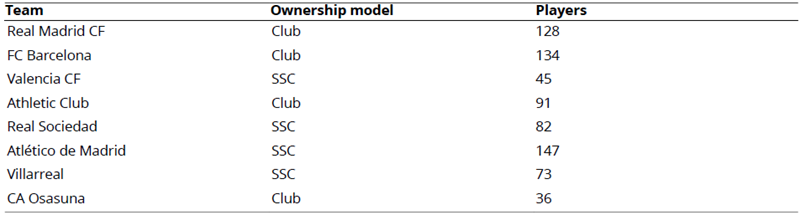
The participants (n = 736) were players from the top eight football academies in Spain (see Table 1) as of January 2024 (2023/24 season). These academies were selected based on the number of academy-trained players competing in major European leagues (Pelayo, 2023). Open-access data on academy players aged U15 to U23 was collected from official team websites and the specialised platform Transfermarkt (2024). Both sources were used to cross-check the data and ensure its accuracy. As is standard in RAE studies (e.g., Bezuglov et al., 2023; Castillo et al., 2019; Doyle & Bottomley, 2019; Gyimesi & Kehl, 2023; Hill & Sotiriadou., 2016; Pérez-González et al., 2023), the only variable used to conduct the analysis was the players’ birth date, namely their day and month of birth.
Sample Segmented by Teams
The RAE was detected through Poisson regression (Doyle & Bottomley, 2018, 2019). The Poisson regression formula y = e (b0 + b1x) serves to explain the frequency count of an event (y) by an explanatory variable x. The data used for Poisson regression were week of birth (WB) whereby the first week in January was designated WB 1, and time period of birth (Tb) describing how far from the beginning of the year a player was born. This last index ranging between 0 and 1 was calculated as Tb = (WB −.5)/52. In the Poisson regression, the event (y) was the frequency of birth in a givenweek, and the explanatory variable (x) was Tb. We also calculated the index of discrimination (ID) according to Doyle and Bottomley (2019) as e-b1. This index measures the relative odds of a player born on day 1 versus day 365 of the competition year being selected. The likelihood ratio D2 was determined according to Cohen et al. (1996). All statistical tests, including descriptive analysis, were performed using the software package R (version 4.3.2). Significance was set at p< .05. The cut-off date for classifying categories is January 1.
Results
Figure 1 shows the frequency of week of birth for all players analysed in the sample. A higher frequency of players born in the first weeks of the year is noted with a lower presence of those born at the end of it. Later we will check that these differences are statistically significant and, therefore, there is a RAE on the sample as a whole (n= 736).
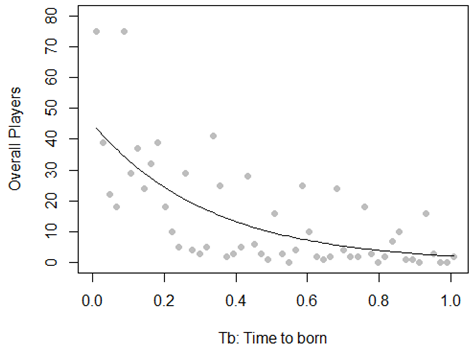
Figure 1
Frequency of Week of Birth (WB) for all Players and Poisson Regression
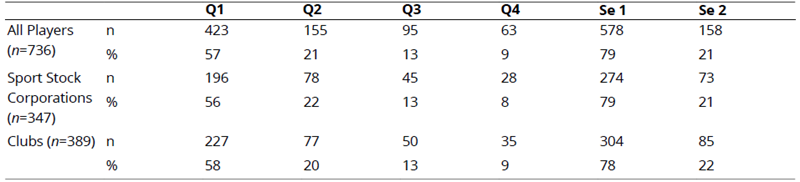
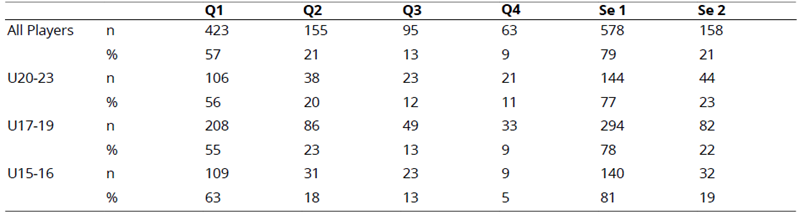
Birth date distributions by quartile (Q) and semester (Se) for the players, are showed by ownership model in Table 2. In addition, the same analysis is performed by age group in Table 3 and by club in Table 4
Birth Date Distributions According to Their Quartile (Q) or Semester (Se) of Birth by Ownership Model
Birth Date Distributions According to Their Quartile (Q) or Semester (Se) of Birth by Ages Ranges
Birth Date Distributions According to Their Quartile (Q) or Semester (Se) of Birth by Club
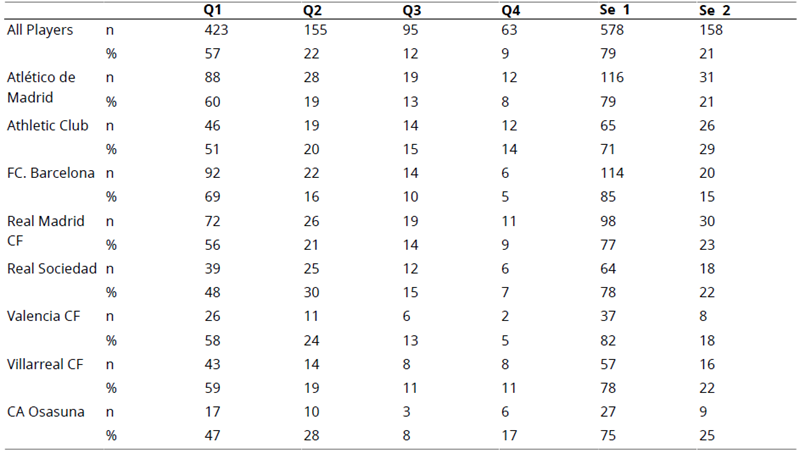
Poisson’s regression analysis showed by ownership model is displayed in Table 5 and Figures 2 and 3, by age group and by club in the appendix (respectively in Tables 6 and 7).
Poisson Regression Analysis of RAE by Frequency for all Youth Players by Ownership Model of Football Club
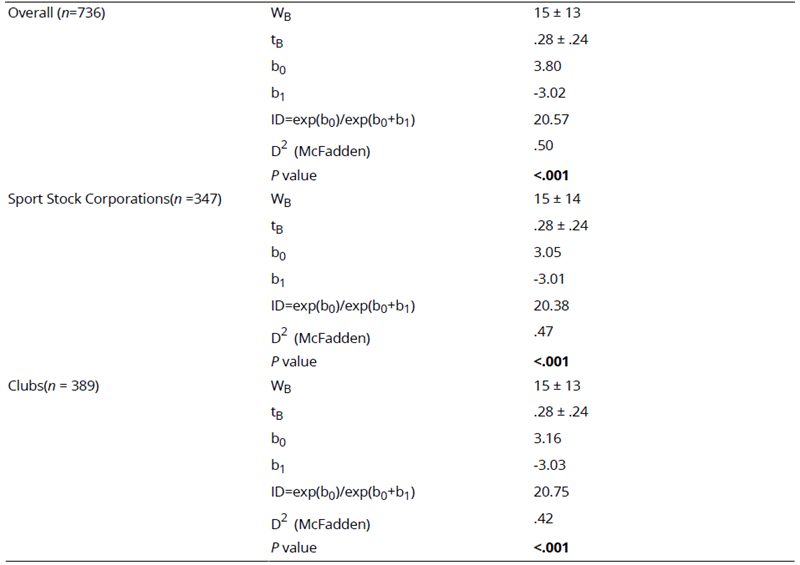
WB: week of birth; tB: time of birth; ID: index of discrimination.
Poisson Regression Analysis of RAE by Frequency for all Youth Players by age Group
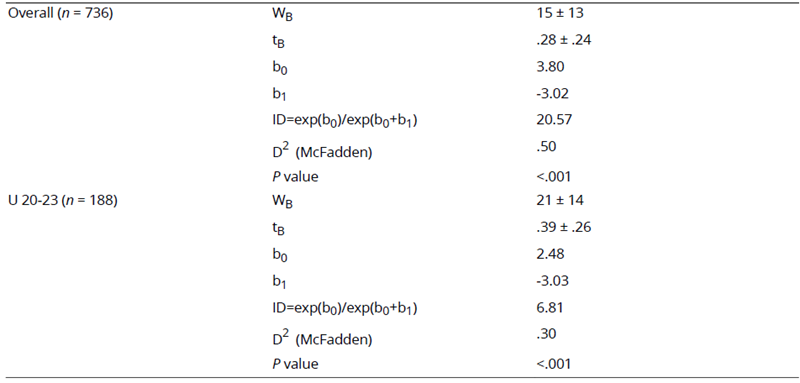
Poisson Regression Analysis of RAE by Frequency for all Youth Players by age Group
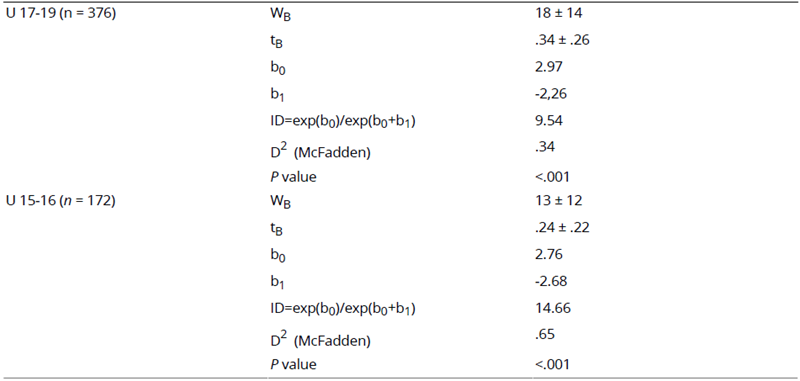
WB: week of birth; tB: time of birth; ID: index of discrimination.
Poisson Regression Analysis of RAE by Frequency for all Youth Players by Team
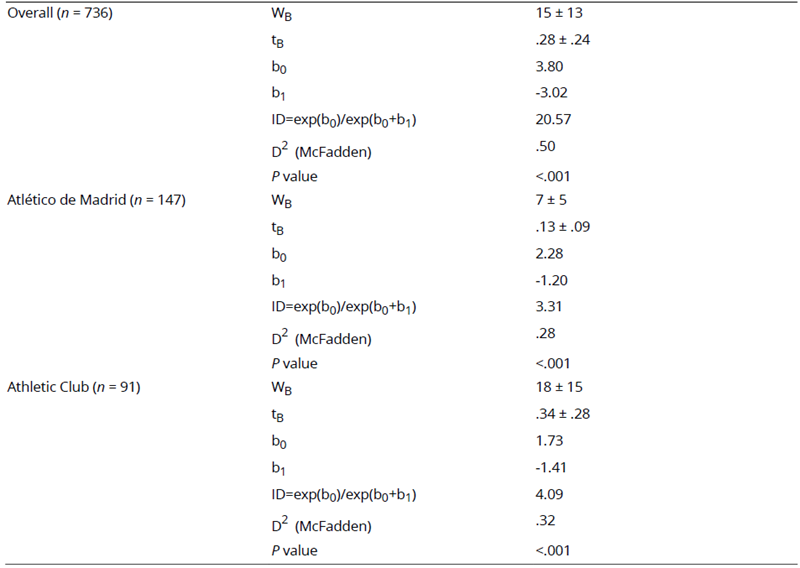
WB: week of birth; tB: time of birth; ID: index of discrimination.
Poisson Regression Analysis of RAE by Frequency for all Youth Players by Team
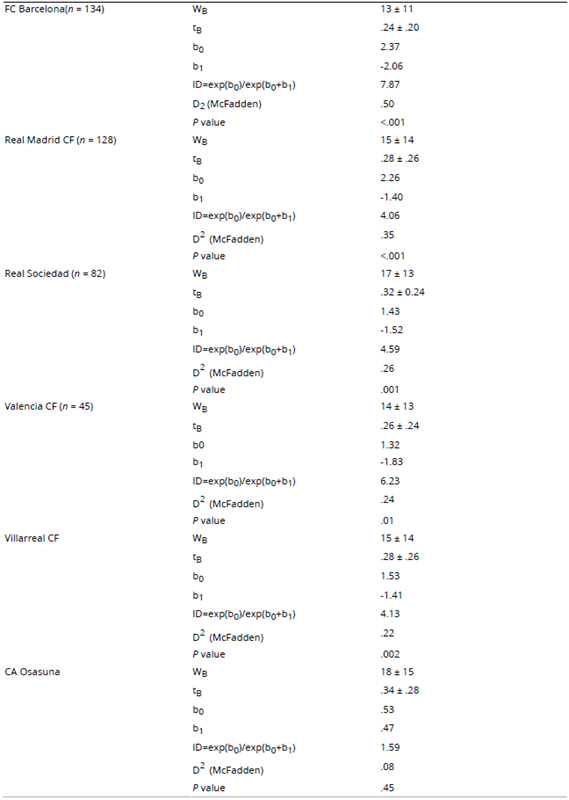
WB: week of birth; tB: time of birth; ID: index of discrimination.
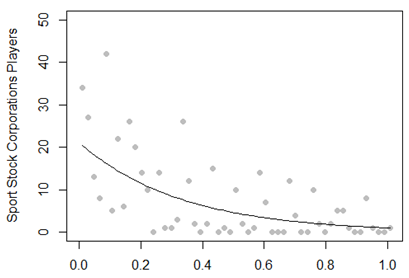
Figure 2
Frequency of Week of Birth (WB) for Sport Stock Corporations and Poisson Regression
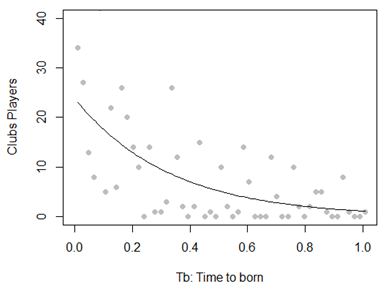
Figure 3
Frequency of Week of Birth (WB) for Clubs and Poisson Regression
To test the robustness of the analysis, we conducted the Poisson regression excluding FC Barcelona and Real Madrid, given their distinct characteristics and potential influence on the outcomes. The results remained consistent (p<.001), reinforcing the reliability of our findings.
In summary, the results show that, given the suggested hypotheses:
-
(H1) “SSCs are not affected by RAE”. The hypothesis is rejected, given that the RAE is significant in SSCs.
-
(H2) “Clubs are affected by RAE”. The hypothesis cannot be rejected, because in the same way that SSCs, the RAE is significant in clubs.
Discussion
Our Poisson regression by frequency analysis revealed the presence of a significant overall RAE in players of the best eight academies in Spain. The results align with previous studies that have identified significant RAE in soccer globally (Pérez-González et al., 2021), across Europe (Bezuglov et al., 2023; Augste & Lasme, 2011; Helsen et al., 2005) and specifically in Spain (Salinero et al., 2013, 2014; Lesma et al., 2011). A sufficient critical mass is essential for RAE to occur, which explains its absence in Spain for sports like padel (Muñoz Moreno et al., 2021) and handball (Gómez-López et al., 2017).
When analysed by ownership model (Table 5), the effect was significant (p<.001) in both clubs and SSCs. These results confirm the findings of Pérez-González et al. (2023), which indicate that only clubs owned by public shareholders remain unaffected by RAE. In lieu of the hypotheses results, both SSCs and clubs are affected by the RAE. Therefore, there is no better governance by shareholders-based models (SSCs) in comparison with non-shareholders models (clubs). More significantly, the results reject Jensen's theory that the "governance problem" stems from the multi-fiduciary stakeholder paradigm.
This is new evidence that the Jensen’s problem of governance (Jensen, 2002) needs to be revisited many more times, given that sport industry (by means of the present paper) along with banking industry shows no superiority of shareholder’s model (Torres-Pruñonosa et al., 2012; San-Jose et al., 2014; 2018; 2020).
These theories presuppose that groups such as clubs, with their diverse membership and intricate management, would be far less successful than SSCs. As Jensen (2002) points out, clubs ought to have disappeared a few years after they were established. Conversely, clubs that have been in existence for almost a century have reached the same difficulties (i.e. RAE) that are on par with SSCs. As a result, football teams are a prime example of a multi-fiduciary governance structure that works well and provide real-world evidence that Jensen's "problem of governance" is overstated.
This highlights the relevance of stakeholder participation as well as the obstacles that arise when they refuse to participate in the decision-making process in a lethargic manner. Consequently, especially in light of the results, defining the governing body effectively, keeping positive relationships with stakeholders, professionalism and commitment to the clubs' interests and managing the sporting and financial aspects are among the important concerns.
The results indicate that neither member-owned nor shareholder-owned sports legal structures counteract the RAE. Focusing solely on one aspect of the win/profit maximisation dilemma—where clubs prioritise winning and SSCs focus on profits—(Garcia-del-Barrio & Szymanski, 2009; Terrien et al., 2017) perpetuates discrimination against players born later in the year. Although clubs operate as stakeholder-governed institutions, their primary objective remains winning, as they prioritise the interests of their members over those of other stakeholders (Pérez-González et al., 2023). Therefore, policymakers should explore hybrid governance models to counteract RAE. Football—and sports institutions more broadly—could reduce this form of age-based discrimination by adopting multi-stakeholder governance structures. Allocating different voting rights to various stakeholder groups, including parents of youth academy players, would help balance diverse interests and mitigate RAE. Given that parents prioritise the athletic and social development of their children over short-term competitive success, granting them a voice in decision-making could promote policies that foster long-term player growth and well-being, rather than those that inadvertently reinforce selection biases based on relative age (Bonal et al., 2020). While implementing such an alternative governance model may be challenging for elite sports institutions, it would be significantly more feasible at lower competition levels, where RAE first emerges and takes root.
Good governance should foster management strategies in sports academies that prioritise the physical and athletic development of young athletes, regardless of their starting skill level (Nuviala & Casajus, 2005). These strategies include revising recruitment and selection policies with a holistic, long-term perspective (Cobley et al., 2009; Brazo-Sayavera et al., 2017; Romann et al., 2018), raising awareness among coaches and managers about the existence of RAE (Arrieta et al., 2016), implementing measures such as bio-banding—grouping athletes based on physical and mental development rather than chronological age (Kelly et al., 2020; Bradley et al., 2019)—and maintaining a fixed quota of players from each quarter of the birth year. Federations must mandate this final policy if football institutions fail to implement it voluntarily; alternatively, restructuring competitions so that young athletes compete based on birth semester rather than calendar year could provide a viable solution.
Moreover, the study again confirms the high incidence of RAE in football academies in Spain (Castillo et al, 2019; Salinero et al., 2013). This latest discovery indicates that RAE requires more studies and reconsideration. A birth distribution that is skewed, disproportionately favouring those born early in the selection year, has been extensively documented across various sports, such as rugby, tennis, baseball and ice hockey, in numerous countries. This phenomenon is prevalent in both youth and senior competitions and persists even at the highest levels (Pérez-González et al.,2020; 2021).
It is important to note that talent is not inherently linked to someone's birth date, yet the talent identification process consistently demonstrates a significant bias toward relative age. This bias is understandable, but what remains puzzling is its persistence (Palacios-Huerta, 2022).
Conclusions
This paper's findings include several noteworthy and intriguing discoveries. We have examined if RAE has an impact on SSCs and clubs. Our investigation leads us to the conclusion that the different RAE levels of football organisations does not depend on the Spanish teams’ belonging to a stakeholder or a shareholder model. There is not any evidence that the football institution model driven by shareholders is more efficient than clubs. Furthermore, it proves that Jensen's (2002) "problem of governance" argument is exaggerated and, at least, one additional example—Spanish football clubs—demonstrates that a stakeholder-based strategy is equally effective as a shareholder-based model (SSCs). Our empirical results, we believe, are important for a stakeholder-based football institution model. Clubs continue to be a system of sport organisation, with a governance body that involves a wide range of stakeholders in the decision-making process. Members of the club include players, coaches, staff and supporters. Their choices are more complicated, maybe as a result of the previously described stakeholder dilemma or the potential for a governance issue (Jensen's "problem of governance"). Though the clubs' management of stakeholders' interests and essential regard for them do not preclude them from being comparatively less efficient than SSCs.
We wish to draw attention to the importance of the stakeholder dilemma, which affects not just aims but also systems that impact results and, in turn, efficiency, even though it was not thoroughly examined in this study. Future studies must, thus, examine the governing bodies of each type of sport institution studied in this paper, including clubs and SSCs.
The limitations of the paper include several aspects that should be considered when interpreting the results. First, the sample is limited to only eight football teams, all located in Spain. This relatively small sample size may limit the generalisability of the findings, especially in the context of other countries with different structures and governance models. Additionally, the study uses cross-sectional data from a single season (2023/24), which restricts the ability to assess long-term trends in the RAE. A longitudinal approach that tracks players over multiple seasons could provide more robust insights.
Nonetheless, the sample of the eight most prominent Spanish academies offers a unique advantage in that it includes an equal representation of two distinct ownership models—four academies from clubs and four from SSCs. This allowed us to directly compare these two types of football organisations within the same context, facilitating the analysis of RAE across different governance structures. Future research could build on these findings by expanding the sample to include additional academies or by considering more diverse international contexts. For example, examining other national European situations where shareholder and stakeholder governance models coexist could provide valuable insights. A comparative analysis of football organisations in European countries with different governance structures would offer a broader perspective. Specifically, future studies might explore shareholder-governed football clubs, given that teams such as Athletic Club, FC Barcelona, and Real Madrid regularly compete in European football championships like the UEFA Champions League. This could enrich the understanding of the relationship between governance models and the RAE across diverse competitive environments.
Overall, as both football teams and SSC are impacted by RAE, demonstrating inefficiency, the implications for managers and policy makers are that should not be converted into SSCs to promote efficiency.
Ethics Committee Statement
Not applicable.
Conflict of Interest Statement
The authors declare no conflicts of interest. The affiliating entities or institutions had no influence on the design of the study, the analysis of the data, or the interpretation of the results.
Funding
This research was funded by the INTERNATIONAL UNIVERSITY OF LA RIOJA, grant number PP-2013-10, and theCallfor Grants for Research Stays Abroad 2022/2023, tocarry out a research stay at the University of Limerick.
Authors' Contribution
ConceptualizationJ.T.-P. & B. P.-G.; Methodology B. P.-G.; Software B. P.-G.; Validation B.P.-G.; Formal Analysis B. P.-G.; InvestigationJ.T.-P., A.F.-L. & B. P.-G.; Resources J. T.-P., A. F.-L. & B. P.-G.; Data Curation B. P.-G.; Writing – Original Draft J. T.-P., P. B., A. F.-L. & B. P.-G.; Writing – Review & Editing J.T.-P., A. F.-L. & B. P.-G.; Visualization J. T.-P., P. B., A. F.-L. & B. P.-G.; Supervision J .T.-P. & B. P.-G.; Project Administration J. T.-P., A. F.-L. & B .P.-G.; Funding Acquisition J. T.-P. All authors have read and agreed to the published version of the manuscript.
Data Availability Statement
Data available uponrequest from the corresponding author: jose.torresprunonosa@unir.net
References
Andronikos, G., Elumaro, A. I., Westbury, T., & Martindale, R. J. J. (2016). Relative age effect: Implications for effective practice. Journal of Sports Sciences, 34(12), 1124–1131. https://doi.org/10.1080/02640414.2015.1093647
Arrieta, H., Torres-Unda, J., Gil, S. M., &Irazusta, J. (2016). Relative age effect and performance in the U16, U18 and U20 European basketball championships. Journal of Sports Sciences, 34(16), 1530-1534. https://doi.org/10.1080/02640414.2015.1122204
Augste, C., & Lames, M. (2011). The relative age effect and success in German elite U-17 soccer teams. Journal of Sports Sciences, 29(9), 983-987. https://doi.org/10.1080/02640414.2011.574719
Bai, J. (Jianqiu), Ma, L., Mullally, K. A., & Solomon, D. H. (2019). What a difference a (birth) month makes: The relative age effect and fund manager performance. Journal of Financial Economics, 132(1), 200–221. https://doi.org/10.1016/j.jfineco.2018.10.003
Besoccer. (2020). Barça, Madrid, Athletic y Osasuna, sin riesgo de convertirse en SAD. https://es.besoccer.com/noticia/barca-madrid-athletic-y-osasuna-sin-riesgo-de-convertirse-en-sad-825925
Bezuglov, E., Morgans, R., Butovskiy, M., Emanov, A., Shagiakhmetova, L., Pirmakhanov, B., Waśkiewicz, Z., & Lazarev, A. (2023). The relative age effect is widespread among European adult professional soccer players but does not affect their market value. PLOS ONE, 18(3), e0283390. https://doi.org/10.1371/journal.pone.0283390
Boatright, J. (2008). Ethics in Finance (1st edition 1999 ed.). Blackwell.
Bonal, J., León-Quismondo, J., Burillo, P., Pérez-González, B., & Fernández-Luna, Á. (2020). Non-professional sport academies in Spain: The parents' perspective. International Journal of Sport Management and Marketing, 20(5-6), 428-444. https://doi.org/10.1504/IJSMM.2020.115127
Bradley, B., Johnson, D., Hill, M., McGee, D., Kana-ah, A., Sharpin, C., Sharp, P., Kelley, A., Cumming, S. P., & Malina, R. M. (2019). Bio-banding in academy football: Player’s perceptions of a maturity matched tournament. Annals of Human Biology, 46(5), 400-408. https://doi.org/10.1080/03014460.2019.1640284
Brazo-Sayavera, J., Martínez-Valencia, M. A., Müller, L., Andronikos, G., & Martindale, R. J. J. (2017). Identifying talented track and field athletes: The impact of relative age effect on selection to the Spanish National Athletics Federation training camps. Journal of Sports Sciences, 35(22), 2172-2178. https://doi.org/10.1080/02640414.2016.1260151
Broughton, T., Langley, K., Tilling, K., & Collishaw, S. (2023). Relative age in the school year and risk of mental health problems in childhood, adolescence and young adulthood. Journal of Child Psychology and Psychiatry, 64(1), 185–196. https://doi.org/10.1111/jcpp.13684
Brustio, P. R., Cobley, S., Abbott, S., La Torre, A., Moisè, P., Rainoldi, A., & Boccia, G. (2022). Corrective adjustment procedures as a strategy to remove relative age effects: Validation across male and female age-group long jumping. Journal of Science and Medicine in Sport, 25(8), 678–683. https://doi.org/10.1016/j.jsams.2022.04.007
Bundesliga (2023). Explaining the Bundesliga's 50+1 Rule. https://www.bundesliga.com/en/bundesliga/news/50-1-fifty-plus-one-german-football-soccer-rule-explained-ownership-22832
Caldwell-Harris, C. L., & MacWhinney, B. (2023). Age effects in second language acquisition: Expanding the emergentist account. Brain and Language, 241, 105269. https://doi.org/10.1016/j.bandl.2023.105269
Castillo, D., Pérez-González, B., Raya-González, J., Fernández-Luna, Á., Burillo, P., & Lago-Rodríguez, Á. (2019). Selection and promotion processes are not associated by the relative age effect in an elite Spanish soccer academy. PLoS ONE, 14(7), e0219945. https://doi.org/10.1371/journal.pone.0219945
Cobley, S., Baker, J., Wattie, N., & McKenna, J. (2009). Annual age-grouping and athlete development. Sports Medicine, 39(3), 235-256. https://doi.org/10.2165/00007256-200939030-00005
Cohen, A. S., Kim, S. H., & Wollack, J. A. (1996). An investigation of the likelihood ratio test for detection of differential item functioning. Applied Psychological Measurement, 20(1), 15-26. https://doi.org/10.1177/014662169602000102
De Larochelambert, Q., Difernand, A., Antero, J., Sedeaud, A., Toussaint, J.-F., Pierre Yves, L., & Coulmy, N. (2022). Relative age effect in French alpine skiing: Problem and solution. Journal of Sports Sciences, 40(10), 1137–1148. https://doi.org/10.1080/02640414.2022.2052428
Doyle, J. R., & Bottomley, P. A. (2018). Relative age effect in elite soccer: More early-born players, but no better valued, and no paragon clubs or countries. PLoS ONE, 13(2), e0192209. https://doi.org/10.1371/journal.pone.0192209
Doyle, J. R., & Bottomley, P. A. (2019). The relative age effect in European elite soccer: A practical guide to poisson regression modelling. PLoS ONE, 14(4), e0213988. https://doi.org/10.1371/journal.pone.0213988
Folgado, H., Bravo, J., Quintas, A., Raimundo, A., & Gonçalves, B. (2021). Relative age effect in physical fitness of south Portugal students between 10 and 18 years old. International Journal of Environmental Research and Public Health, 18(11), 6092. https://doi.org/10.3390/ijerph18116092
García, B., & Llopis-Goig, R. (2021). Supporters’ attitudes towards European football governance: Structural dimensions and sociodemographic patterns. Soccer & Society, 22(4), 372-387. https://doi.org/10.1080/14660970.2020.1790356
García, B., & Welford, J. (2015). Supporters and football governance, from customers to stakeholders: A literature review and agenda for research. Sport Management Review, 18(4), 517-528. https://doi.org/10.1016/j.smr.2015.08.006
Garcia-del-Barrio, P., & Szymanski, S. (2009). Goal! Profit maximization versus win maximization in soccer. Review of Industrial Organization, 34, 45–68. https://doi.org/10.1007/s11151-009-9203-6
Gibbs, B. G., Jarvis, J. A., & Dufur, M. J. (2012). The rise of the underdog? The Relative age effect reversal among Canadian-born nhl hockey players: A reply to Nolan and Howell. International Review for the Sociology of Sport, 47(5), 644–649. https://doi.org/10.1177/1012690211414343
Gómez-López, M., Granero-Gallegos, A., Cordo Cabal, L., & Ruiz Sánchez, V. (2017). Efecto de la edad relativa en jugadores adolescentes de balonmano. Apunts. Educación Física y Deportes, 130, 73-83. https://doi.org/10.5672/apunts.2014-0983.es.(2017/4).130.06
Goodpaster, K. (1991). Business ethic and stakeholder analysis. Business Ethics Quarterly, 1(1), 53-73. https://doi.org/10.2307/3857592
Gyimesi, A., & Kehl, D. (2023). Relative age effect on the market value of elite European football players: Abalanced sample approach. European Sport Management Quarterly, 23(2), 544–560. https://doi.org/10.1080/16184742.2021.1894206
Herm, S., Callsen-Bracker, H.-M., & Kreis, H. (2014). When the crowd evaluates soccer players’ market values: Accuracy and evaluation attributes of an online community. Sport Management Review, 17(4), 484–492. https://doi.org/10.1016/j.smr.2013.12.006
Helsen, W. F., Van Winckel, J., & Williams, A. M. (2005). The relative age effect in youth soccer across Europe. Journal of Sports Sciences, 23(6), 629-636. https://doi.org/10.1080/02640410400021310
Hernández-Beltrán, V., Gamonales, J. M., Espada, M. C., & Escudero-Tena, A. (2023). Analysis of the evolution of the number of federation licenses in Spain (2009-2021). Cultura, Ciencia y Deporte, 18(57), 173-196. https://doi.org/10.12800/ccd.v18i57.2041
Hill, B., & Sotiriadou, P. (2016). Coach decision-making and the relative age effect on talent selection in football. European Sport Management Quarterly, 16(3), 292–315. https://doi.org/10.1080/16184742.2015.1131730
Jackson, R. C., & Comber, G. (2020). Hill on a mountaintop: A longitudinal and cross-sectional analysis of the relative age effect in competitive youth football. Journal of Sports Sciences, 38(11–12), 1352–1358. https://doi.org/10.1080/02640414.2019.1706830
Jakobsson, J., Julin, A. L., Persson, G., & Malm, C. (2021). Darwinian selection discriminates young athletes: Therelative age effect in relation to sporting performance. Sports Medicine - Open, 7(1), 16. https://doi.org/10.1186/s40798-021-00300-2
Jensen, M. (2002). Value maximization, stakeholder theory, and the corporate objective function. Business Ethics Quarterly, 12(2), 235-256. https://doi.org/10.2307/3857812
Kelly, A. L., Côté, J., Jeffreys, M., & Turnnidge, J. (2021). Birth advantages and relative age effects in sport. Routledge. https://doi.org/10.4324/9781003163572
Kelly, A., Jackson, D., Taylor, J., Jeffreys, M., & Turnnidge, J. (2020). “Birthday-banding” as a strategy to moderate the relative age effect: A case study into the England squash talent pathway. Frontiers in Sports and Active Living, 2. https://doi.org/10.3389/fspor.2020.573890
Lemoyne, J., Huard Pelletier, V., Trudeau, F., & Grondin, S. (2021). Relative Age Effect in Canadian Hockey: Prevalence, Perceived Competence and Performance. Frontiers in Sports and Active Living, 3. https://doi.org/10.3389/fspor.2021.622590
Lesma, M. L., Pérez González, B., & Salinero, J. J. (2011). El efecto de la edad relativa (RAE) en la liga de fútbol española. Journal of Sport and Health Research, 3(1), 35-46.
Ley 10/1990, de 15 de octubre, del Deporte, Boletín Oficial del Estado, 249 (17 de octubre 1990). https://www.boe.es/eli/es/l/1990/10/15/10
Malina, R. M., Cumming, S. P., Rogol, A. D., Coelho-e-Silva, M. J., Figueiredo, A. J., Konarski, J. M., & Kozieł, S. M. (2019). Bio-banding in youth sports: Background, concept, and application. Sports Medicine, 49(11), 1671–1685. https://doi.org/10.1007/s40279-019-01166-x
Morganti, G., Kelly, A. L., Apollaro, G., Pantanella, L., Esposito, M., Grossi, A., & Ruscello, B. (2023). Relative age effects and the youth-to-senior transition in Italian soccer: The underdog hypothesis versus knock-on effects of relative age. Science and Medicine in Football, 7(4), 406–412. https://doi.org/10.1080/24733938.2022.2125170
Müller, O., Simons, A., & Weinmann, M. (2017). Beyond crowd judgments: Data-driven estimation of market value in association football. European Journal of Operational Research, 263(2), 611–624. https://doi.org/10.1016/j.ejor.2017.05.005
Muñoz Moreno, A., Serrano Gonzalez, C., Quintana-García, I., & Granado Peinado, M. (2021). Efecto relativo de la edad en el circuito profesional de Pádel. Retos. NuevasTendenciasenEducaciónFísica, Deporte y Recreación, 41, 519–523. https://doi.org/10.47197/retos.v0i41.76857
Nuviala, A. N., & Casajus, J. A. (2005). Quality perceived of sports service in school age from the parents's perspective. The case of Huelva province. International Journal of Medicine and Science of Physical Activity and Sport, 5(17), 1-12. http://cdeporte.rediris.es/revista/revista17/artcalidad1.pdf
Palacios-Huerta, I. (2022, October, 24). Next generation 2022: Why scouts select players based on ‘the relative age effect’. The Guardian. https://www.theguardian.com/football/blog/2022/oct/24/next-generation-2022-why-scouts-select-players-based-on-the-relative-age-effect
Peeters, T. (2018). Testing the wisdom of crowds in the field: Transfermarktvaluations and international soccer results. International Journal of Forecasting, 34(1), 17–29. https://doi.org/10.1016/j.ijforecast.2017.08.002
Pelayo, Á. (2023, 29 de octubre). Las 10 mejores canteras de la liga. 90 min. https://www.90min.com/es/posts/las-10-mejores-canteras-de-la-liga
Pérez-González, B., Cardona-Soriano, P., & Torres Pruñonosa, J. (2023). A relative age effect (RAE) analysis of top European football clubs segmented by ownership models. Cogent Business & Management, 10(3), 2275377. https://doi.org/10.1080/23311975.2023.2275377
Pérez-González, B., Fernández-Luna, A., Castillo, D., & Burillo, P. (2020). Are european soccer players worth more if they are born early in the year? Relative age effect on player market value. International Journal of Environmental Research and Public Health, 17(9), 3301. https://doi.org/10.3390/ijerph17093301
Pérez-González, B., León-Quismondo, J., Bonal, J., Burillo, P., & Fernández-Luna, Á. (2021). The new generation of professional soccer talent is born under the bias of the RAE: Relative age effect in international male youth soccer championships. Children, 8(12), 1117. https://doi.org/10.3390/children8121117
Romann, M., Rössler, R., Javet, M., & Faude, O. (2018). Relative Age Effects in Swiss talent development – a nationwide analysis of all sports. Journal of Sports Sciences, 36(17), 2025-2031. https://doi.org/10.1080/02640414.2018.1432964
Salinero Martín, J. J., Pérez González, B., Burillo Naranjo, P., & Lesma, M. L. (2013). El efecto de la edad relativa en el fútbol español. Apunts: Educación Física y Deportes, 114(4), 53-57. http://dx.doi.org/10.5672/apunts.2014-0983.es.(2013/4).114.05
Salinero Martín, J. J., Pérez González, B., Burillo Naranjo, P., Lesma, M. L., & Herrero González, H. (2014). El efecto de la edad relativa en el fútbol profesional español. Revista Internacional de Medicina y Ciencias de la Actividad Física y el Deporte, 14(56), 591-601. https://recyt.fecyt.es/index.php/JSHR/issue/view/4179/774
San-Jose, L., Retolaza, J. L., & Torres-Pruñonosa, J. (2014). Efficiency in Spanish banking: A multistakeholder approach analysis. Journal of International Financial Markets, Institutions and Money, 32, 240-255. https://doi.org/10.1016/j.intfin.2014.06.005
San-Jose, L., Retolaza, J. L., & Torres-Pruñonosa, J. (2020). Eficiencia social en las cajas de ahorro españolas transformadas en bancos. El Trimestre Económico, 87(347), 759-787. https://doi.org/10.20430/ete.v87i347.882
San-Jose, L., Retolaza, J., & Lamarque, E. (2018). The social efficiency for sustainability: European cooperative banking analysis. Sustainability, 10(9), 3271. https://doi.org/10.3390/su10093271
Schorer, J., Cobley, S., Büsch, D., Bräutigam, H., & Baker, J. (2009). Influences of competition level, gender, player nationality, career stage and playing position on relative age effects. Scandinavian Journal of Medicine & Science in Sports, 19(5), 720–730. https://doi.org/10.1111/j.1600-0838.2008.00838.x
Senaux, B. (2008). A stakeholder approach to football club governance. International Journal of Sport Management and Marketing, 4(1), 4-17. https://www.researchgate.net/profile/Benoit-Senaux/publication/247834609_A_stakeholder_approach_to_football_club_governance/links/5a85f0b2458515b8af89030a/A-stakeholder-approach-to-football-club-governance.pdf
Stephen Cobley, C. A., & Baker, J. (2008). Relative age effects on physical education attainment and school sport representation. Physical Education and Sport Pedagogy, 13(3), 267–276. https://doi.org/10.1080/17408980701711983
Terrien, M., Scelles, N., Morrow, S., Maltese, L., Durand, C. (2017). The win/profit maximization debate: Strategic adaptation as the answer? Sport, Business and Management: An International Journal, 7(2), 121–140. https://doi.org/10.1108/SBM-10-2016-0064
Torres-Pruñonosa, J., Retolaza, J. L., & San-Jose, L. (2012). Gobernanza multifiduciaria de stakeholders: Análisis comparado de la eficiencia de bancos y cajas de ahorros. Revesco. Revista de Estudios Cooperativos, 108, 152-172. https://doi.org/10.5209/rev_REVE.2012.v18.39591
Transfermarkt. (2024). Transfermarkt. https://www.transfermarkt.es/
Wong, I. C. K. (2023). Relative age and persistence of ADHD diagnosis in young children. The Lancet Psychiatry, 10(12), 910–911. https://doi.org/10.1016/S2215-0366(23)00334-6
Author notes
Autor para la correspondencia: Jose Torres-Pruñonosa, jose.torresprunonosa@unir.net
Additional information
Título Abreviado: Jensen’s Problem of Governance Revisited and RAE’s Spanish Football
How to cite this article: orres-Pruñonosa, J., Burillo, P., Fernández-Luna, A., Pérez-González, B. (2025). Jensen’s Problem of Governance Revisited by the Relative age Effect on Spanish Football. Cultura, Ciencia y Deporte, 20(66), 2334. https://doi.org/10.12800/ccd.v20i66.2334


