
ANALYSIS OF THE EMOTIONAL IMPACT OF GAMIFICATION IN THE TEACHER TRAINING MASTER’S PROGRAM
ANÁLISIS DEL IMPACTO EMOCIONAL DE LA GAMIFICACIÓN EN EL MÁSTER DE FORMACIÓN DEL PROFESORADO


Carmen Navarro-Mateos, Isaac J. Pérez-López, Enrique Rivera-García
ANALYSIS OF THE EMOTIONAL IMPACT OF GAMIFICATION IN THE TEACHER TRAINING MASTER’S PROGRAM
Cultura, Ciencia y Deporte, vol. 20, no. 65, 2025, 10.12800/ccd.v20i65.2400
Universidad Católica San Antonio de Murcia
Carmen Navarro-Mateos a
University of Granada, España
Isaac J. Pérez-López
University of Granada, España
Enrique Rivera-García
University of Granada, España
Received: 12 january 2025
Accepted: 05 may 2025
Abstract: The objective of this study is to analyze the emotional impact of gamification on postgraduate students’ training, specifically in the Master's in Secondary Education Teaching. The core of the proposal is inspired by the famous cooking competition MasterChef, due to its significance and the multiple parallels between the culinary world and teaching. A qualitative methodology was used to assess the emotional impact on the 29 participants in the study, based on the collection and analysis of micronarratives submitted anonymously through a Google Forms throughout the intervention. The main findings of the research reveal the factors influencing emotional regulation (competence, frustration, pride, etc.) within the framework of the proposed gamification, providing key insights to facilitate the learning of emotional management. Competition, elimination challenges, and second chances were key elements in their training process. The proposal allowed participants to learn how to manage emotions under pressure, which was linked to their future professional development.
Keywords: Gamification, university, emotions, learning.
Resumen: El objetivo de este estudio es analizar el impacto emocional que la gamificación tiene en la formación del alumnado de posgrado, en concreto, en el Máster de Profesorado de Secundaria. El eje de la propuesta se inspira en el famoso concurso de cocina MasterChef, debido a su significatividad y a los múltiples paralelismos existentes entre el mundo culinario y el docente. Se empleó una metodología cualitativa para evaluar el impacto emocional de las 29 personas que participaron en la propuesta, partiendo de la recopilación y análisis de micronarrativas realizadas a lo largo del desarrollo de la intervención, recogidas de manera anónima a través de un formulario de Google Forms. Los principales resultados de la investigación revelan los factores que inciden en la gestión emocional (competencia, frustración, orgullo, etc.) dentro del marco de la gamificación propuesta, proporcionando las claves para facilitar el aprendizaje de la regulación emocional. La competición, las pruebas de eliminación y las segundas oportunidades fueron elementos clave en su proceso formativo. La propuesta permitió al alumnado participante aprender a gestionar emociones bajo presión, lo cual se vinculó a su desarrollo profesional futuro.
Palabras clave: Gamificación, universidad, emociones, aprendizaje.
Introduction
In today’s society, academic intelligence alone does not guarantee professional success. Instead, the most successful career development tends to be associated with individuals who understand and effectively manage their own emotions, as well as those of the teams they work with (Chernyshenko et al., 2018; Kim et al., 2018). This concept is known as emotional regulation, and it essentially refers to the ability to adjust one’s behavior in alignment with specific goals in order to adapt to circumstances and promote both personal and collective well-being (Eisenberg & Spinrad, 2004; Robinson, 2014). Emotional regulation is closely linked to emotional intelligence (Goleman, 1995), which contributes to understanding the role of emotions and developing strategies to comprehend and control them. In order to grasp the phenomenon of emotional regulation, it is essential to define the concept of emotion—an inherently complex task due to the wide range of perspectives from which it has been studied (Gómez & Calleja, 2016). Emotions have a biological dimension, as they are physical, biochemical, and neurophysiological processes that emerge abruptly and are accompanied by physical manifestations (Fernández-Poncela, 2011; Filliozat, 2007). According to Gross (1999), emotions direct attention to key aspects of the environment, guide decision-making, and prepare behavioral responses. Feelings, on the other hand, arise in accordance with an individual’s interpretation of the world and constitute the mental expression of emotions (Toledo-Orbeta & Bonhomme, 2019).
Interest in social and emotional skills has a long history in both psychology and education (Kautz et al., 2014). The analysis of emotional processes in learning has focused more on early childhood and primary education than on higher education, making it necessary to promote a pedagogy of emotion at the university level (Kahu et al., 2015; Walker & Palacios, 2016). In educational settings, emotions have often been overlooked in the design of methodological strategies, typically being regarded as secondary or even opposed to rationality (Ibáñez, 2002). However, incorporating emotions into the learning process contributes to the development of key competencies such as empathy, teamwork, communication skills, and critical thinking (O’Toole & O’Flaherty, 2022). In fact, emotions are deeply embedded in classroom relationships, as they relate to the willingness to act with sensitivity and responsibility, the capacity to be emotionally present, and the development of emotional management in students (Aspelin, 2019; Hendrie & Bastacini, 2019).
One of the current challenges in higher education is to train students to self-regulate their learning process (Panadero, 2017). This involves developing the necessary skills to activate, sustain, and regulate thoughts, emotions, motivations, and behaviors aimed at achieving learning objectives (Alonso-Tapia et al., 2020). Several studies suggest that equipping postgraduate teacher trainees with social and emotional competencies has highly positive effects, as it provides them with both knowledge and confidence to face real-world teaching interventions (Corcoran & O’Flaherty, 2022; Jennings et al., 2011). In real educational contexts, a teacher’s ability to build relationships with students plays a crucial role in the learning process (Aspelin, 2019), significantly influencing students’ academic, social, and emotional development (Fitzgerald et al., 2022; Wubbels et al., 2012). While cognition is undeniably important in academic performance, empirical evidence shows that it is not sufficient on its own, and that emotional competencies have a substantial impact on both academic achievement and social development (Amutio et al., 2020; Suberviola-Ovejas, 2011).
In this regard, the development of pedagogical models, strategies, and methodologies that foster meaningful and experiential learning environments becomes an ideal context for addressing the competencies demanded by today’s society (Gleason-Rodríguez & Rubio, 2020; Jiménez-Hernández et al., 2020). Gamification is particularly relevant in this context, as it is based on the meaningfulness inherent to games and facilitates students’ emotional development by allowing them to confront reality within a safe framework (Alcalá del Olmo et al., 2020). Gamification has gained considerable traction in recent years, as evidence of its potential continues to grow (Mora-González et al., 2022; Pérez-López, 2021). However, in postgraduate education, there are fewer initiatives—compared to secondary or undergraduate levels—that demonstrate the potential of gamification to foster the development of various competencies (Navarro-Mateos & Pérez-López, 2024).
Regarding the concept of gamification, Pérez-López (2020) defines it as:
“Captivating students and immersing them in an adventure that enables them to achieve an educational goal that goes beyond the experience itself, driven by a compelling purpose in which the challenges and resources provided by the instructor (a guide rather than the protagonist) are coherently integrated into the constructed narrative (p. 39)”.
This definition highlights the importance of the emotional component in this type of educational approach. In order to “captivate” students, it is necessary to positively predispose them toward the activity, with curiosity serving as a fundamental element (Pérez-López, 2021). In this vein, several authors have emphasized the role of curiosity in enhancing learning (Kidd & Hadden, 2015; Mora, 2017). From a cognitive perspective, the brain seeks novelty—stimuli that stand out from the ordinary—making it essential to design emotionally engaging learning experiences in higher education for meaningful learning to occur (Domínguez-Márquez, 2019; Logatt, 2016). Moreover, within the framework of the “10-40 Model” (Pérez-López & Navarro-Mateos, 2023), which outlines key components for any gamified educational proposal, two elements are directly tied to the emotional dimension: the compelling purpose (the narrative should feature a goal that captures students’ interest and drives them to action) and actions and emotions (identifying key actions within the thematic universe of the gamification proposal, linking them to the emotions they evoke, and designing challenges and missions to generate them).
Considering the above, the objective of this article is to assess the emotional impact of a gamification proposal inspired by the television show MasterChef, implemented in a Master’s Degree Program in Teacher Training. To this end, we first describe the various triggers included in the experience, based on the “10-40 Model” (Pérez-López & Navarro-Mateos, 2023), along with their emotional consequences. We then analyze students’ perceptions based on the narratives they shared throughout the experience.
Origin of the Proposal
MasterchEF is a gamification-based educational proposal in which active methodologies play a central role. Its starting point is grounded in the widespread appeal of the talent show MasterChef among students, identified through the results of a preliminary survey in which they were asked about their preferences and interests regarding popular television shows.
With the aim of enhancing the emotional impact of the proposal, several motivational triggers were incorporated, as outlined by Pérez-López and Navarro-Mateos (2023), to increase student motivation and engagement:
-
Competition: individual or group challenges in which participants compete to obtain a specific advantage.
-
Random events: unexpected occurrences that force students to change their strategy at a given moment.
-
Time investment: the more time students dedicate to a challenge, the more value they attribute to it.
-
Time pressure: having a limited amount of time to complete a specific task or challenge.
-
Privileges: benefits granted to certain students, allowing them to access something exclusively or avoid obstacles that make the next challenge more difficult.
-
Lives: extra chances that allow students to repeat a challenge or re-enter the proposed narrative.
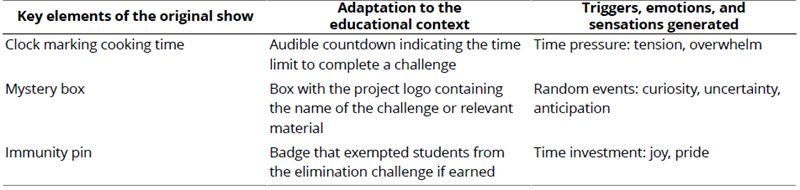
Additionally, to increase the credibility of the experience and promote students’ immersion in the proposal, various iconic elements from the original show were included—those that hold the greatest emotional resonance (Table 1).
Key Elements of the Television Program and Their Impact on Participants
Materials and Methods
The evaluation of the proposal was framed within the interpretive paradigm (Flick, 2004), with the aim of understanding the complexity of the studied reality from a humanistic perspective (Domínguez-Fernández et al., 1997), emphasizing the lived experience of each participant throughout the proposal. The study followed the guidelines for design, analysis, and interpretation outlined by Denzin and Lincoln (2012), based on inductive analysis, characterized by a flexible design that allows for adjustments during the research process (Schenke & Pérez, 2018), ultimately leading to a deductive reflection intended to answer the research questions posed.
Contextualization and Research Objective
The intervention was carried out in the course “Learning and Teaching of Physical Education,” part of the Master's Degree in Secondary Education, Vocational Training, and Language Teaching (specializing in Physical Education) at the University of Granada (Spain). This course has a workload of 12 credits (ninety classroom hours and two hundred and ten hours of autonomous work). The main objectives or learning outcomes of this course are as follows:
-
To understand and analyze curricular elements, establishing correspondences between them and assessing their suitability.
-
To understand and apply basic concepts of Physical Education didactics in order to perform a comprehensive analysis of teaching and learning processes.
-
To plan school Physical Education from a critical perspective, evaluating its appropriateness and making coherent modifications aligned with educational goals.
-
To acquire teaching competencies for the effective development of their future professional practice.
The MasterChef-inspired proposal was implemented in Group 3 of the course, with a total of 29 students (4 women and 25 men), with an average age of 24.3 ± 2.9 years.
The purpose of this research was to examine the emotional impact of a gamification proposal based on the MasterChef contest, aimed at increasing motivation toward learning among students enrolled in the Master's Degree in Teacher Training.
Data Collection and Analysis Technique
The dataset for this research was collected through the use of micronarratives (Biglia & Bonet-Martí, 2009). The purpose was to gain a deep understanding of the significance and depth of the teaching-learning process (Bolívar et al., 2001). Students anonymously submitted these micronarratives via a Google Forms questionnaire, in which they were asked to create a micronarrative for each class session that provided a reflective analysis of the “program” (class). The questionnaire consisted of a single open-ended question, allowing students full freedom to express the emotions they felt, while encouraging them to ground their analysis in reasoned arguments about the opinions, emotions, and feelings expressed. The instruction accompanying the open-ended question was:
“Deconstructing my experiences in MasterchEF. Reflect on what happened in today’s program, analyzing the different moments, challenges, questions posed by the chEFs, etc., that you consider worthy of a Michelin Star due to their significance. Grab your juicer and try to extract all the substance possible from each of your memories (whether positive or not), describing the emotions and lessons they have generated. Avoid ‘fast food’ reflections that remain mere anecdotes analyzed superficially. Try to go beyond what the aspiring cook you were before starting this culinary learning experience would do, and deeply describe, analyze, and reflect (slow-cooked, the more the better). This way, you will not only root the memory more firmly but also the learning derived from it, becoming even more aware of everything experienced. It would be great if you numbered each of your REM (Michelin Star Memories) moments and left a space between them. Action without reflection, at best, is mere entertainment.”
Results and Discussion
The analysis was conducted on a total corpus of 265 micro-narratives and followed a thematic and categorical approach (Mieles et al., 2012). The aim was to make visible the various emotions and sensations experienced by the students who participated in the gamification proposal. The process began with an examination of initial word frequency, which allowed for the identification of core categories and their related subcategories based on the students’ narratives. In some instances, emotions were not mentioned explicitly, but could be inferred through the analysis and reflections provided, consistent with previous research focused on emotions in educational settings (Toledo-Orbeta & Bonhomme, 2019).
Categories were considered central when they emerged with high frequency and relevance within the corpus of micro-narratives. Notable examples included “Learning,” “Teaching Role,” “Motivation,” “Emotions,” and “Critical Awareness” (Figure 1). To analyze the emotional impact of the proposal, special attention was given to the central category “9. Emotions.” An inductive analysis was conducted using NVivo qualitative software to identify key categories, followed by a categorical analysis to define the subcategories associated with each.
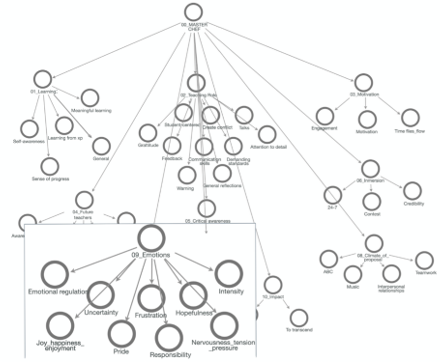
Figure 1
General map of the Project
Subsequently, supported by the construction of contingency matrices using the software, we proceeded to a deductive analysis aimed at answering the main micro-questions that emerged and were recorded in the research team’s memos.
The starting point of this analysis is a "nutritional plate," representing a hierarchical map that allows for the comparison of the subcategories comprising the central category of "Emotions," based on the number of references associated with each (Figure 2).
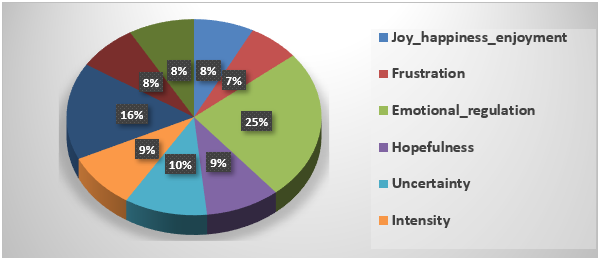
Figure 2
Hierarchical map of the Subcategories Comprising the Central Category “Emotions”
As can be seen, there is a wide range of emotions and feelings, including in their narratives comments related to emotional regulation and the intensity of the emotions experienced. The students shared in their testimonies how the teacher created different situations that required them to regulate and manage a variety of emotions, becoming aware of the importance of this competence in their future roles as educators. After first analyzing the emotional regulation prompted by the proposal, the discussion will then address two main questions—closely related to this aspect—that arise from the participants’ narratives.
Chef´s Specialty: Emotional Regulation
When we talk about emotional regulation and management, we refer to the process through which individuals identify, modify, and express their emotions. A key variable in this process is the ability to mentally reframe a challenging situation in order to reduce its emotional impact (García-Garnica et al., 2022). After completing the coding matrix, it became clear that “Emotional Regulation” was directly linked to other subcategories such as “Frustration,” “Intensity,” and “Nervousness/Tension/Pressure” (Figure 3).
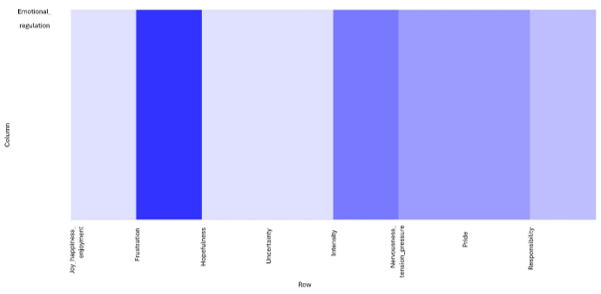
Figure 3
Heat map Showing the Relationship Between Emotional Regulation and the Other Subcategories Within the Central Category “Emotions”
Why is it called the “Chef’s Specialty”? This designation arises from the numerous testimonies focusing on the teacher’s ability to identify areas for improvement that the students themselves were unable to recognize. Initially, this generated frustration among the students, but thanks to the awareness-raising work around developing critical consciousness and the importance of proper emotional regulation in such situations, they eventually became able to appreciate all the learning that this process offered them. A clear example of this is the testimony of Carlos:
“…although it may sound somewhat contradictory, I love being able to recognize how a session that, at first, seemed awesome to us, later turns out to have several gaps in planning, content, and organization. I admit that at the beginning it can be frustrating to see how someone dismantles all your work. You even end up resorting to the easy way out, getting angry at them instead of yourself, blinded by a lack of self-criticism that prevents you from recognizing the true reality and value of their work (Testimony 129)”.
Another example of the teacher’s capacity can be seen in Fran’s testimony, who acknowledges that “we are not used to criticism, and it is probably a failure of the educational system. We do not accept correction, do not assume error, and do not give in to our stubbornness” (Testimony 149). As the experience progressed, it was possible to see how the ability to manage these situations also evolved, as reflected in María’s testimony: “In the end, during the group reflection, far from feeling demotivated by the criticism we received about the classes we had prepared, I felt that the next one I gave would be more coherent with what a PE class should be” (Testimony 212). Resilience, understood as the ability to recover from adversity and face situations that may generate stress (Southwick & Charney, 2018), is acquired through training. This should be the path to follow in higher education, since facing various setbacks is considered part of the transition to becoming better professionals (Eisenberg et al., 2016). In fact, exposing students to situations that require emotional management will improve their performance in future teaching activities, which will favor the achievement of their goals and academic performance (García-Garnica et al., 2022).
On the other hand, to foster the students’ need to develop the aforementioned emotional management, triggers characteristic of the television show were included, such as competition and random events. If we analyze the nature of the MasterchEF proposal, the first of these (competition) was the greatest challenge they faced daily, as each week they played to continue fighting for the title, just like in the original show. In fact, nerves arose linked to the desire to remain part of the program, which made them experience each session with great intensity. This circumstance is clearly evident in Miguel’s testimony, when he says, “While I was waiting for the chef’s verdict on which team would face elimination, I felt real nerves; I was truly living the program” (Testimony 21). Julia perfectly captures the essence of MasterchEF: “So many experiences concentrated in such a short time, how intensely I’m living it, and how beautiful is the contrast between the reactions and emotions of each person at different moments” (Testimony 42).
Regarding the second trigger intended to influence emotional management, random events helped develop cognitive flexibility in the students, that is, the ability to adapt effectively to changes (Yu et al., 2019). An example of this occurred during one of the team challenges, after the captains had chosen the people they wanted to work with, team members were rotated. This meant they had to lead and work efficiently with teammates they had not selected. In Nazaret’s narrative, we can see what this meant for the students waiting to be chosen:
“Moment ‘Captains, one step to the right’: I think all the contestants were a bit ‘stunned’ at this point in the program, hahaha! I love when unexpected things like this happen, forcing us to switch gears from one moment to the next. Especially the captains’ situation must have been even tougher, since I’m sure they were thinking about who to choose and why, and suddenly... they found themselves with a new team composed of members they hadn’t chosen” (Testimony 121).
Focusing on the team captains, thanks to Teresa we can understand what those who had formed their “ideal” team experienced:
It was time to choose the team (...). I was clear about whom I wanted. And I put together an amazing team, honestly. I was already highly motivated, and then they switched our team... Wow (I won’t say the word). But well, you have to know how to work with everyone and be able to anticipate adversities (Testimony 124).
What are the Roots (Origins) of Positive Emotions?
It is interesting to observe how “Hope,” “Joy,” and “Pride” are associated with time investment, that is, the effort and dedication devoted to a specific challenge to achieve the expected outcome. A clear example is Nacho’s testimony, in which he refers to the recycled material game he had to create for one of the elimination challenges:
“Despite the number of hours I had invested in this, the short time it was used was enough for me to feel proud, just as I knew that all my teammates’ toys held great value—not because of how flashy they were, but because of everything behind them that is unseen” (Testimony 181).
Furthermore, “Joy” is linked to “Intensity” (see Figure 4), which is directly related to “Tension” and the corresponding “Emotional Management,” as Daniel expresses: “When the judges said we had won the challenge, I felt great joy; we were all very, very happy—after all the tension and work, we had achieved it” (Testimony 14).
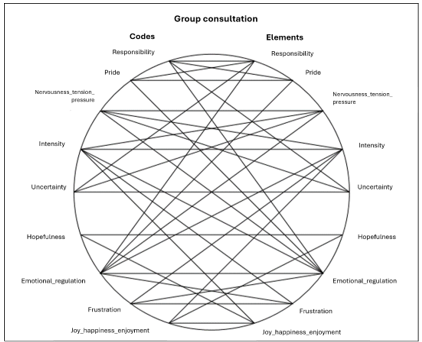
Figure 4
Relationship Between Subcategories That Constitute the Category “Emotions”
On the other hand, in cases such as Natalia’s, we can observe how the formative component carries more weight than the narrative one, since, as she shares, “the truth is that everyone put a lot of effort into it and there were very good ideas. Although it was the first time I was nominated, it was one of the programs I enjoyed and learned from the most” (Testimony 184). This idea is supported by various studies that have analyzed the positive relationship between emotions such as joy or satisfaction and learning (Anzelin et al., 2020; Yuan & Lee, 2015).
Closely related to this, it is worth mentioning what the most complex challenge represented for the participants in the MasterchEF kitchens: the design of a serious game aimed at facilitating the learning of a Physical Education curriculum content. Serious games are board games created with an educational purpose, in which the course content is naturally integrated into the game itself (Pérez-López, 2020). This major group challenge required a huge investment of time and effort, leading them to feel genuinely proud of their proposals, to the point of expressing excitement about sharing them with people in their close environment:
“I’m glad to have created a board game. I’m excited to have my nieces play it and learn from something I made together with my classmates. I feel very good as a person when I create something that can help many people” (Testimony 233).
After designing their serious games, during the presentation session they had the opportunity to test their own games as well as those of the other groups, an approach that generated very positive aspects in the students, as Alfredo expresses:
“I think it was a very special program, in which a spark of excitement was ignited in each of us. The fact of dedicating a lot of time to something, putting in effort, making mistakes but improving it as many times as necessary, managing to finish creating something from scratch, thinking about its evolution from minute one, and having the opportunity to see classmates testing the game and witnessing its effect on them was truly something special” (Testimony 235).
These examples show us the enormous impact that active methodologies have in general, and game-based learning in particular. In fact, previous interventions conducted in the Teacher Training Master’s Program reveal the potential of serious games for acquiring theoretical content among pre-service teachers (Pérez-López, 2020; Pérez-López & Navarro-Mateos, 2022).
With the aim of staying as faithful as possible to the original program, privileges such as the "immunity pin" were included, granted to those who voluntarily used time outside of class to improve challenges and deepen their understanding of the course content. In this sense, the driving force behind their actions was intrinsic motivation since, until it was rewarded, they were unaware that this privilege would be part of the proposal. In the educational context, and more specifically within a gamification approach, if truly meaningful objectives are to be achieved, it is crucial to focus on intrinsic motivation (Pérez-López, 2021), which is linked to interest, enjoyment, or inherent satisfaction (Ryan & Deci, 2020). To avoid influencing the nature of their motivation, the "immunity pin" (which guaranteed them an additional week in the program) was awarded without prior notice. In fact, it is particularly noteworthy how the mere act of recognizing certain participants, among whom the "immunity pin" would be given, already provided an extra boost of motivation for Sofía: "Thank you for highlighting me and for being in the running for immunity. For me, it has been a boost of motivation due to the recognition it implies, but I know I can still do more, and I’m going for it" (Testimony 66). Those who received this pin, such as Álvaro, felt immense joy from the unexpected privilege: "I absolutely didn’t expect it, honestly, not at all. It was great joy; it’s truly appreciated when your work is valued, and that’s exactly how I felt when I received the immunity pin" (Testimony 125). Moreover, this social recognition generates in the other participants emotions with substantial formative “juice,” as Antonio expresses:
“Honestly, I feel proud of my classmates, while also believing that the immunity they were granted is more than well deserved. On the other hand, I am overcome with a feeling of healthy envy—after all, who wouldn’t have liked to be in their place and be recognized by their own peers” (Testimony 115).
On the other hand, at a narrative level, the “second chance” (repesca) was included, corresponding to the trigger of “lives.” Similar to the original program, participants who had been eliminated had the opportunity to re-enter the competition. For this purpose, a new challenge was presented, and those who stood out the most could once again compete for the title of MasterchEF winner. Including second chances in the proposal had a positive impact on student motivation, as in the case of Pepe, who stated, “I had come to think that if I was eliminated it would not be a big deal, because I could re-enter through the second chance round, which renewed my enthusiasm” (Testimony 78).
What do These Harder-to-Digest Emotions Provoke?
Throughout the proposal, the challenge for the participating students was to learn how to work and organize themselves under pressure, which involved significant emotional regulation. Additionally, the structure of the proposal, which adhered to the format of the original contest, generated intense emotional fluctuations with many highs and lows that they had to learn to manage. As Darío expresses: “In a day and a half I have felt joy, tension, fear, overwhelm, anger, nerves (many), the urge to cry, release. If I leave MasterchEF without knowing how to manage these more negative emotions, nothing will succeed” (Testimony 63).
Undoubtedly, time pressure was the trigger that generated the most “Nerves, Tension, Pressure” and “Frustration.” This is reflected in Fernando’s account, who notes: “Again with a bittersweet feeling, and once again I have not been able to perform well under time pressure, a poor excuse but one I still maintain because when I work on something I like, I want it to be perfect” (Testimony 56). Clara shares a similar sentiment in her testimony: “Without a doubt, that first class helped me to assimilate what real work is… that day left me with a thorn in my side” (Testimony 39).
It was crucial that students learned to manage this frustration within a safe formative context, in order to acquire tools that would help them professionally face similar situations, which are very common in the educational field. In most testimonies, at the beginning of the contest, students blamed time rather than engaging in self-criticism regarding their work. A clear example of this is when Marcos says: “Time ran out and I couldn’t even plate or serve my dish, my first test was a disaster. I blamed all my frustration on the time and on the fact that I work better without time constraints” (Testimony 53). They also became frustrated when the materials they had prepared theoretically did not yield the expected results once implemented. Jaime’s testimony perfectly captures this feeling: “…when you prepare something you believe is very good, then when you put it into practice it never turns out that well and you end up disappointed” (Testimony 172).
However, as the program progressed, emphasis was placed on the importance of analyzing and becoming aware of the factors that were truly preventing them from meeting the objectives within the allotted time. Thanks to various group reflections, students like Joaquín became aware of aspects they usually overlooked: “This makes me reflect on the importance that experiencing pleasant situations and good news is not enough to evolve; frustration and defeat sometimes teach you more and are more necessary for self-knowledge and self-motivation” (Testimony 100). Therefore, in higher education, where the development of students’ critical consciousness gains great relevance, it is important to foster reflective practice that is meaningfully integrated into the teaching-learning process (Bharuthram, 2018).
One of the elements that generated the greatest emotional impact was knowing that their continuation in the program was at stake every week through the elimination challenge. Narratively, being “eliminated” meant the impossibility of winning the competition, but from a formative perspective, it had no consequence since they continued attending sessions and participating in challenges. For some participants, despite being in this experience to learn, being eliminated caused great frustration and disappointment. Andrés expressed this when he stated: “First day after being eliminated. The truth is that returning to the program and realizing you are no longer competing felt very strange and I became demotivated” (Testimony 188). To adequately manage these emotions, group reflections were common, aimed at making them aware of the formative value of this circumstance and that they should not allow the competition to condition their professional and personal development. A summary of some of these reflections is captured in Raúl’s statement:
After exchanging opinions, it was concluded that the design of the classes did not prevent learning (not even being eliminated from the program). Moreover, if we take it as an opportunity, we can obtain the real benefit of getting to know ourselves, experiencing situations transferable to reality, such as working with people we are more compatible with, with people who give more, etc. (Testimony 197).
Finally, regarding responsibility, at certain moments the students were placed in complex situations where they had to assume the consequences of their decisions. For students like Rodrigo, certain situations made him “feel blocked when faced with the unknown... Many times I wanted to run away, especially when everything is against me” (Testimony 220). These challenging moments aimed to prepare them for their professional future, an aspect that some participants were able to appreciate despite the emotions and sensations experienced. An example of this is shown by Elena, who recounts what it meant for her to assume a role of responsibility in one of the challenges:
“As a final moment, we encountered a situation I had never experienced before, which was having to evaluate and save/eliminate a fellow contestant from the program. In my opinion, the purpose of this task is to put ourselves in the teacher’s shoes and understand the difficulty of separating the professional from the personal friendship” (Testimony 201).
Conclusions
This article has analyzed the emotional impact generated by a gamification proposal inspired by the television contest MasterChef on students enrolled in the Teaching Master’s program. A wide range of emotions, such as “joy,” “frustration,” and “uncertainty,” were identified, linked to competitiveness, elimination rounds, and second-chance opportunities. These elements allowed participating students to develop skills for managing emotions under pressure, which are fundamental for their future professional roles as educators. Throughout the intervention, students reflected on their emotional reactions, learning to handle frustrations and strengthen their resilience, as evidenced by the evolution of the micro-narratives throughout the experience. It can be concluded that this type of approach holds great potential for Teaching Master’s students, both in terms of motivating learning and fostering competency development. Furthermore, the MasterChef contest format offers extensive possibilities for adaptation to other subjects and even educational levels, by adjusting the challenges to the specific curriculum content without losing the excitement that characterizes the program.
Ethics Committee Statement
The Ethics Committee of the University of Granada approved the study protocol (No. 421/CEIH/2017).
Conflict of Interest Statement
The authors declare no conflict of interest.
Funding
This research did not receive external funding, as it was conducted as part of an academic course.
Authors' Contribution
Conceptualization: Carmen Navarro-Mateos, Isaac J. Pérez-López; Methodology: Carmen Navarro-Mateos, Enrique Rivera-García; Software: Enrique Rivera-García; Validation: Carmen Navarro-Mateos, Isaac J. Pérez-López; Formal Analysis: Enrique Rivera-García; Investigation: Isaac J. Pérez-López; Data Curation: Carmen Navarro-Mateos; Writing – Original Draft: Carmen Navarro-Mateos; Writing – Review & Editing: Isaac J. Pérez-López, Enrique Rivera-García; Supervision: Isaac J. Pérez-López. All authors have read and agreed to the published version of the manuscript.’
Data Availability Statement
Data available upon request from the corresponding author (carmenavarro@correo.ugr.es).
Acknowledgements
This work was carried out with the support of a predoctoral contract from the Andalusian Government (Code 24653).
References
Alcalá del Olmo, M. J., Santos-Villalba, M. J., & Leiva-Olivencia, J. J. (2020). Metodologías activas e innovadoras en la promoción de competencias interculturales e inclusivas en el escenario universitario. European Scientific Journal, 16(40), 6. https://digibug.ugr.es/bitstream/handle/10481/65990/13836-Article%20Text-40491-1-10-20210110%20%281%29.pdf?sequence=1&isAllowed=y
Alonso-Tapia, J., Abello, D. M., & Panadero, E. (2020). Regulating emotions and learning motivation in higher education students. International Journal of Emotional Education, 12(2), 73-89. https://oaji.net/articles/2020/4987-1607679275.pdf
Amutio, A., López-González, L., Oriol, X., & Pérez-Escoda, N. (2020). Predicting academic performance through relaxation-meditation-mindfulness and emotional competences. Universitas Psychologica, 19. https://doi.org/10.11144/Javeriana.upsy19.prat
Anzelin, I., Marín-Gutiérrez, A., & Chocontá, J. (2020). Relación entre la emoción y los procesos de enseñanza aprendizaje. Sophia Educación, 16(1), 48-64. http://dx.doi.org/10.18634/sophiaj.16v.1i.1007
Aspelin, J. (2019). Enhancing pre-service teachers’ socio-emotional competence. International Journal of Emotional Education, 11(1), 153-168. https://relationellpedagogik.se/onewebmedia/Aspelin%20socio-emotional%20comp..pdf
Bharuthram, S. (2018). Reflecting on the process of teaching reflection in higher education. Reflective Practice, 19(9), 806-817. http://dx.doi.org/10.1080/14623943.2018.1539655
Biglia, B., & Bonet-Martí, J. (2009). La construcción de narrativas como método de investigación psico-social. Prácticas de escritura compartida. Forum: Qualitative Social Research, 10(1). https://ddd.uab.cat/pub/artpub/2009/146075/fqs_a2009v10n1.pdf
Bolívar, A., Domingo, J., & Fernández, M. (2001). La investigación biográfico-narrativa. Enfoque y metodología. La Muralla.
Corcoran, R. P., & O'Flaherty, J. (2022). Social and emotional learning in teacher preparation: Pre-service teacher well-being. Teaching and Teacher Education, 110. http://dx.doi.org/10.1016/j.tate.2021.103563
Chernyshenko, O. S., Kankaraš, M., & Drasgow, F. (2018). Social and emotional skills for student success and well-being: Conceptual framework for the OECD study on social and emotional skills. OECD Education Working Papers, 173. https://doi.org/10.1787/db1d8e59-en
Denzin, N. K., & Lincoln, I. (2012). Manual de investigación cualitativa. Gedisa.
Domínguez-Fernández, G., Amador-Muñoz, L., & Díez-Gutiérrez, E. (1997). La evaluación: Un proceso autoevaluativo para una cultura de calidad de la enseñanza. Científico Técnica.
Domínguez-Márquez, M. (2019). Neuroeducación: Elemento para potenciar el aprendizaje en las aulas del siglo XXI. Educación y Ciencia, 8(52), 66-76. https://educrea.cl/wp-content/uploads/2021/02/NEUROEDUCACION.pdf
Eisenberg, D., Lipson, S. K., & Posselt, J. (2016). Promoting Resilience, Retention, and Mental Health. Student Services, 2016(156), 87-95. https://doi.org/10.1002/ss.20194
Eisenberg, N., & Spinrad, T. L. (2004). Emotion-related regulation: Sharpening the definition. Child Development, 75(2), 334-339. https://doi.org/10.1111/j.1467-8624.2004.00674.x
Fernández-Poncela, A. M. (2011). Antropología de las emociones y teoría de los sentimientos. Versión. Estudios de Comunicación y Política, (26), 315-339. https://versionojs.xoc.uam.mx/index.php/version/article/view/416/415
Filliozat, I. (2007). El corazón tiene sus razones. Conocer el lenguaje de las emociones. Urano.
Fitzgerald, M. M., Shipman, K., Pauletic, M., Ellesworth, K., & Dymnicki, A. (2022). Promoting educator social emotional competence, well-being, and student-educator relationships: A pilot study. Mental Health & Prevention, 26(1), 200234. https://doi.org/10.1016%2Fj.mhp.2022.200234
Flick, U. (2004). Introducción a la investigación cualitativa. Ediciones Morata.
García-Garnica, M., Chacón-Cuberos, R., Expósito, J., & Martínez-Martínez, A. (2022). La gestión emocional y la autoeficacia se asocian con bajos niveles de estrés en el profesorado universitario español: Una perspectiva nacional. Bordón: Revista de Pedagogía, 74(1), 29-44. https://doi.org/10.13042/bordon.2022.90354
Gleason-Rodríguez, M., & Rubio, J. E. (2020). Implementación del aprendizaje experiencial en la universidad, sus beneficios en el alumnado y el rol docente. Revista Educación, 44(2), 264-282. https://www.scielo.sa.cr/pdf/edu/v44n2/2215-2644-edu-44-02-00279.pdf
Goleman, D. (1995). Inteligencia emocional. Kairós.
Gómez, O., & Calleja, N. (2016). Regulación emocional: Definición, red nomológica y medición. Revista Mexicana de Investigación en Psicología, 8(1), 96-117. https://doi.org/10.32870/rmip.vi.312
Gross, J. (1999). Regulación de las emociones: pasado, presente, futuro. Cognición y emoción, 13(5), 551-573.
Hendrie, K. N., & Bastacini, M. C. (2019). Autorregulación en estudiantes universitarios: Estrategias de aprendizaje, motivación y emociones. Revista Educación, 44(1), 190-207. https://doi.org/10.15517/revedu.v44i1.37713
Ibáñez, N. (2002). Las emociones en el aula. Estudios pedagógicos (Valdivia), (28), 31-45. https://www.redalyc.org/pdf/1735/173513847002.pdf
Jennings, P. A., Snowberg, K. E., Coccia, M., & Greenberg, M. T. (2011). Improving classroom learning environments by Cultivating Awareness and Resilience in Education (CARE): Results of two pilot studies. Journal of Classroom Interaction, 46(1), 37-48. https://d1wqtxts1xzle7.cloudfront.net/31580632/Jennings_et_al_CARE_Yr_1-libre.pdf?1391452798=&response-content-disposition=inline%3B+filename%3DImproving_Classroom_Learning_Environment.pdf&Expires=1753916348&Signature=P1ql7qPdqmvVzUuXA0TT4MhcyJ9QCADA1gloDUXZnDf8gOas5c9iEszF6DoH66zdG6mXAPgthBtq8~cV47WDnlcqaxBXJlBbDyD3xUILkHn~23FM8m36R6flxM0pq6HN1Nxj5jsonYtUgeetxGihTRkLoq~tUnb7uL06ItHWxwVExPAt9vNGREftGsE81PBySPXF8REjHpL0QhiBoyT0lCq8soOmJ32zx8KQDEwMNvCDyMrzaYOOsNgPtxLMTsV-rTj-inYSuCQApJ4w4XpgmVz2uPM41Knr6TjeIuTjwUTiQtuX6WjnP3DiZXH0yM5WbzmwyUQKW7OGXh549RKTsw__&Key-Pair-Id=APKAJLOHF5GGSLRBV4ZA
Jiménez-Hernández, D., González-Ortiz, J. J., & Tornel-Abellán, M. (2020). Metodologías activas en la universidad y su relación con los enfoques de enseñanza. Profesorado. Revista de Currículum y Formación de Profesorado, 24(1), 76-94. https://doi.org/10.30827/profesorado.v24i1.8173
Kahu, E. R., Stephens, C., Leach, L., & Zepke, N. (2015). Linking academic emotions and student engagement: Mature-aged distance students’ transition to university. Journal of Further & Higher Education, 39(4), 481-497. https://doi.org/10.1080/0309877X.2014.895305
Kautz, T., Heckman, J. J., Diris, R., Ter Weel, B., & Borghans, L. (2014). Fostering and measuring skills: Improving cognitive and non-cognitive skills to promote lifetime success. OECD Education Working Papers.
Kidd, C., & Hayden, B. Y. (2015). The psychology and neuroscience of curiosity. Neuron, 88(3), 449-460. https://doi.org/10.1016%2Fj.neuron.2015.09.010
Kim, H. K., Park, J., Choi, Y., & Choe, M. (2018). Virtual reality sickness questionnaire (VRSQ): Motion sickness measurement index in a virtual reality environment. Applied ergonomics, 69, 66-73. https://doi.org/10.1016/j.apergo.2017.12.016
Logatt, C. A. (2016). ¿Cómo influyen las emociones en el aprendizaje? Asociación Educar, 83, 6-7.
Mieles, M. D., Tonon, G., & Alvarado, S. V. (2012). Investigación cualitativa: El análisis temático para el tratamiento de la información desde el enfoque de la fenomenología social. Universitas Humanística, (74), 195–226. https://www.redalyc.org/pdf/791/79125420009.pdf
Mora, F. (2017). Neuroeducación. Solo se puede aprender aquello que se ama. Alianza Editorial.
Mora-González, J., Navarro-Mateos, C., & Pérez-López, I. J. (2022). “STAR WARS™: The First Jedi” gamification program: Improvement of fitness among college students. Journal of Teaching in Physical Education, 42(3), 502-510. https://doi.org/10.1123/jtpe.2021-0309
Navarro-Mateos, C., & Pérez-López, I. J. (2024). Gamificación: De la curiosidad al aprendizaje a través de la emoción en el máster de profesorado. Revista Electrónica Interuniversitaria de Formación del Profesorado, 27(1), 151-166. https://doi.org/10.6018/reifop.591631
O’Toole, V., & O’Flaherty, J. (2022). The role of emotion in higher education: Exploring global citizenship education. Irish Educational Studies, 43(4), 645-663. https://doi.org/10.1080/03323315.2022.2135565
Panadero, E. (2017). A Review of Self-regulated Learning: Six models and four directions for research. Frontiers in Psychology, 8(442), 1-28. https://doi.org/10.3389/fpsyg.2017.00422
Pérez-López, I. J. (2021). Opciones lúdicas en educación: Aprendiendo desde la emoción. In F. M. Bombillar-Sáenz., Torres-López, M.A., Sánchez-Mesa, L. (Eds.), Hábitos de Vida Saludables y Lucha Contra la Obesidad: Los Retos del Derecho nte la Salud Alimentaria y la Nutrición (pp. 257-279). Aranzadi Thomson Reuters.
Pérez-López, I. J. (2020). De las 7 bolas de dragón a los 7 reinos de poniente. Viajando por la ficción para transformar la realidad. Copideporte S. L.
Pérez-López, I. J., & Navarro-Mateos, C. (2022). Un serious game como recurso formativo en la especialidad de Educación Física del máster de profesorado. Retos. Nuevas Tendencias en Educación Física, Deportes y Recreación, 46, 725–732. https://doi.org/10.47197/retos.v46.93751
Pérez-López, I. J., & Navarro-Mateos, C. (2023). Guía para gamificar: Construye tu propia aventura. Copideporte S. L.
Robinson, D. (2014). The role of cultural meanings and situated interaction in shaping emotion. Emotion Review, 6(3), 189-195. http://dx.doi.org/10.1177/1754073914522866
Ryan, R. M., & Deci, E. L. (2020). Intrinsic and extrinsic motivation from a self-determination theory perspective: Definitions, theory, practices, and future directions. Contemporary Educational Psychology, 61. https://doi.org/10.1016/j.cedpsych.2020.101860
Schenkel, E. N., & Pérez, M. I. (2018). Un abordaje teórico de la investigación cualitativa como enfoque metodológico. Acta Geográfica, 12(30), 227-233. https://doi.org/10.18227/2177-4307.acta.v12i30.5201
Southwick, S. M., & Charney, D. S. (2018). Resilience. the science of mastering life’s greatest challenges. Cambridge University Press. https://doi.org/10.1017/CBO9781139013857
Suberviola-Ovejas, I. (2011). Competencia emocional y rendimiento académico en el alumnado universitario. Vivat Academia Revista de Comunicación, 117, 1-17. https://doi.org/10.15178/va.2011.117E.1-17
Toledo-Orbeta, C., & Bonhomme, A. (2019). Educación y emociones: Coordenadas para una teoría vygotskiana de los afectos. Psicologia Escolar e Educacional, 23. http://dx.doi.org/10.1590/2175-353920190193070
Walker, J., & Palacios, C. (2016). A pedagogy of emotion in teaching about social movement learning. Teaching in Higher Education, 21(2), 175-190. http://dx.doi.org/10.1080/13562517.2015.1136280
Wubbels, T., Den Brok, P., Van Tartwijk, J., & Levy, J. (2012). Interpersonal relationships in education: An overview of contemporary research. Sense Publishers.
Yu, C., Beckmann, J. F., & Birney, D. P. (2019). Cognitive flexibility as a meta-competency. Studies in Psychology, 40(3), 563-584. https://doi.org/10.1080/02109395.2019.1656463
Yuan, R., & Lee, I. (2015). The cognitive, social and emotional processes of teacher identity construction in a pre-service teacher education programme. Research Papers in Education, 30(4), 469-491. http://dx.doi.org/10.1080/02671522.2014.932830
Author notes
Autor para la correspondencia: Carmen Navarro-Mateos, carmenavarro@correo.ugr.es
Additional information
Título Abreviado: Emotional Impact of Gamification in Education
How to cite this article: Navarro-Mateos, C., Pérez-López, I. J., & Rivera-García, E. (2025). Analysis of the emotional impact of gamification in the teacher training master’s program. Cultura, Ciencia y Deporte, 20(65), 2400. https://doi.org/10.12800/ccd.v20i65.2400


