
IMPACT OF GAMIFIED ACTIVE BREAKS THROUGH DIGITAL STORYTELLING IN PRIMARY EDUCATION
IMPACTO DE LOS DESCANSOS ACTIVOS GAMIFICADOS MEDIANTE DIGITAL STORYTELLING EN EDUCACIÓN PRIMARIA


Mario Gómez-Martín, Joel Manuel Prieto-Andreu, Leandro Álvarez-Kurogi
IMPACT OF GAMIFIED ACTIVE BREAKS THROUGH DIGITAL STORYTELLING IN PRIMARY EDUCATION
Cultura, Ciencia y Deporte, vol. 20, no. 65, 2025, 10.12800/ccd.v20i65.2395
Universidad Católica San Antonio de Murcia
Mario Gómez-Martín a
Universidad Internacional de La Rioja, España
Universidad Internacional de La Rioja, España
Joel Manuel Prieto-Andreu
Universidad Internacional de La Rioja, España
Universidad Internacional de La Rioja, España
Leandro Álvarez-Kurogi
Universidad Internacional de La Rioja, España
Universidad Internacional de La Rioja, España
Universidad Internacional de La Rioja, España
Received: 08 january 2025
Accepted: 20 june 2025
Abstract: This study examined the implementation of gamified active breaks through Digital Storytelling in primary education to improve student learning and psychological well-being. Although there is evidence on the benefits of physical activity, gamification, and Digital Storytelling separately, there is no research that combines them. Therefore, the study aimed to analyze the impact of gamified active breaks with Digital Storytelling on psychological, motivational, emotional, academic, and player profile variables, according to gender, physical-sports activity, type of sport, and age, in primary school students. The total sample was 424 students (201 girls and 223 boys) aged from 9 to 13 years old (M = 10.4; SD = 1.07) and a longitudinal quasi-experimental design was used, with nonparametric statistical analyses including the Mann Whitney U, Kruskal Wallis, and Wilcoxon tests being applied, along with Spearman’s correlation and multinomial logistic regression. Results revealed significant improvements in intrinsic motivation, flow, content assimilation, and reduction of the dominator profile, as well as high levels of satisfaction and positive emotions. An increase in the ‘Excellent’ level of academic performance, from 23.8% to 39% was highlighted, along with differences in gender, physical-sports activity, type of sport, and age. In conclusion, gamified active breaks were an innovative strategy to enrich learning and promote student well-being, although customizing them according to the socio-demographic and contextual characteristics of the students could maximize their impact.
Keywords: Active learning, student well-being, educational gamification, digital storytelling, academic achievement.
Resumen: Este estudio abordó la implementación de Descansos activos gamificados mediante Digital Storytelling en Educación Primaria, como estrategia para mejorar el aprendizaje y bienestar psicológico estudiantil. Aunque existen evidencias sobre los beneficios de la actividad física, gamificación y narrativa digital por separado, no consta ninguna investigación que los combine. Por tanto, el objetivo del presente estudio fue analizar el impacto de los Descansos Activos gamificados con Digital Storytelling en variables psicológicas, motivacionales, emocionales, académicas y perfil de jugadores, según género, actividad físico-deportiva, tipo de deporte y edad, en estudiantes de Educación Primaria. La muestra fue de 424 estudiantes (201 niñas y 223 niños) de 9 a 13 años (M = 10.4; DE = 1.07) y se empleó un diseño cuasiexperimental longitudinal con mediciones pre y post intervención, aplicándose los análisis estadísticos no paramétricos U de Mann-Whitney, Kruskal-Wallis y Wilcoxon, además de la correlación de Spearman y regresión logística multinomial. Los resultados revelaron mejoras significativas en la motivación intrínseca, flow, asimilación de contenidos y reducción del perfil dominador, además de niveles altos de satisfacción y emociones positivas. Se destacó un aumento del nivel "Excelente" en el rendimiento académico, del 23.8% al 39%, y se identificaron diferencias de género, actividad físico-deportiva, tipo de deporte y edad. En conclusión, los Descansos Activos gamificados con Digital Storytelling han supuesto una estrategia innovadora para enriquecer el aprendizaje y fomentar el bienestar estudiantil, pudiendo maximizarse su impacto personalizando las características sociodemográficas y contextuales del alumnado.
Palabras clave: Aprendizaje activo, bienestar estudiantil, gamificación educativa, narrativas digitales, rendimiento escolar.
Introduction
In current education, on the one hand, the aim is to eliminate traditional methodological aspects, such as the lack of focus on the student, rigidity in the teaching-learning processes, and disconnection from the current context (Khalaf, 2018; Siddiqui et al., 2021; Younis & Hatim, 2021). On the other hand, the goal is to reduce sedentary behavior in schools, considered a problematic factor in global health, by promoting at least 60 minutes of physical activity per day (World Health Organization [WHO], 2020).
To this end, innovative approaches that promote emotional, psychological, and physical well-being holistically must be implemented (Hornstra et al., 2015; Ros-Morente et al., 2018). First, Digital Storytelling (DST) uses narrative incorporating multimedia elements that foster motivation, creativity, content learning, and interpersonal relationships, relying on constructivist and experiential learning postulates, such as those of Dewey, Piaget, and Vygotsky, as well as on cognitive load theory (Abderrahim & Plana, 2021; Kilic, 2014; Kim & Li, 2020; Niemi & Multisilta, 2016; Rahimi, 2019; Sweller, 1988; Zagita & Sun, 2021). Second, gamification is effective in motivating learners and increasing their engagement in a playful way, integrating game mechanics into non-game contexts (Villafuerte et al., 2023). In this sense, the design of gamified proposals must take into account the different types of players in the classroom in order to be effective, understanding that motivational regulation may vary depending on each person (Marczewski, 2015; Prieto-Andreu & Moreno-Ger, 2024). Moreover, in the context of games, interactive narratives gain relevance. Their proper application can help students process information in an engaging manner, supporting the three basic psychological needs (BPNs) of self-determination theory: autonomy, which implies a sense of control over one's actions; competence, which refers to the perception of effectiveness in tasks; and relatedness, which is based on the connection with others, considered fundamental for well-being and intrinsic motivation (Grasse et al., 2022; Liu & Huang, 2017; Ribeiro, 2017; Ryan & Deci, 2000). Finally, to mitigate long sedentary days in schools, strategies have emerged that incorporate physical activity (PA) without disrupting the academic schedule, including Active Breaks (ABs), defined as brief PA activities (5-15 minutes) that help improve health and contribute to academic performance (Dallolio et al., 2022; Institute of Medicine, 2013; Mantjes et al., 2012; Watson et al., 2017).
However, despite the evidence regarding DST, gamification, and ABs, no research combines them, which could better support the current educational aims outlined above. Therefore, this study aimed to analyze the impact of gamified ABs integrated with DST on motivational, psychological, emotional, academic, and player profile variables in Primary School students, considering gender, physical-sport activity, type of sport, and age.
Material and Methods
Design
A longitudinal quasi-experimental design with pre- and post-intervention measures and a single non-randomized experimental group was used in this study to determine the differences between the initial levels of the observed variables and the modifications generated, following the ABs.
Participants
The sample consisted of 424 students (201 girls and 223 boys) in 4th, 5th, and 6th grades of Primary Education, aged between 9 and 13 years (M = 10.1; SD = 1.07), enrolled in private charter schools in Talavera de la Reina, Toledo, Spain, located in areas with medium to low socioeconomic status and substantial sociocultural diversity.
Instruments
To comprehensively assess the impact of gamified ABs with DST on student learning and well-being, seven instruments were used, the combination of which enabled a multidimensional analysis covering motivational, psychological (BPNs), experiential (flow), cognitive (content assimilation), player profiles, satisfaction with the ABs, and students' emotions.
Academic Motivation
The Perceived Locus of Causality scale (PLOC) on academic motivation (Murcia et al., 2009) was used, with Cronbach's alpha reliability obtained in the present study of .79 before the intervention and .81 after. It is a Likert-type scale (1-7) of 20 items preceded by the phrase “I participate in this class...”, which measures five dimensions of motivational regulation: amotivation, external regulation, introjected, identified, and intrinsic. This allows the self-determination index (SDI) to be calculated - e.g., “I participate in class because I want to learn new things”-.
Basic Psychological Needs (BPNs)
The BPNs questionnaire (Moreno et al., 2008) was used, with Cronbach's alpha reliability obtained in the present study of .75 before the intervention and .80 after. It is a Likert-type scale (1-5) of 12 items (e.g., “In my classes, I carry out class activities effectively”) that measures the three dimensions of BPNs: autonomy; competence; and relatedness.
Flow
The brief inventory of optimal experiences on the level of flow during activity (Calero & Injoque-Ricle, 2013) was used, with Cronbach's alpha reliability obtained in the present study of .73 before the intervention and .72 after. It is a Likert-type scale (1-5) consisting of nine items (e.g., “I have a feeling of total control”) that measure Csikszentmihalyi's (1990) nine dimensions of flow: loss of self-awareness, clear and direct feedback, the link between action and awareness, concentration on the present task, distortion in the perception of time, balance between perceived ability and challenge, autotelic experience, feeling of control, and clear goals.
Content Assimilation
A set of five multiple-choice questions, each with a single correct answer, was designed to assess the impact of gamified ABs with DST on students’ understanding of the content covered during the ABs (e.g., “Taking your pulse is useful”).
Player Profiles
The Gamertype scale on game preferences in a gamified context (Prieto-Andreu & Moreno-Ger, 2024) was used, with Cronbach's alpha reliability obtained in the present study of .80 before the intervention and .83 after. It is a Likert-type scale (1-4) consisting of 30 items that assess students’ dominator, tracker, and interactor profiles (e.g., “I like interacting, sharing ideas, and learning in a team”).
Satisfaction/Enjoyment With the Teaching-Learning Process
A custom scale was developed based on the Interactive Evaluation of the Teaching-Learning Process (EIPEA), adapted by Martínez-Campillo (2017), and the Evaluation Scale of a New Teaching Method to measure satisfaction/enjoyment with the new teaching model. The scale included three items from the EIPEA and two from the Maloof’s scale, using a Likert-type scale (1-5). The Cronbach's alpha obtained in the posttest of the present study was .65 (e.g., “I am satisfied with how I have learned” [EIPEA]; “I enjoyed it more than with conventional classes” [Maloof]).
Emotions
The Games and Emotions Scale for Children on Emotional Level (GES-C; Alcaraz-Muñoz et al., 2022) was used, with Cronbach's alpha reliability obtained in the present study after the intervention of .74 for positive emotions and .75 for negative emotions. It is a nine-item Likert-type scale (1-5) that measures two dimensions presented graphically: positive emotions; and negative emotions. Faces are used to illustrate the range of emotional intensity.
Procedure
Initial Contact, Consent, and Explanation of the Study
The educational institutions were contacted by the research team and provided with detailed information about the study´s objectives, procedures, and scope. Subsequently, the educational institutions obtained informed consent based on the principles of the Declaration of Helsinki on Human Research (World Medical Association, 2013), to comply with ethical research standards.
Preparation and Design of the Intervention
The ABs were structured according to the three key components of a typical physical education session -warm-up, main part and return to calm- (González-Arévalo & Lleixá-Arribas, 2010), dedicating 2-3 minutes to the Warm-up to prepare the body, 5-7 minutes to the Main Part with high-intensity endurance exercises and pulse measurement, and 2-3 minutes to the Return to Calm with stretching. Endurance was addressed through the following content areas drawn from the Organic Law 3/2020, of 29 December, which amended Organic Law 2/2006, of 3 May, on Education (LOMLOE, 2020): ‘Active and healthy life’ and ‘Emotional self-regulation and social interaction in motor situations’, in addition to the specific competence ‘Adopting an active and healthy lifestyle’. In this sense, gamified ABs were designed with DST (Figure 1), using Points, Badges, and Leaderboards (PBL) and integrating a single narrative based on the hero's journey (Campbell, 1949) and Freytag's (1863) classic structure, applied in digital format. Moreover, the design also incorporated elements based on Self-Determination Theory (Ryan & Deci, 2000) and Cognitive Load Theory (Sweller, 1988). Regarding Self-Determination Theory, students were allowed to choose the pace and intensity of execution (autonomy), simple and non-technically demanding tasks were proposed (competence), and the development of the ABs was proposed jointly with the entire class (relatedness). Regarding Cognitive Load Theory, simple exercises, clear premises, visual aids, and a structured video sequence were used to facilitate understanding and reduce cognitive demands.
Classroom Implementation and Data Collection
A pre-test was administered 3 to 10 school days prior to the DST-gamified ABs, and a post-test at the end of the DST-gamified ABs, with data collected through paper questionnaires. The two-week range for the pre-test administration was due to school availability. The ABs were applied in a single session per group class, with a duration of 11 minutes and 43 seconds. No prior teacher training was required, as the video was designed by one of the authors and the intervention was delivered in person by the research team. Figure 1 presents a collection of images from ABs and includes a note with the link to the video used. Specifically, these images depict the digital narrative (top left), an example exercise (top right), and the badges awarded for merit and achievement (bottom row):
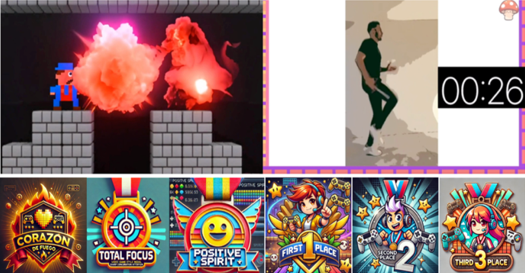
Figure 1
Gamified ABs With DST
Note: Gamified ABs with DST.mp4
Statistical Analysis
Data collected through the questionnaires were analyzed in IBM SPSS Statistics, Jamovi, and Python, using the Matplotlib library. Responses with incomplete pretest and/or posttest and those with less than 70% of the total items completed were excluded. For students with more than 70% of the total questionnaires completed, missing values were imputed using the mean, resulting in a final sample of 256 students. The variables were classified into independent (gender, physical-sport activity, type of sport, and age) and dependent (academic motivation: SDI, amotivation, external, introjected, identified, and intrinsic regulation; BPNs: autonomy, competence, and relatedness; flow: nine dimensions detailed in the Instruments section; content assimilation; player profile: dominator, tracker, and interactor; enjoyment/satisfaction with the teaching-learning process; and emotions: positive and negative). Finally, normality tests (Kolmogorov-Smirnov and Shapiro-Wilk) were conducted for all constructs, confirming that academic motivation, flow, BPNs, emotions, content assimilation, and player profiles (except the tracker profile before the intervention, p > .05) did not follow a normal distribution (p < .05). Therefore, non-parametric statistical analyses were employed, including the Mann-Whitney U test, Kruskal-Wallis test, and Wilcoxon test, in addition to Spearman's correlation and multinomial logistic regression.
Results
Overall Results of the Dependent Variables
Post-Intervention
Academic Motivation. A significant increase was observed in levels of intrinsic regulation (p < .05, rbis = - .164).
Flow. A significant increase was found in the dimension of loss of self-awareness (flow1, p < .01, rbis = -.251).
Content Assimilation. A significant improvement of 5.8% was observed in academic performance, with a specific increase in the percentage at the “Excellent” level from 23.8% to 39.0% (p < .001, rbis = -.401).
Player Profiles. A highly significant decrease was found in the dominator profile among students (p < .001, rbis = .297).
Satisfaction/enjoyment. The results showed that 91% of the students reported high satisfaction with the teaching-learning model and process.
Emotions. A total of 54.7% of students reported experiencing high levels of positive emotions, while 39% reported moderate levels.
Figure 2 displays the significant changes observed after the implementation of gamified ABs with DST, assessed by the Wilcoxon test on the variables of academic motivation, flow, player profile, and content assimilation.
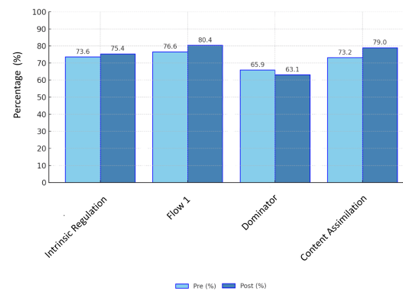
Figure 2
Significant Post-Intervention Changes in Motivation, Flow, Player Profile, and Content Assimilation
By Gender
Pre and Post intervention
Academic Motivation. Before the intervention, significant differences were found in amotivation and external regulation (p < .001), with boys reporting higher values. Furthermore, positive correlations were found for amotivation (r = .165; p < .01) and external regulation (r = .216; p < .001), indicating a positive tendency among boys towards these types of motivational regulation. Multinomial logistic regression confirmed this tendency, showing that boys were more likely to exhibit higher levels of amotivation (estimator = 1.464, odds ratio = 4.322, p < .001) and external regulation (estimator = 1.036, odds ratio = 2.82, p < .01), but less likely to present intermediate levels of introjected regulation (estimator = –1.256, odds ratio = .285, p < .05) and SDI (estimator = – .926, odds ratio = .3963, p < .01). After the intervention, significant differences were found in amotivation and external regulation (p < .001), with boys reporting higher values. However, significant differences were also observed in SDI (p < .001), with girls reporting higher levels. Additionally, positive correlations were found for amotivation (r = .285, p < .001), external regulation (r = .239, p < .001), and introjected regulation (r = .152, p < .01), indicating a tendency among boys to exhibit these types of motivational regulation. Multinomial logistic regression further showed that boys were more likely to present high levels of amotivation (estimator = 1.936, odds ratio = 6.93, p < .001) and external regulation (estimator = 1.25, odds ratio = 3.52, p < .01). In contrast, a negative correlation was found for SDI (r = –.223, p < .001), and multinomial logistic regression (estimator = –.674, odds ratio = 0.51, p < .05) indicated an inclination among girls toward more autonomous regulation. Finally, the Wilcoxon test showed significant increases in amotivation, introjected regulation, and intrinsic regulation in boys (p < .05, rbis = -.229, -.239, and -.209, respectively).
BPNs. After the intervention, girls showed a decrease in their perception of autonomy, with significant gender differences observed (p < .05), as boys reported higher values. Additionally, a positive correlation was found for the same variable (r = .129, p < .05), indicating a general tendency for boys to perceive themselves as more autonomous.
Flow. After the intervention, significant differences were found in clear and direct feedback (Flow 2, p < .05), time distortion (flow 5, p < .001,), skill-challenge balance (Flow 6, p < .05), autotelic experience (flow 7, p < .05) and task control (flow 8, p < .05), with higher values in boys. In addition, the Wilcoxon test revealed an increase in clear and direct feedback in boys (flow 2, p < .05, rbis = -.263). Among girls, a significant increase was observed in loss of self-awareness (flow 1, p < .05, rbis = -.269), while decreases were recorded in clear and direct feedback (flow 2, p < .05, rbis = .307), and autotelic experience (flow 7, p < .05, rbis = .394).
Player Profiles. Before the intervention, significant differences were found in the dominator (p < .001) and tracker (p < .01) profiles, with higher scores in boys. However, after the intervention, significant differences were observed in the interactor profile (p < .001), again with boys scoring higher. Additionally, the Wilcoxon test showed a reduction in the dominator profile among boys (p < .01, rbis = .219), as well as a significant reduction in both the dominator (p < .001, rbis = .410) and tracker profiles (p < .05, Cohen’s d = -.219) among girls.
Satisfaction/Enjoyment. After the intervention, significant differences were found in overall satisfaction (p < .01), with boys reporting a higher level.
Emotions. After the intervention, multinomial logistic regression showed a tendency for girls to report moderate levels of positive emotions (p < .05).
Table 1 presents the significant differences found in the variables analyzed, according to gender, both in the pre-and post-intervention phase:
Significant Gender Differences in Motivation, Player Profiles, BPNs, Flow, and Satisfaction/Enjoyment Before and After the Intervention
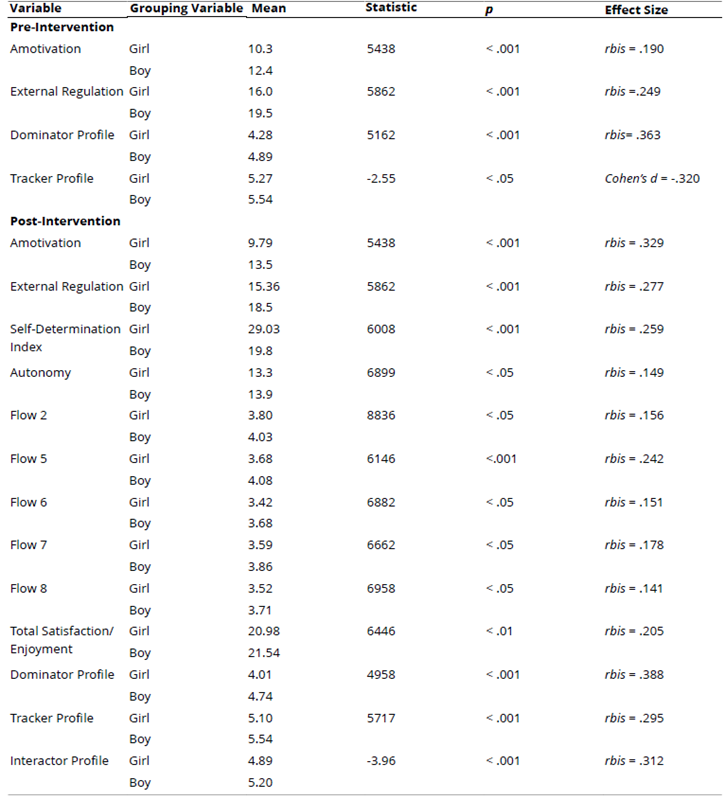
Figure 3 presents the significant changes in the variables analyzed by gender following the implementation of the ABs gamified with DST, as assessed using the Wilcoxon test:
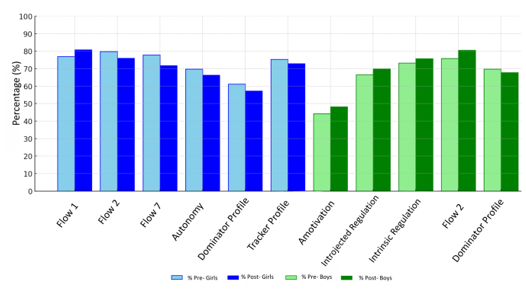
Figure 3
Significant Changes in Motivation, BPNs, Flow, and Player Profiles After the Intervention, According to Gender
According to the Practice of Physical-Sport Activity
Pre and Post intervention
Academic Motivation. After the intervention, significant differences in intrinsic regulation were observed (p < .05, rbis = .215), with physically active students reporting higher values. The Wilcoxon test showed a significant increase in intrinsic regulation among physically active students (p < .01, rbis = .204).
Flow. After the intervention, Wilcoxon test results showed a significant increase in the loss of self-awareness (flow 1, p < .01, rbis = -.285) among physically active students. In contrast, non-active students showed a significant increase in the balance between ability and perceived challenge (flow 6, p < .05, rbis = -.449).
Player Profiles. Before the intervention, significant differences were observed in the dominator profile of the students (p < .05, rbis = .216), with physically active students reporting higher values. In addition, a positive correlation was found in the dominator profile (r = .126; p < .05), and the multinomial logistic regression indicated a higher likelihood for physically active students to present intermediate values of intrinsic regulation compared to non-active students (estimator 1.722, odds ratio 5.59, p < .05). However, after the intervention, the results of the Wilcoxon test showed a significant reduction in the dominator profile among physically active students (p < .001, rbis = .307), while non-active students showed a significant reduction in the tracker profile (p < .05, Cohen’s d = .415).
Table 2 presents the statistically significant changes in mean percentages for academic motivation, flow, and player profiles among both physically active and inactive students.
Significant Changes in Flow, Player Profiles, and Academic Motivation Before and After the Intervention, by Physical Activity Participation.

Figure 4 also displays significant differences in mean percentages for academic motivation and player profiles between physically active and inactive students, both before and after the intervention:
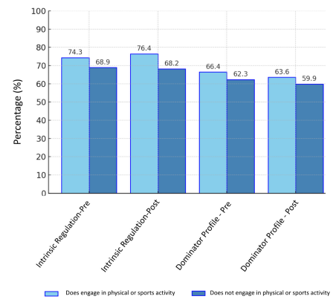
Figure 4
Significant Differences in Motivation and Player Profiles Before and After the Intervention, by Physical Activity Participation
Based on the Type of Sport Practiced
Pre and Post Intervention
Academic Motivation. Before the intervention, significant differences in intrinsic regulation were observed (p < .05, ε² = .030) with students who played individual sports showing the highest values, followed by team sports, while those who did not play sports showed the lowest values. In addition, positive correlations were found in external regulation (r = .128; p < .05) and introjected regulation (r = .126; p < .05), indicating an initial tendency based on external rewards in those who played sports. Finally, multinomial logistic regression indicated a lower probability of intermediate levels of amotivation (estimator -1.25, odds ratio .284, p < .05) and a higher probability of high levels of intrinsic regulation in those who played team sports (estimator 2.12, odds ratio 8.41, p < .05), compared to those who did not play sports. After the intervention, multinomial logistic regression results indicated lower odds of intermediate levels of amotivation in students who practiced both individual and team sports (estimator -1.048, odds ratio .351, p < .05) and higher odds of intermediate levels of SDI in those who played team sports (estimator .8047, odds ratio 2.24, p < .05), compared to those who did not play sports. Finally, the Wilcoxon test showed a significant decrease in external regulation in those who played individual sports (p < .05, rbis = .514).
BPNs. Before the intervention, significant differences were observed in autonomy (p < .01, ε² = .052), with higher values found among students who played both sports. In addition, a positive correlation was found in autonomy (r = .169; p < .05), indicating a tendency to be more autonomous when playing sports. However, after the intervention, the Wilcoxon test showed a decrease in perceived competence in students who played both individual and team sports (p < .05).
Flow. Before the intervention, significant differences were found in task concentration (flow 4, p < .05, ε² = .034) and autotelic experience (flow 7, p < .05, ε² = .032), with higher values among students playing individual sports. Conversely, students participating in both individual and team sports showed higher values in action-awareness linkage (flow 3, p < .05, ε² = .025) and clear goals (flow 9, p < .05, ε² = .031). In addition, positive correlations were found for perceived greater skill-challenge balance (flow 6, r = .149; p < .01) and clear goals (flow 9, r = .134; p < .05). However, after the intervention, significant differences were only observed in loss of self-awareness (flow 1, p < .05, ε² = .034), with individual sports having the highest values, and a positive correlation was found in clear goals (flow 9, r = .129; p < .05). Finally, the Wilcoxon test showed a significant increase in the loss of self-awareness (flow 1, p < .01, rbis = -.407) in students who played team sports, but a decrease between action and awareness (flow 3, p < .05, rbis = .416) in those who played both types of sports.
Player Profiles. After the intervention, the Wilcoxon test showed a significant reduction in the dominator profile among students playing individual sports, team sports, and both (p < .05, rbis = .624).
Emotions. After the intervention, multinomial logistic regression results showed a higher probability of high levels of negative emotions in those students who played team sports compared to those who did not play sports (estimator 6.43, odds ratio 619.3, p < .05).
Figure 5 illustrates significant differences, expressed as percentages, in academic motivation, BPNs, and flow before and after the intervention, identified using the Kruskal-Wallis test, by type of sports practiced:
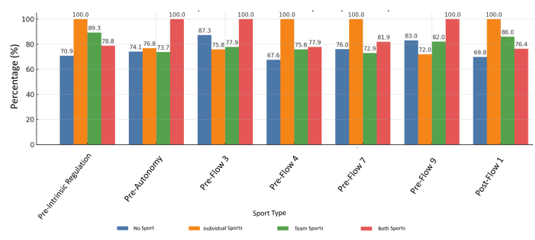
Figure 5
Significant Differences in Academic Motivation, BPNs, and Flow Before and After the Intervention, by Type of Sport Practiced
According to Student Age
Pre and Post Intervention
Academic Motivation. Before the intervention, 13-year-old students showed the highest values of amotivation and external regulation with significant differences between age groups (p < .05, ε² = .044 and .038, respectively). After the intervention, although 10-year-olds showed the highest values of external regulation, they showed a significant increase in their intrinsic regulation (p < .01, rbis = -.346), in addition to a sharp increase in SDI levels among 12-year-olds (p < .05, rbis = -.480), and a significant reduction in amotivation with 13-year-olds (p < .05, rbis = .444). Moreover, multinomial logistic regression indicated a lower probability of high levels of introjected regulation among 11-year-olds (estimator -1.83, odds ratio .161, p < .05) and 12-year-olds (estimator -2.08, odds ratio .125, p < .05).
BPNs. Before the intervention, 11-year-old students showed the highest competence values, with significant differences between age groups (p < .05, ε² = .042). However, after the intervention, these differences disappeared. The Wilcoxon test showed a significant increase in competence among 10-year-olds (p < .01, rbis = -.372), but a decrease among 11-year-old pupils (p < .05, rbis = .279).
Flow. Before the intervention, 12-year-olds showed the highest values of clear goals (flow 9, p < .05, ε² = .042). After the intervention, 13-year-old students showed the highest levels of activity immersion (flow 3, p < .05, ε² = .051) and the Wilcoxon test showed a significant reduction in autotelic experience (flow 7, p < .05, rbis = .279) among 10-year-old students.
Player Profiles. Before the intervention, 13-year-old students showed the highest values of the dominator profile (p < .05, ε² = .066) and, after the intervention, the Wilcoxon test showed a significant reduction in the dominator profile among students aged 9 (p < .01, rbis = .429), 10 (p < .05, rbis = .298), and 11 (p < .05, rbis = .281), with older students continuing to have higher levels. In addition, a significant decrease in the interactor profile was found among 11- and 12-year-olds (p < .05, rbis = .289, and .465, respectively).
Satisfaction/Enjoyment. After the intervention, differences were observed between age groups (p < .05, ε² = .037), with 13-year-olds having higher ABs satisfaction values.
Emotions. After the intervention, 9-year-old students had the highest levels of positive emotions (p < .05, ε² = .043).
Figure 6 illustrates the significant differences shown above, expressed in percentages, identified before and after the intervention using the Kruskal-Wallis test, according to the age of the students:
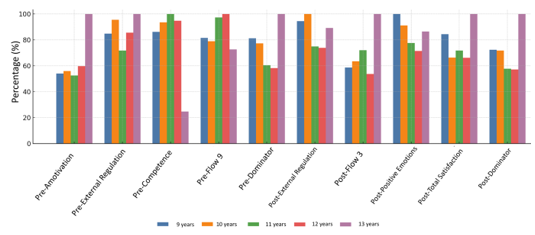
Figure 6
Significant Differences in Motivation, BPNs, Flow, Player Profiles, Satisfaction/Enjoyment, and Emotions Before and After the Intervention, by age Group
Figure 7 presents significant changes in mean percentages for the analyzed variables before and after the intervention, assessed using the Wilcoxon test, highlighting the impact of ABs in each age group:
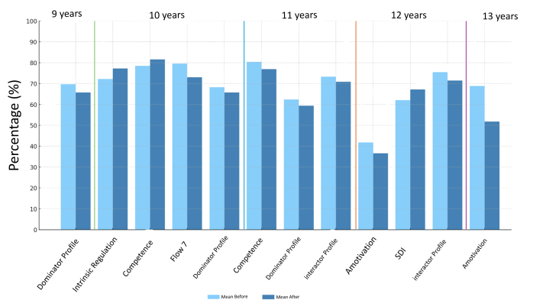
Figure 7
Significant Changes in pre- and Post-Intervention Mean Percentages for Academic Motivation, BPNs, Flow, and Player Profiles, by age Group
As shown in the figure, 9-year-old students reduced their dominator profile scores by 4%. Among 10-year-olds, intrinsic regulation increased by 5%, and competence by 3.5%, whereas autotelic experience (flow 7) decreased by 6.6% and the dominator profile by 2.6%. The 11-year-old group showed a reduction of 3.5% in competence, 3% for the dominator profile, and 2.4% for the interactor profile. Similarly, 12-year-olds showed a 5.8% reduction in amotivation and 2.4% in the interactor profile, but an increase of 5% in their SDI. Finally, 13-year-olds exhibited a substantial reduction in amotivation, decreasing by 17.1% after the intervention.
Discussion
This study aimed to analyze the impact of gamified ABs integrated with DST on psychological, motivational, emotional, academic, and player profile variables in Primary School students, according to gender, physical-sports activity, type of sport, and age. In terms of flow, academic motivation, and content assimilation, the significant differences found are consistent with Méndez-Giménez and Pallasá-Manteca (2022), who highlighted that vigorous intensity ABs can affect attention and self-determined motivation in schoolchildren. Thus, it is worth noting that, according to the present study, flow and intrinsic regulation are fundamental in the educational process, as adequate flow fosters greater immersion in activities, which enhances motivation and, in turn, promotes deeper and more effective learning, thereby improving students' academic performance (Jinmin & Qi, 2023; Larson & Rusk, 2011). Therefore, the significant improvements found in these variables are related to the psychological constructs necessary for academic performance (Mustafa et al., 2010). On the other hand, the observed increase in intrinsic regulation contrasts with Lorenzo-Lledó et al. (2023), who reported that PBLs tend to reinforce extrinsic motivations. Consistent with this finding, the integration of DST in gamified ABs appears to have mitigated this effect, possibly due to the reduction of the dominator profile of the students. These findings are in line with the meta-analysis of Sailer and Hommer (2020), who highlighted how gamification, by integrating narrative elements and collaborative social dynamics, strengthens intrinsic motivation and learning, aligning with the principles of Self-Determination Theory. From this perspective, the adaptation of the narrative to the scheme of the hero's journey (Campbell, 1949) has contributed to increased intrinsic motivation, emotional immersion, and understanding of content in gamified environments (Toledo-Palomino & Isotani, 2024). Similarly, the fit with Freytag's (1863) model seems to have favored narrative immersion, making it easier for students to experience each moment as a small meaningful adventure and, consequently, generating positive emotions and improvements in more than one motivational dimension, coinciding with previous studies on the motivational potential of storytelling (Green & Brock, 2000).
Conversely, the results highlight notable gender differences, which align with Frikha et al. (2024), who reported motivational and BPNs differences between boys and girls in physical Education learning. Thus, following the results of the present study, before the intervention, boys showed higher levels of amotivation and external regulation (p < .001), reflecting a predominant extrinsic motivation. This trend is also found in Wigfield et al. (2009), as boys tend to be more oriented towards external rewards and competitive goals, especially in unstructured settings. After the intervention, boys showed increases in intrinsic regulation and immersion, as well as a significant reduction in their dominator profile (p <.01), suggesting that the structural elements of the ABs were more motivating for them and fostered a more cooperative environment. This positive effect coincides with Hamari et al. (2014), who highlight the ability of gamified strategies to promote a sense of achievement and social connectedness, especially in activities that integrate collaborative and competitive components. In contrast, girls showed greater increases in SDI and loss of self-awareness (flow 1, p < .001), reinforcing the effectiveness of DST in promoting more autonomous motivation, as well as suggesting greater immersion in digital narratives. These findings are consistent with Quintero-González et al. (2018), who highlight that gamified strategies foster cooperation and engagement, although their effects may vary, depending on the design.
Additionally, the practice of physical activity and the type of sport practiced influenced the results obtained. According to the present study, physically active students presented higher values of intrinsic regulation after ABs and decreased their dominator profile (p < .05). In contrast, non-active students showed improved activity immersion but a slight decrease in intrinsic regulation, suggesting that ABs had varying impacts depending on student´s physical activity profiles. Nevertheless, ABs effectively engaged learners and fostered a cooperative environment. These findings are in line with Martinovic et al. (2011) and Alvariñas-Villaverde et al. (2018), who highlighted that higher levels of PA practice are associated with higher task motivation. Furthermore, the decrease in external regulation in individual sports (p < .05) and the greater loss of self-awareness, together with the decrease in the dominator profile in group and individual sports (p < .01), suggests that gamified ABs with DST can adjust previous motivational dynamics, depending on the type of sport practiced, promoting autonomy and a collaborative approach.
Finally, the results of the present study demonstrate the adaptability of gamified ABs with DST at different ages, with positive effects observed in all age ranges, although in a differentiated manner, in line with Lorenzo-Lledó et al. (2023). Furthermore, the decrease in the dominator profile in nine-year-old students (p < .05) suggests an impact of DST-gamified ABs on their competitive orientation, indicating a shift toward lower control tendencies. On the other hand, 10-year-olds showed an increase in intrinsic regulation and perceived competence (p < .01), reflecting progress in autonomous motivation, albeit with challenges in autotelic experience (flow 7, p < .05). In the 11-year-olds, the increase in the interactor profile (p < .05) suggests that the ABs promoted more collaborative dynamics, although their perception of competence may have been reduced. Likewise, 12-year-old students experienced a reduction in amotivation and a significant increase in their SDI (p < .05), indicating that the ABs connected with their internal interests through mechanics that fostered more autonomous motivational regulation. Lastly, 13-year-old students showed a sustained decrease in amotivation and higher overall satisfaction (p < .05), reflecting the effectiveness of gamified narratives and dynamics in capturing their interest. In this sense, the effectiveness in this age group may also be attributed to their ability to provide deep emotional and cognitive immersion, aligning with the principles of experiential design put forward by Pine and Gilmore (1998). However, alternative explanations that could have boosted the results should also be considered, such as the novelty effect of the use of digital technologies and gamification, which may increase motivation during the first sessions (Rodrigues et al., 2022), or the mere fact of participating in research, known as the Hawthorne effect, which may induce temporary improvements in student behavior (McCambridge et al., 2014).
Consequently, it can be summarized that, in the present study, the integration of gamified ABs with DST in Primary Education significantly enhances intrinsic regulation, the flow state, content assimilation, and cooperation among students, also modulating motivational profiles, according to gender, physical sports practice and age. While previous studies have demonstrated the benefits of gamification in fostering more autonomous and meaningful learning (Jinmin & Qi, 2023; Sailer & Hommer, 2020), the results of the present research extend this evidence by demonstrating the synergistic impact of combining gamification with ABs and DST. Specifically, this combination not only enhances autonomous motivation, satisfaction, and positive emotions but also significantly reduces amotivation and dominator profiles. From an applied perspective, the findings suggest that the implementation of gamified ABs with DST emerges as an effective and innovative pedagogical strategy to foster more active and autonomous participation in learning, which elicits higher satisfaction and positive emotions, tangibly improving academic performance and social competencies in the Primary School classroom.
Conclusions
Based on the objective of the present study to analyze the impact of gamified ABs integrated with DST on psychological, motivational, emotional, academic, and player profile variables in Primary School students, according to gender, physical-sports activity, type of sport, and age and on the corresponding theoretical framework and the results obtained, the study concludes that:
-
Gamified ABs integrated with DST significantly impact psychological, motivational, and academic variables in Primary School students.
-
Improvements in intrinsic motivation, flow, and student well-being, along with a reduction in the dominator profile, suggest a strong alignment between educational goals and student motivations.
-
In academic terms, the increase in the percentage of students at the ‘excellent’ level of content assimilation from 23.8% to 39% reinforces the intervention’s effectiveness for learning. Additionally, 91% of students reported high satisfaction, and 54.7% experienced strong positive emotions, highlighting the intervention´s positive impact on psychological well-being.
-
In terms of gender differences, boys showed greater immersion, intrinsic regulation, and total satisfaction, while girls excelled in increasing SDI, with both genders reducing their dominator profile.
-
Concerning physical activity and type of sport, physically active students improved their intrinsic regulation and reduced their dominator profile, while non-active students achieved a better skill-challenge balance (flow 6). Those who played individual sports reduced their external regulation and those who played team sports increased their immersion in the activity, in addition to reducing the dominator profile in both sports.
-
Regarding age, younger students benefited in perceived competence and intrinsic regulation, while older students reduced amotivation and increased their SDI.
Therefore, gamified ABs with DST represent an effective strategy to enhance motivation, improve immersion in learning, promote student well-being, and improve academic performance, while reducing initial disparities related to gender, physical sports activity, type of sport, and age. However, the findings highlight the importance of personalizing these interventions to optimize their impact, according to the socio-demographic and contextual characteristics of the students (e.g.: incorporate collaborative challenges to increase motivation in girls; use narrative themes adjusted to the level of the students; adapt the physical intensity and duration, according to students’ physical condition and possible mobility or health limitations, considering the active role of the teacher, who accompanies, guides and facilitates student participation, together with the support of the video design, which enables students to freely adjust the intensity of the exercise according to their abilities, by proposing a fixed time of activity that does not require a minimum number of repetitions, thus favoring individual adaptation; designing stories that reflect cooperation or self-regulation, based on the sport practiced; and adjusting the dynamics to the different player profiles - cooperative tasks for interactors, clear objectives with rewards for trackers and competitive tasks for dominators). Moreover, its implementation can be viable at other educational levels and in different contexts, such as Secondary Education and environments with high cultural diversity, by incorporating narratives adjusted to the age, interest, and maturity development of students, choosing characters and narratives closer to their social references, using more complex challenges and/or adapted to the class group and integrating interdisciplinary curricular content, linked, for example, to areas such as science, language or history.
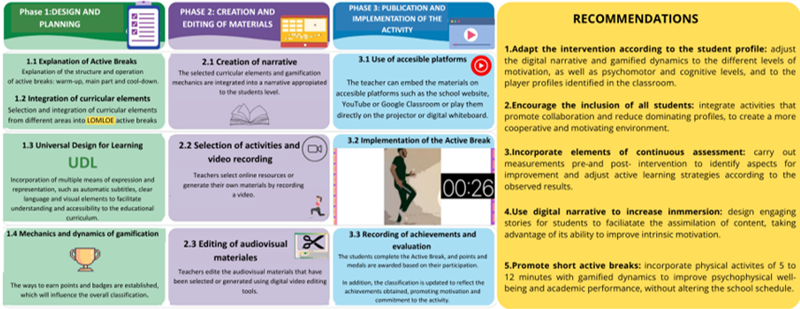
Finally, future research should address limitations such as the sample size, the duration of the intervention, limited in this study to a single session, and the absence of follow-up, which implies that the observed effects should be interpreted as short-term results. In this sense, it is suggested to explore longer and more sustained interventions, taking into account that short, frequent ABs distributed throughout the school week are more effective than long ABs (Watson et al., 2019; Zerf et al., 2021). Furthermore, the use of different types of DST, the inclusion of brief teacher training initiatives - such as the guidelines in Annex 1, designed to facilitate the pedagogical implementation of ABs - as well as the analysis of their impact on students with special educational needs or at risk of exclusion, and the comparison between different countries, could significantly enrich the study. Moreover, replication in public schools and rural settings with diverse socio-economic characteristics would allow for a deeper understanding of the scope of DST-gamified ABs in a wider variety of educational contexts. Additionally, it is recommended to analyze the level of digital literacy, availability of technological resources, and language barriers. Finally, it should be added that the fact that the sample comes from private charter schools in a medium-low socio-economic context limits the generalizability of the results to other populations. Therefore, it is recommended to extend the study to different educational and geographical contexts to improve the external validity and applicability of the findings.
Ethics Committee Statement
The educational institutions obtained informed consent based on the principles of the Declaration of Helsinki on research involving human subjects (World Medical Association, 2013). However, due to the nature and scope of this study, it was not necessary to submit it for approval by an ethics committee.
Conflict of Interest Statement
The authors declare that this research does not present any conflict of interest.
Funding
This research received no funding.
Authors' Contribution
Conceptualization MGM, JMPA & LAK.; Methodology MGM, JMPA & LAK; Software MGM; Validation MGM, JMPA & LAK; Formal Analysis MGM.; Investigation MGM.; Resources MGM, JMPA & LAK.; Data Curation MGM.; Writing – Original Draft MGM.; Writing – Review & Editing MGM, JMPA & LAK.; Visualization MGM.; Supervision MGM, JMPA & LAK. All authors have read and agreed to the published version of the manuscript.’
Data Availability Statement
Data available upon request from the corresponding author [mario.gomezmartin@unir.net].
Acknowledgements
We would like to thank the schools, teachers and students who participated in this research for their cooperation.
References
Abderrahim, L., & Plana, M. G. (2021). A theoretical journey from social constructivism to digital storytelling. The EuroCALL Review, 29(1), 38. https://doi.org/10.4995/eurocall.2021.12853
Alcaraz-Muñoz, V., Alonso Roque, J. I., & Yuste Lucas, J. L. (2022). Diseño y validación de la escala de juegos y emociones para niños (GES-C). Cuadernos de Psicología del Deporte, 22(1), 28–43. https://doi.org/10.6018/cpd.476271
Alvariñas-Villaverde, M., Portela-Pino, I., & Soto-Carballo, J. (2018). Level of motivation and physical activity in primary education students. Journal of Human Sport and Exercise, 13(2), S467-476. https://doi.org/10.14198/jhse.2018.13.proc2.30
Calero, A., & Injoque-Ricle, I. (2013). Propiedades psicométricas del inventario breve de experiencias óptimas (Flow). Revista Evaluar, 13(1), 40-55. https://doi.org/10.35670/1667-4545.v13.n1.6796
Campbell, J. (1949). The hero with a thousand faces. Princeton University Press.
Csikszentmihalyi, M. (1990). Fluir. Una psicología de la felicidad. Kairós.
Dallolio, L., Gallé, F., Masini, A., Valeriani, F., Ceciliani, A., Cagno, A., Galeone, D., Pecoraro, P., Valerio, G., Liguori, G., Spica, V., Brandi, G., Baldelli, G., Capelli, G., Coco, D., Corradi, M., Cortis, E., Deiana, P., Rosa, E., … & Ubaldi, F. (2022). Active breaks: a strategy to counteract sedentary behaviors for health promoting schools. A discussion on their implementation in Italy. Annali di Igiene: Medicina Preventiva e di Comunita, 35(2), 202-212. https://doi.org/10.7416/ai.2022.2532
Freytag, G. (1863). Die Technik des Dramas. S. Hirzel.
Frikha, M., Mezghanni, N., Chaâri, N., Said, N., Alibrahim, M., Alhumaid, M., Hassan, M., Alharbi, R., Amira, M., & Abouzeid, N. (2024). Towards improving online learning in physical education: Gender differences and determinants of motivation, psychological needs satisfaction, and academic achievement in Saudi students. PLOS ONE, 19(2), e0297822. https://doi.org/10.1371/journal.pone.0297822
González-Arévalo, C., & Lleixá-Arribas, T. (2010). Didáctica de la educación física. GRAÓ.
Grasse, K. M., Kreminski, M., Wardrip-Fruin, N., Mateas, M., & Melcer, E. F. (2022). Using self-determination theory to explore enjoyment of educational interactive narrative games: A case study of academical. Frontiers in Virtual Reality, 3. https://doi.org/10.3389/frvir.2022.847120
Green, M. C., & Brock, T. C. (2000). The role of transportation in the persuasiveness of public narratives. Journal of Personality and Social Psychology, 79(5), 701–721. https://doi.org/10.1037/0022-3514.79.5.701
Hamari, J., Koivisto, J., & Sarsa, H. (2014). Does gamification work? A literature review of empirical studies on gamification. 47th Hawaii International Conference on System Sciences, 3025–3034. IEEE Xplore. https://doi.org/10.1109/HICSS.2014.377
Hornstra, L., Veen, I., Peetsma, T., & Volman, M. (2015). Innovative learning and developments in motivation and achievement in upper primary school. Educational Psychology, 35(5), 598-633. https://doi.org/10.1080/01443410.2014.922164
Institute of Medicine (2013). Educating the Student Body: Taking physical activity and physical education to school. National Academies Press.
Jinmin, Z., & Qi, F. (2023). Relationship between learning flow and academic performance among students: A systematic evaluation and meta-analysis. Frontiers In Psychology, 14. https://doi.org/10.3389/fpsyg.2023.1270642
Khalaf, B. (2018). Traditional and Inquiry-Based Learning Pedagogy: A systematic critical review. International Journal of Instruction, 11(4), 545-564. https://doi.org/10.12973/IJI.2018.11434A
Kilic, F. (2014). Awareness and cognitive load levels of teacher candidates towards student products made by digital storytelling. Turkish Online Journal of Distance Education, 15(3), 94-107. https://dergipark.org.tr/en/download/article-file/155734
Kim, D., & Li, M. (2020). Digital storytelling: Facilitating learning and identity development. Journal of Computers in Education, 8(2), 33-61. https://doi.org/10.1007/s40692-020-00170-9
Larson, R. W., & Rusk, N. (2011). Intrinsic motivation and positive development. In R. M. Lerner, J. V. Lerner & J. B. Benson (Eds.), Advances In Child Development and Behavior (Vol. 41, pp. 89-130). Elsevier. https://doi.org/10.1016/b978-0-12-386492-5.00005-1
Ley Orgánica 3/2020, de 29 de diciembre, por la que se modifica la Ley Orgánica 2/2006, de 3 de mayo, de Educación. Boletín Oficial del Estado, 340 (2020). https://www.boe.es/eli/es/lo/2020/12/29/3
Liu, M., & Huang, Y. (2017). An inquiry-based digital storytelling approach for increasing learner autonomy in English. Lecture Notes in Computer Science (pp. 219-224). https://doi.org/10.1007/978-3-319-52836-6_23
Lorenzo-Lledó, A., Vázquez, E. P., Cabrera, E. A., & Lledó, G. L. (2023). Application of gamification in early childhood education and primary education: Thematic analysis. Retos. Nuevas Tendencias en Educación Física, Deportes y Recreación, 50, 858-875. https://doi.org/10.47197/retos.v50.97366
Mantjes, J. A., Jones, A. P., Corder, K., Jones, N. R., Harrison, F., Griffin, S. J., & Van Sluijs, E. M. (2012). School related factors and 1yr change in physical activity amongst 9–11 year old English schoolchildren. International Journal of Behavioral Nutrition and Physical Activity, 9(1), 153. https://doi.org/10.1186/1479-5868-9-153
Marczewski, A. (2015). Gamification. Even ninja monkeys like to play. Unicorn edition.
Martínez Campillo, R. L. (2017). Implementación del puzle de Aronson apoyado en el Flipped Classroom para la medición de la condición física en los alumnos de 2º de ESO. Revista Española de Educación Física y Deportes, (417), 21–37. https://doi.org/10.55166/reefd.vi417.543
Martinović, D., Ilić, J., & Višnjić, D. (2011). Gender differences in sports involvement and motivation for engagement in physical education in primary school. Problems of Education in the 21st Century, 31(1), 94-100. https://doi.org/10.33225/pec/11.31.94
McCambridge, J., Witton, J., & Elbourne, D. R. (2014). Systematic review of the Hawthorne effect: New concepts are needed to study research participation effects. Journal of Clinical Epidemiology, 67(3), 267–277. https://doi.org/10.1016/j.jclinepi.2013.08.015
Méndez-Giménez, A. & Pallasá-Manteca, M. (2023). The effects of active breaks on primary school students’ attentional processes and motivational regulation. Apunts Educación Física y Deportes, 151, 49-57. https://doi.org/10.5672/apunts.2014-0983.es.(2023/1).151.05
Moreno, J. A., González-Cutre, D., Chillón, M., & Parra, N. (2008). Adaptación a la educación física de la escala de las necesidades psicológicas básicas en el ejercicio. Revista Mexicana de Psicología, 25(2), 295-303. https://www.redalyc.org/pdf/2430/243016308009.pdf
Murcia, J. A. M., Coll, D. G., & Garzón, M. C. (2009). Preliminary validation in spanish of a scale designed to measure motivation in physical education classes: The Perceived Locus of Causality (PLOC) scale. The Spanish Journal of Psychology, 12(1), 327-337. https://doi.org/10.1017/s1138741600001724
Mustafa, S. M. S., Elias, H., Noah, S. M., & Roslan, S. (2010). A proposed model of motivational influences on academic achievement with flow as the mediator. Procedia - Social and Behavioral Sciences, 7, 2-9. https://doi.org/10.1016/j.sbspro.2010.10.001
Niemi, H., & Multisilta, J. (2016). Digital storytelling promoting twenty-first century skills and student engagement. Technology, Pedagogy and Education, 25(4), 451-468. https://doi.org/10.1080/1475939X.2015.1074610
Organización Mundial de la Salud. (2020). WHO Guidelines on physical activity and sedentary behaviour. In World Health Organization. https://www.who.int/publications/i/item/9789240015128
Pine, B. J., & Gilmore, J. H. (1998). Welcome to the experience economy. Harvard Business Review.
Prieto-Andreu, J., & Moreno-Ger, P. (2024). Jugar correctamente: Validación empírica de la escala Gamertype para el aprendizaje basado en juegos en la educación superior. Revista Española de Pedagogía, 82(288), 243-270. https://doi.org/10.22550/2174-0909.4056
Quintero González, L. E., Jiménez Jiménez, F., & Area Moreira, M. (2018). Más allá del libro de texto. La gamificación mediada con TIC como alternativa de innovación en Educación Física. Retos. Nuevas Tendencias en Educación Física, Deportes y Recreación, 34, 343–348. https://doi.org/10.47197/retos.v0i34.65514
Rahimi, M. (2019). Digital storytelling in language classes. In M. Khosrow-Pour, D.B.A. (Ed.), Advanced Methodologies and Technologies in Modern Education Delivery (pp. 276-290). IGI Global Scientific Publishing https://doi.org/10.4018/978-1-5225-2255-3.CH213
Ribeiro, S. P. M. (2017). Digital storytelling: Learning to be in higher education. In M. Thomas (Ed.), Digital Education and Learning (pp. 207-223). Springer Nature eBooks. https://doi.org/10.1007/978-3-319-51058-3_15
Rodrigues, L., Pereira, F. D., Toda, A. M., Palomino, P. T., Pessoa, M., Carvalho, L. S. G., Fernandes, D., Oliveira, E. H. T., Cristea, A. I., & Isotani, S. (2022). Gamification suffers from the novelty effect but benefits from the familiarization effect: Findings from a longitudinal study. International Journal of Educational Technology in Higher Education, 19(1), 13. https://doi.org/10.1186/s41239-021-00314-6
Ros-Morente, A., Cuenca, E., & Guiu, G. (2018). Analysis of the effects of two gamified emotional education software's in emotional and well-being variables in spanish children and adolescents. International Journal of Emerging Technologies in Learning, 13(9), 148-159. https://doi.org/10.3991/ijet.v13i09.7841
Ryan, R. M., & Deci, E. L. (2000). Self-determination theory and the facilitation of intrinsic motivation, social development, and well-being. American Psychologist, 55(1), 68-78. https://doi.org/10.1037/0003-066x.55.1.68
Sailer, M., & Homner, L. (2020). The gamification of learning: A meta-analysis. Educational Psychology Review, 32(1), 77–112. https://doi.org/10.1007/s10648-019-09498-w
Siddiqui, S., Alam, M., Azmi, J., Ahmad, M., Wiquar, R., & Aziz, A. (2021). Integration of ICT-learning environments: A paradigm shift from traditional teaching pattern. Proceedings of the 2nd International Conference on ICT for Digital, Smart, and Sustainable Development. Jamia Hamdard, New Delhi, India https://doi.org/10.4108/eai.27-2-2020.2303238
Sweller, J. (1988). Cognitive load during problem solving: Effects on learning. Cognitive Science, 12(2), 257–285. https://doi.org/10.1207/s15516709cog1202_4
Toledo-Palomino, P., & Isotani, S. (2024). Enhancing user experience in learning environments: A narrative gamification framework for education. Journal on Interactive Systems, 15(1), 478–489. https://doi.org/10.5753/jis.2024.4083
Villafuerte, V. P. E., Arcos, W. R. P., Morán, O. o. V., & Rodas, G. C. A. (2023). La gamificación como estrategia didáctica para mejorar la motivación y el rendimiento académico de los estudiantes en Educación Básica Media. Polo del Conocimiento, 8(12), 875-894. https://doi.org/10.23857/pc.v8i12.6319
Watson, A., Timperio, A., Brown, H., Best, K., & Hesketh, K. D. (2017). Effect of classroom-based physical activity interventions on academic and physical activity outcomes: A systematic review and meta-analysis. International Journal of Behavioral Nutrition and Physical Activity, 14(114), 1-24. https://doi.org/10.1186/s12966-017-0569-9
Watson, A. J., Timperio, A., Brown, H., & Hesketh, K. D. (2019). A pilot primary school active break program (ACTI-BREAK): Effects on academic and physical activity outcomes for students in Years 3 and 4. Journal of Science and Medicine in Sport, 22(4), 438-443. https://doi.org/10.1016/j.jsams.2018.09.232
Wigfield, A., Tonks, S., & Klauda, S. L. (2009). Expectancy-Value Theory. In K. R. Wentzel, & A. Wigfield (Eds), Handbook of motivation at school (pp. 69-90). Routledge Taylor Francis Group.
World Medical Association (2013). World medical association declaration of helsinki: ethical principles for medical research involving human subjects. Journal of the American Medical Association, 310(20), 2191-2194. https://doi.org/10.1001/jama.2013.281053
Younis, A., & Hatim, M. (2021). Trends in higher education under neoliberalism: Between traditional education and the culture of globalization. Educational Research and Reviews, 16(2), 16-26. https://doi.org/10.5897/ERR2020.4101
Zagita, C., & Sun, J. C. (2021). The effect of instructional and interactive feedback on EFL students’ cognitive load in digital storytelling. 2021 International Conference on Advanced Learning Technologies (ICALT), Tartu, Estonia, 282-284. https://doi.org/10.1109/icalt52272.2021.00091
Zerf, M., Kherfane, M. H., & Bouabdellah, S. (2021). Classroom routine frequency and their timing practice as critical factor to build the recommended primary school active break program. Retos. Nuevas Tendencias en Educación Física, Deportes y Recreación, 41, 434-439. https://doi.org/10.47197/retos.v0i41.77808
Annex 1
Implementation Guidelines and Recommendations for the Design of Gamified ABs With DST
Author notes
a Autor para la correspondencia: Mario Gómez Martín, mario.gomezmartin@unir.net
Additional information
Título Abreviado: Gamified Active Breaks With Digital Storytelling in Primary Education
How to cite this article: Gómez-Martín, M., Prieto-Andreu, J., & Álvarez-Kurogi, L. (2019). Impact of gamified active breaks through Digital Storytelling in primary education. Cultura, Ciencia y Deporte, 20(65), 2395. https://doi.org/10.12800/ccd.v20i65.2395


