
THE INFLUENCE OF GAMIFICATION ON THE TYPE OF STUDENT MOTIVATION IN PHYSICAL EDUCATION
INFLUENCIA DE LA GAMIFICACIÓN EN EL TIPO DE MOTIVACIÓN DEL ALUMNADO DE EDUCACIÓN FÍSICA


Francisco José Montiel-Ruiz, Antonio Calderón
THE INFLUENCE OF GAMIFICATION ON THE TYPE OF STUDENT MOTIVATION IN PHYSICAL EDUCATION
Cultura, Ciencia y Deporte, vol. 20, no. 65, 2025, 10.12800/ccd.v20i65.2330
Universidad Católica San Antonio de Murcia
Francisco José Montiel-Ruiz a
University of Murcia, Spain
Antonio Calderón
University of Limerick, Reino Unido
Received: 08 october 2024
Accepted: 30 April 2025
Abstract: Play is a fundamental activity within socialization processes and serves as an intrinsic component of culture. It also functions as an educational resource underpinning two pedagogical methodologies: gamification and game-based learning. Although these terms have often been used interchangeably, they differ significantly in both characteristics and objectives. This study aimed to examine the impact of a gamified educational intervention, implemented over an entire academic year, on students’ motivational profiles. A quantitative quasi-experimental pre-post design was employed. The Behavioral Regulation in Exercise Questionnaire-3 (BREQ-3) was used to assess changes in students’ levels of self-determined motivation. Participants included 224 students (121 girls and 103 boys) from seven 1st-year Baccalaureate and five 4th-year ESO classes. The core gamification element involved a collective scoreboard in Physical Education, where students earned points cooperatively. Results from the Wilcoxon test indicated a statistically significant improvement in introjected regulation (p = .002) with a small effect size (d = -0.321). The findings suggest that gamification primarily enhances extrinsic forms of motivation among students.
Keywords: Gamification, game-based learning, motivation, self-determination theory, Secondary Education.
Resumen: El juego es una actividad presente en los procesos de socialización como elemento intrínseco a la cultura. Es también un recurso de aprendizaje del que emanan dos metodologías educativas como la gamificación y el aprendizaje basado en el juego (ABJ). Términos que en el pasado se han usado indistintamente pero entre los que existe una diferenciación evidente tanto en las características como en su objetivo. El objetivo del estudio consistió en analizar la influencia de una intervención educativa gamificada, implementada durante un curso académico completo, en el tipo de motivación del alumnado. El método de investigación fue cuasiexperimental de carácter cuantitativo con un diseño pre-post. Se utilizó el cuestionario Behavioral Regulation in Exercise Questionnaire-3 (BREQ-3) que permite conocer los efectos de la intervención en los niveles de motivación autodeterminada del alumnado. Participaron siete grupos de 1º de bachillerato y cinco grupos de 4º ESO sumando un total de 224 alumnos (121 chicas y 103 chicos). El elemento principal de gamificación ha consistido en la construcción de un marcador colectivo en la asignatura de Educación Física para todos los participantes en el que se iban sumando puntos de manera cooperativa. La prueba de Wilcoxon evidencia una mejora estadísticamente significativa en la regulación introyectada (p=.002) con un tamaño del efecto pequeño (d=-0.321). Se concluyó que la gamificación tiene mayor influencia en la motivación extrínseca del alumnado.
Palabras clave: Gamificación, aprendizaje basado en el juego, motivación, teoría de la autodeterminación, Educación Secundaria.
Introduction
Play is a fundamental component in the cultural formation of a society, just like gastronomy or folklore, and is an integral part of its members' lives. Johan Huizinga argued in 1938, in his famous essay Homo Ludens, that play even predates culture in human society. He described it as an activity that captivates and fascinates the player, that arises without material interest, and from which no specific benefit is expected (Huizinga, 1972). The presence of play in socialization processes as an essential element of culture has an impact on learning. In this way, play becomes an educational tool that enables a playful approach to teaching content (Carreras, 2017), promoting comprehensive learning that encompasses the motor, cognitive, social, and emotional domains of human development (UNICEF, 2018). Moreover, it has been shown to be particularly effective as a teaching strategy for increasing student participation (Andrade, 2020).
Today, several educational trends and methods aim to leverage the motivational power of play to achieve educational goals and facilitate student learning. Among these are active gamification and game-based learning methodologies (Cornellà et al., 2020). An educational methodology is intended to support the acquisition of students' knowledge, skills, and attitudes (Cañizares & Carbonero, 2018). An active methodology involves the student taking an active role in their own meaningful learning (Bernal & Martínez, 2017), with the teacher prioritizing guided instruction and personalizing the learning process (Guillén, 2017).
The concepts of gamification and game-based learning (hereinafter GBL) are often used interchangeably, without recognizing the different possibilities each offers, and are mistakenly presented as synonyms. Therefore, it is necessary to define both active methodologies and highlight the elements that differentiate them. It is important to note that a game can be deconstructed, and certain elements can be extracted and applied to non-gaming contexts, such as business, education, or healthcare.
This process refers to gamification, a popular concept today due to its potential to achieve desired outcomes, such as increasing company sales or encouraging family involvement in school. Gamification is thus defined as the application of game characteristics and elements in non-playful situations (Parra-González et al., 2020), aiming to promote behavioral change, foster participation, and motivate individuals to achieve specific goals (Sevilla-Sánchez et al., 2023).
In the educational context, several authors agree that gamification involves using game-like elements to motivate student engagement and skill development, without requiring a fully playful environment (Cornellà et al., 2020; Fernández-Río et al., 2020). Additionally, “gamification is a strategy that involves creating stories or narratives that incorporate game elements and mechanics, making students the true protagonists of their learning” (Ardoy, 2017, p. 21). In contrast, GBL involves using an actual game to facilitate learning. In other words, the game functions as a didactic resource that, when implemented in the teaching–learning process, becomes the “vehicle for learning or working on a specific concept” (Cornellà et al., 2020, p. 9). GBL enables specific content to be taught through the design of activities based on original, adapted, or created games.
In this context, Cañizares and Carbonero (2018) emphasize that gamification does not involve creating a game but rather applying its elements within the teaching–learning process by “creating tasks, activities, and exercises with a series of elements that typically include: points, levels, teams, and badges” (p. 55). In this way, gamified educational activities are intentionally designed and structured to be carried out in a playful manner. Table 1, developed by the authors, summarizes the key differences between GBL and active methodologies based on gamification.
Differences Between PBL and Gamification (Authors)

Gamification processes involve a wide range of elements, which are structured across three dimensions: dynamics, mechanics, and components (Werbach & Hunter, 2012). Dynamics are considered the most abstract layer of gamification systems (Acosta-Medina et al., 2020) and serve to present activities through narratives, rules, or scripts, establishing the playful consequences of progress. Mechanics, on the other hand, are more tangible—referred to by Werbach and Hunter (2012) as the "verbs" of gamification—representing the actions players must take for the game to unfold, whether cooperatively, competitively, or individually.
In the educational context, mechanics represent the strategies students must apply to progress within the gamified experience and acquire relevant knowledge. The final dimension refers to components, which are the most concrete and recognizable aspects for students, signaling that they are participating in a game-like situation. These include elements such as avatars, badges, points, cards, rankings, levels, missions, or progress bars (Rodríguez-Martín et al., 2022).
In summary, dynamics are linked to the stories and narratives that frame the teaching–learning process; mechanics refer to the rules and procedures that guide it; and components are the scoring, tracking, or reward elements. Beyond these three dimensions, Fernández-Río and Flores-Aguilar (2019) identify key elements that make gamification truly effective in educational settings: a compelling narrative, challenging objectives, flexible tasks, and immediate feedback from the teacher, allowing students to understand their potential for progress.
It is also important to consider possible differences in how students respond to gamification. According to Prieto-Andreu and Moreno-Ger (2024), each participant may be drawn to different aspects of the game, leading to varied interactions with its mechanics. Recognizing this diversity makes it possible to design more effective gamification strategies. These authors propose a taxonomy of twelve player profiles based on three axes: relational, competence-based, and motivational.
In the motivational dimension, the theory of self-determination—developed by Deci and Ryan (1980)—is particularly relevant. This theory posits that human behaviors can be self-determined depending on the type of motivation driving them. Deci and Ryan describe a continuum ranging from amotivation to intrinsic motivation, passing through various stages of extrinsic motivation (Moreno et al., 2007). Moreno and Martínez (2006) define it as a "macro-theory of human motivation related to the development and functioning of personality within social contexts, analyzing the extent to which people act voluntarily and by their own choice" (p. 34).
Moreno et al. (2015) note that the theory of self-determination is increasingly applied in the analysis of motivational processes, particularly in the context of physical activity and sport, as it helps explain the causes and conditions under which human behaviors occur (p. 72). Deci and Ryan (2000) present a framework that organizes the different degrees of behavioral self-determination in relation to motivation, as illustrated in Table 2.
Types of Motivation and Behavior Regulation on the Self-Determination Continuum
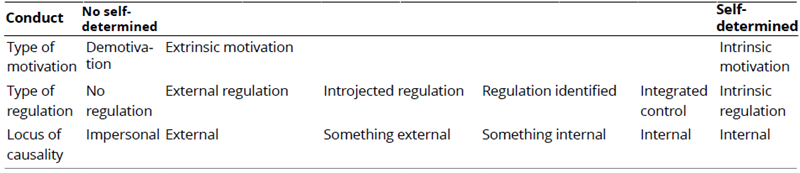
Note. Extracted from Deci and Ryan, 2000
Motivation can be understood as a continuum ranging from non-self-determined to fully self-determined behavior. Along this continuum, three main types of motivation emerge: amotivation, extrinsic motivation, and intrinsic motivation. Each of these is characterized by different forms of regulation, with varying loci of causality depending on the degree of self-determination. The practical application of self-determination theory in the field of physical activity should aim to guide individuals toward more self-determined forms of behavior by enhancing their intrinsic motivation. This can be achieved through instructional approaches in Physical Education that, as noted by Moreno et al. (2024), “use various motivational styles to create a positive learning environment and promote active lifestyle habits” (p. 38). The recommendations provided by Moreno and Martínez (2006)—which are also applicable to non-competitive physical activity and general Physical Education—include: providing positive feedback, promoting process-oriented goals, setting moderately challenging objectives, offering activity choices, fostering social relationships, using rewards judiciously, and helping students understand that ability can be improved through effort and learning (p. 16).
In short, this theory helps identify the type of motivation that governs students’ engagement in physical activity. Rather than indicating the mere presence or absence of motivation, it clarifies the nature of that motivation. This understanding enables us to assess the degree of self-determination a student exhibits in relation to their physical activity participation. The present study aimed to examine the relationship between a didactic intervention mediated by a gamification methodology and students’ motivation. Specifically, it analyzed how educational intervention influenced the various types of behavioral regulation in students when performing a task.
Material and Methods
Participants
The participants in this study were Physical Education teachers at the secondary education level. The project was disseminated through the Lorca Physical Education and Sport FORUM, which comprises over 300 members. The inclusion criterion for participation was that teachers had to be instructing students in either 4th year of ESO or 1st year of Baccalaureate. Ten teachers from five secondary schools in the Region of Murcia participated in the study. Their students were organized into seven groups from 1st year of Baccalaureate and five groups from 4th year of ESO, totaling 224 students (121 girls and 103 boys), aged between 15 and 18 years (M = 16.45; SD = 1.05). The entire intervention plan received unanimous approval from the Research Ethics Committee of the University of Murcia (ID: 1687). All procedures, regulations, and documentation recommended by the committee were followed to formally obtain authorization and informed consent from participants. This was carried out through an information sheet and an informed consent form, both signed by the student and their parents or legal guardians.
Instruments
The Questionnaire for the Regulation of Behavior in Physical Exercise-3 was used to know the effects of the intervention on the levels of self-determined motivation of the students. To this end, the version adapted to Spanish by González-Cutre et al. (2010) of the instrument called Behavioral Regulation in Exercise Questionnaire-3 (BREQ-3) by Wilson et al. (2006) was implemented. This questionnaire is based on the Self-Determination Theory, as it is composed of a total of twenty-three items that measure the stages of the self-determination continuum (intrinsic, integrated, identified, introjected, external regulation and demotivation). This questionnaire has been used in secondary school students in a multitude of studies (Alonso-Vargas et al., 2023; Pulido et al., 2021; Samperio et al., 2016; Vaquero-Solís et al., 2019) being the most used instrument according to the systematic review by Carrasco-Venturelli et al., (2024) on variables that analyze motivation. This allows us to know motivation as a factor that varies in a high school student according to the moment and situation instead of seeing motivation as a single unit of measurement. The questionnaire was subjected to an internal consistency analysis (González-Cutre et al., 2010), which revealed Cronbach's alpha values of .87 for intrinsic regulation, .87 for integrated regulation, .66 for identified regulation, .72 for introjected regulation, .78 for external regulation, and .70 for demotivation.
Educational Procedure and Intervention
The educational intervention was designed based on the fundamental elements proposed by Fernández-Río and Flores-Aguilar (2019) to gamify in educational contexts and which are described in Table 3. It was implemented in parallel to all the annual programming in Physical Education, so it was coordinated by the teachers of this area in each of the participating institutes. Summarizing the approach conducted, the students had to perform physical activity in their free time and share it through their virtual classroom space, keeping the activities, they conducted as an individual portfolio, whether they were individual or with classmates. Different challenging objectives were set for the students, which were shown in the form of challenges to be overcome cooperatively (Table 4). The teachers offered a formative assessment to improve the performance of the task and quantitatively scored these activities that served to accumulate points on a collective scoreboard (Figure 1) that allowed collaboration to overcome various stages. In addition, rankings were established by educational centers and class groups, awarding badges and reward cards to students (Figure 2).
Intervention Based on the Elements Defined in Fernández-Río and Flores-Aguilar (2019)
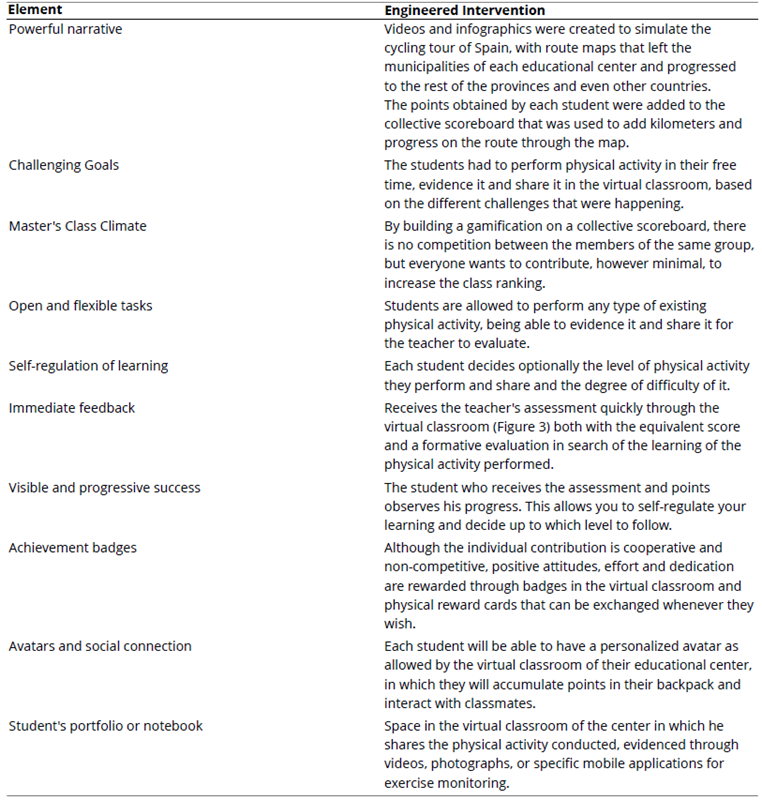
Teachers were given a linear plan with the challenges to be conducted in each term. There were specific cases of challenges, such as the training unit for cooperative games and the one referring to team games with opposition, in which they were given complete session cards. Never as something closed but as guides adaptable to their group-classroom context.
Descriptive List With the Challenges, Their Evaluation and Link to the Curricular Regulations
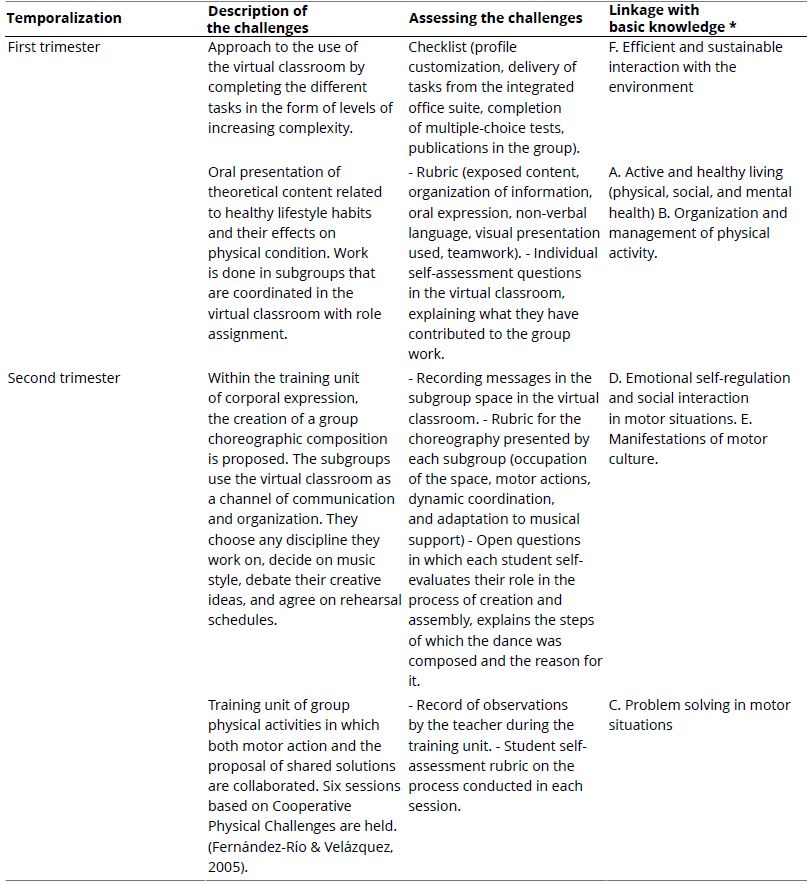
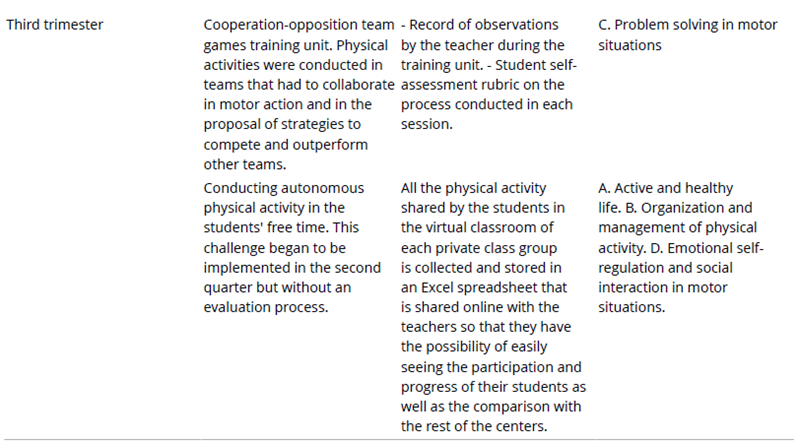
*Note. Basic knowledge in Physical Education extracted from Decrees 235/2022 and 251/2022 establishing the organisation and curriculum of Compulsory Secondary Education and Baccalaureate, respectively.
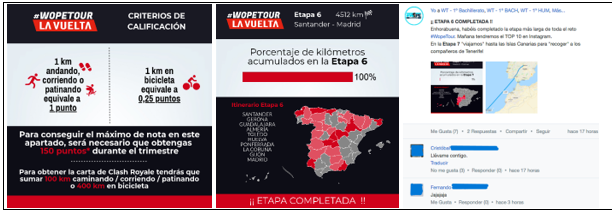
Figure 1
Representation of the Qualification Criteria and Captures of the Collective Scoreboard (Author’s Source)

Figure 2
Reward Letters Given to Students After Completing the Challenges (Author’s Source)
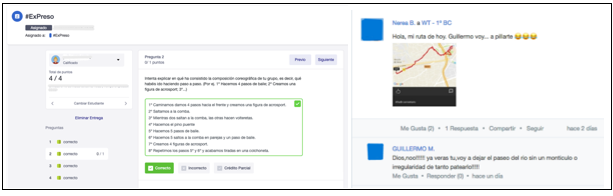
Figure 3
Screenshots With Examples of Interrelationships That Took Place in Virtual Classroom (Author’s Source)
Statistical Analysis
First, descriptive statistics (mean and standard deviation) were obtained, along with the mean differences between pre- and post-intervention scores, both for the overall sample and disaggregated by gender. Differences over time in the types of behavioral regulation were analyzed using the non-parametric Wilcoxon signed-rank test for related samples, as normality could not be assumed. Statistical significance was determined at a 95% confidence level (p < .05).
Subsequently, effect sizes were calculated using Cohen’s d index. According to Dunst and Hamby (2012), effect sizes can be categorized as negligible (d < 0.19), small (0.20 < d < 0.49), medium (0.50 < d < 0.79), or large (d > 0.80). It is worth noting that even a small effect size (d = 0.1) may represent a meaningful improvement if applied consistently across all students and sustained over time (Coe & Merino, 2003). Statistical analyses were conducted using IBM SPSS v26.
Results
To determine which elements characterize student behavior in pre-test and post-test conditions, the results of the BREQ-3 questionnaire analysis are presented. Table 5 displays the results of the comparative analysis between pre- and post-intervention moments regarding the types of behavioral regulation for all participants. The Wilcoxon test revealed a statistically significant improvement with a small effect size in introjected regulation (p = .002, d = –0.321) between the beginning and end of the intervention. This indicates an increase in student motivation regulated by introjection.
Descriptive Statistics and Wilcoxon Test Results for BREQ-3
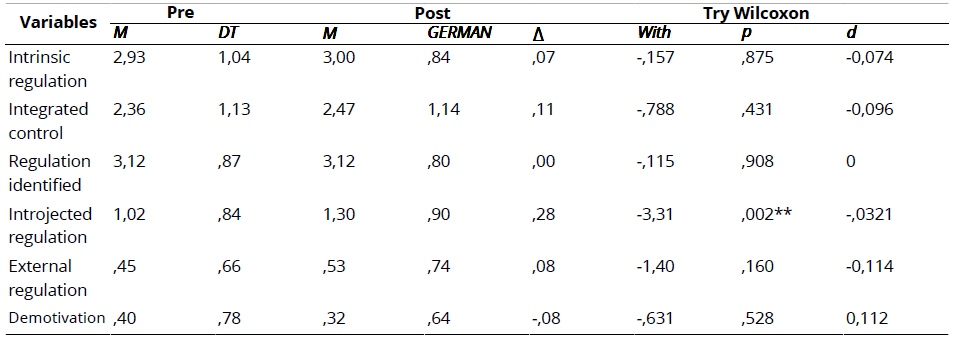
Note. Δ= Incremento de M; p < .001, ** p < .01, * p < .05; d = d de Cohen
Beyond the statistical significance in introjected regulation, a slight rightward shift of the distribution curve was observed—toward the more self-determined forms of regulation on the continuum (Figure 4). Thus, the trends indicated slight increases in intrinsic, integrated, and external regulation, while identified regulation remained unchanged and amotivation decreased.
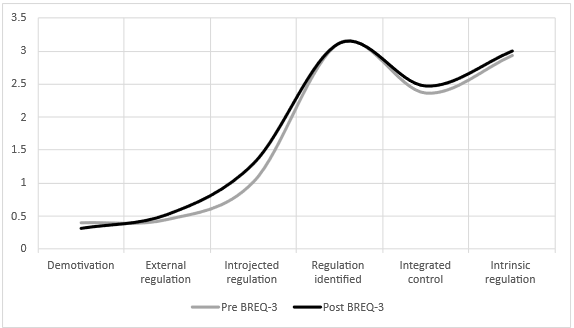
Figure 4
Graph With the pre- and Post-Levels of Behavior Regulation of all Participants
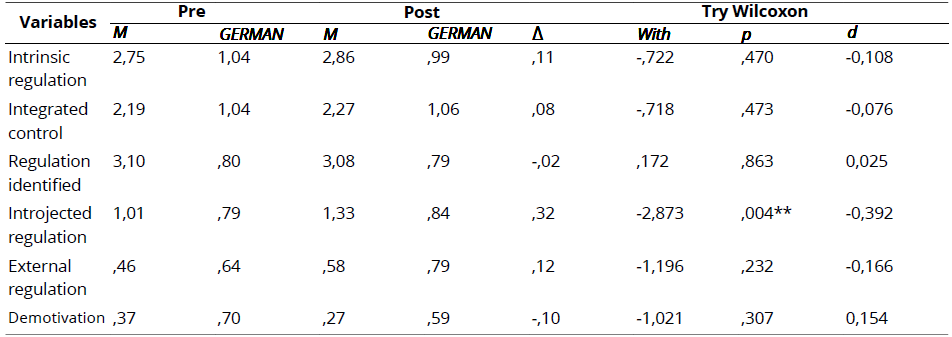
Table 6 shows the comparative analysis results for the participating girls. Again, the Wilcoxon test showed a statistically significant improvement with a small effect size in introjected regulation (p = .004, d = –0.392) between pre- and post-intervention. This reflects an increase in motivation among girls regulated by introjection.
Descriptive Statistics and Results of the Wilcoxon Test for BREQ-3 of Girls
Note. Δ= Incremento de M; p < .001, ** p < .01, * p < .05; d = d de Cohen
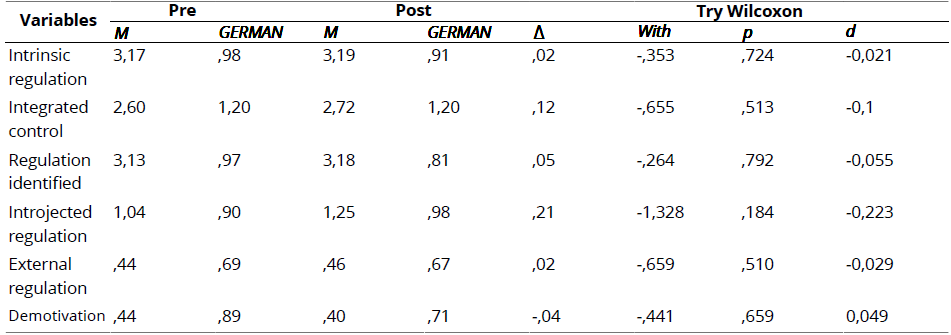
Although the remaining types of behavioral regulation did not show statistically significant changes, they exhibited positive trends. Notably, there was a rightward shift in values on the self-determination continuum, including a decrease in amotivation (Δ = –.10) and in external regulation (Δ = –.12). Table 7 presents comparative analysis results for the participating boys. In this case, the Wilcoxon test did not identify any statistically significant changes in the types of behavioral regulation. However, as with the girls, the program also led to an increase in introjected regulation, which, while not statistically significant (p = .184), still yielded a small effect size (d = –0.223).
Descriptive Statistics and Results of the Wilcoxon Test for BREQ-3 of Boys
Note. Δ= Incremento de M; p < .001, ** p < .01, * p < .05; d = d de Cohen
In terms of growth trends, beyond the increase in introjected regulation (Δ = .21), the rise in integrated regulation (Δ = .12) and a slight decrease in amotivation (Δ = –.04) are noteworthy.
A comparative analysis of changes between sexes reveals a general trend of the distribution curve shifting to the right following the gamification intervention—moving from amotivation toward intrinsic motivation. Despite these positive trends, statistical significance was found only for introjected regulation, particularly among girls. This type of regulation belongs to the extrinsic motivation range.
Discussion
In this study—featuring a didactic intervention mediated by gamification—growth in motivation and a reduction in student amotivation were observed. These results align with other studies (Andrade, 2020; Calbacho et al., 2021; Carbajal et al., 2022; Juan-Lázaro & Area-Moreira, 2021; Parra-González et al., 2020; Prieto-Andreu et al., 2022), which suggest that gamification has a direct and beneficial impact on students' learning experiences by enhancing motivation.
These findings are consistent with prior research (Fernández-Río et al., 2020; Moreno et al., 2015; Navarro-Mateos et al., 2023; Navarro-Mateos & Pérez-López, 2024) indicating that gamification, when implemented over a sustained period, increases student motivation. However, they contrast with recent findings by Sevilla-Sánchez (2023), whose gamification proposal, implemented with a control group, showed no improvements in motivation.
It is important to reiterate that the primary objective of this study was to examine the evolution of the continuum of behavioral regulation types, not whether motivation increased or decreased overall, but what kind of motivation regulated students’ engagement in tasks. Despite positive trends, statistical significance was observed only in introjected regulation, particularly among girls. This indicates that their increased participation in physical activity was driven by a sense of personal responsibility, typically to improve their grade in Physical Education or to contribute to the collective team score.
In other words, the area most influenced by gamification was extrinsic motivations specifically introjected regulation. This outcome runs counter to the core objective of using gamification in the classroom, which should be to establish conditions that foster intrinsic motivation. Promoting intrinsic motivation must remain a central priority in teachers' instructional planning (Salazar-Ayala, 2020). To this end, various studies have shown that gamification can enhance students’ intrinsic motivation when it includes active learning strategies, immediate feedback, visible and progressive success, continuous novelty, and a classroom climate oriented toward personal growth (Fernández-Río et al., 2020; Rodríguez-Martín, 2022).
From a methodological standpoint, the present study aligns with research that underscores the importance of immediate feedback and the progressive design of learning activities (Rodríguez-Martín, 2022). However, the absence of a significant effect on intrinsic motivation raises challenges. Methodological limitations of this study may have influenced the interpretation of results. Other research has shown that promoting self-determination is more effective when gamification focuses on personal meaning, satisfaction, and autonomy, rather than on external incentives (Navarro-Mateos et al., 2023).
The impact of gamification on introjected regulation suggests that gamified activity design must be reconsidered to better promote intrinsic motivation. This has several practical implications, such as prioritizing student autonomy. For example, tasks can be designed to allow students to make meaningful choices and decisions, helping them develop a stronger personal connection to the activity. Learning based on personal meaning—through activities that reflect students’ individual interests and values—is essential for moving beyond extrinsic motivation.
In this same vein, the inclusion of individualized progress goals is recommended. These goals should offer visible achievements that do not directly affect grading but instead provide other negotiated benefits between teacher and student, potentially supporting a transition toward self-determined behavior.
Another key implication of this study is the critical role of the teacher in activity planning. Teacher training is essential to ensure educators understand how to apply game elements (e.g., feedback, levels, challenges) in ways that support both autonomy and intrinsic motivation. This includes training in how to identify which elements foster self-determination and how to implement them intentionally. Given the current predominance of extrinsic motivation—such as performance driven by grades or collective scoring—it is advisable to replace these strategies with others that emphasize effort and personal improvement. Reward systems should be used in a way that does not undermine students’ sense of autonomy or their enjoyment of the task itself.
Today, multiple educational approaches aim to leverage the motivational potential of play to enhance learning outcomes. Among these are gamification and game-based learning (GBL). In this context, the teacher’s role is to integrate various methodologies to develop a personalized teaching strategy in which gamification and GBL are used when they improve the effectiveness and efficiency of the teaching–learning process. Thus, the implementation of games and game elements must be grounded in pedagogical principles, considering the functionality and usability of the chosen resources.
Ultimately, the success or failure of a learning activity based on these strategies depends not on the technique itself, but on thoughtful design, planning, and alignment with curricular objectives. Despite considering these elements in this study's intervention, it was observed that the greatest behavioral changes occurred in regulation types closer to extrinsic motivation.
Therefore, the inclusion of active methodologies based on play should aim to foster students' self-determination. A framework that views physical activity as driven by intrinsic motivation—grounded in personal meaning, satisfaction, and joy—should prevail over approaches that rely on grades or game scores as primary motivators.
Conclusions
Based on the findings of this study, it was concluded that gamification has a greater influence on students’ extrinsic motivation, as evidenced by an increase in introjected regulation. This outcome calls for a critical reflection on the use of gamification in educational contexts. The game elements integrated into learning experiences can pose a challenge, as they may generate artificial motivation—where the primary source of stimulus is external—thus reinforcing extrinsic motivation.
Therefore, it is essential to reconsider the design of game elements in educational interventions to ensure they foster intrinsic rather than extrinsic motivation. A positive aspect of these experiences lies in the upward trends in student motivation; however, further efforts are needed to create new educational experiences aimed at strengthening more self-determined forms of motivation.
The more engaging the game elements—such as narratives with challenging objectives and a visible, progressive success pathway—the greater the student interest. Nevertheless, this appeal may risk detaching gamification from its educational purpose. For these elements to meaningfully contribute to the teaching–learning process, they must be tightly linked to game dynamics and governed by rules that ensure alignment with curricular objectives. In this sense, game elements should serve the educational goals defined by the teacher, not dictate them.
Furthermore, several foundational factors must be promoted for gamification to be effective in teaching–learning processes. The first is positive interdependence—the need to achieve goals collectively, fostering collaboration among peers throughout the learning process. A key design question arises: How can we promote positive interdependence among students, encouraging teamwork and cooperation to achieve shared objectives?
This study found that the collective scoreboard is an effective tool for this purpose. It allows students to work together toward a common goal while competing with other classes, thereby promoting intergroup competition through intragroup cooperation.
Another important factor is curiosity, which is cultivated through experiential learning embedded in the narrative framework of the gamified project. Autonomy is equally essential; although students work collaboratively to meet shared goals, they must also assume personal responsibility for their individual tasks. When designing gamified experiences, educators must ask: How can we create narratives that spark students’ curiosity and inspire them to explore and discover independently?
The final critical factor is tolerance for error. Constructive feedback from both teachers and peers is essential to foster critical thinking and help students view mistakes as opportunities for growth. This raises further questions: What steps can we take to provide feedback that supports students in seeing error as a learning opportunity? How can gamification be designed to encourage a mindset in which mistakes are perceived not as failures but as a natural part of learning?
In summary, the success or failure of gamified learning activities does not depend solely on the presence of certain elements or techniques, but on thoughtful design, careful planning, and meaningful alignment with curricular goals. All of this leads to a final reflection that educators must consider: How can we integrate gamification elements in a way that motivates students to improve through their intrinsic desire to master the content, rather than relying on external rewards?
In other words, what measures can we take to ensure that gamification transcends the role of a mere system of external incentives and instead becomes a tool that fosters curiosity and a genuine love of learning?
To conclude, several limitations of this study must be acknowledged. From a practical perspective, one key limitation was the significant workload required of teachers to adapt their instructional planning to the gamified intervention. Additionally, the intervention was conducted in real, diverse, and heterogeneous educational contexts, making simultaneous implementation challenging due to the need to adjust timing and logistics for each school.
As for methodological limitations, the absence of a control group restricts the robustness of quantitative comparisons. Similarly, the lack of triangulation through qualitative analysis and the absence of a longitudinal design limits the depth of the findings and points to clear avenues for future research.
It would also be worthwhile to further explore the taxonomy of motivational profiles proposed by Prieto-Andreu and Moreno-Ger (2024), especially in relation to when gamified elements begin to lose their motivational impact due to the fading novelty effect. Moreover, although introjected regulation is far from representing full self-determination, its improvement may offer useful insights into whether it can predict sustained gains in academic performance.
Another promising direction would be to examine whether different types of gamified dynamics—competitive vs. collaborative—elicit different emotional responses among students, potentially influencing both engagement and learning outcomes.
Ethics Committee Statement
The full intervention plan received unanimous approval from the Research Ethics Committee of the University of Murcia (ID: 1687). The procedures, regulations, and documentation recommended by this committee were used to formally obtain authorization and participants’ consent, through an information sheet for participants and an informed consent statement.
Conflict of Interest Statement
The authors declare that there are no conflicts of interest.
Funding
This research did not receive any funding.
Authors' Contribution
Conceptualization: F.J.M.R. & A.C.; Methodology: F.J.M.R. & A.C.; Formal Analysis: F.J.M.R. & A.C.; Investigation: F.J.M.R. & A.C.; Resources: F.J.M.R. & A.C.; Data Curation: F.J.M.R.; Writing – Original Draft: F.J.M.R.; Writing – Review & Editing: A.C. All authors have read and agreed to the published version of the manuscript.’
Data Availability Statement
The data are available upon reasonable request from the corresponding author (franciscojose.montiel2@um.es)
Referencias
Acosta-Medina, J. K., Torres-Barreto, M. L., Paba-Medina, M. C., & Alvarez-Melgarejo, M. (2020). Análisis de la gamificación en relación a sus elementos. Universidad Industrial de Santander. https://hal.science/hal-02548860/
Alonso-Vargas, J. M., Ubago-Jiménez, J. L., Puertas-Molero, P., González-Valero, G., & Melguizo-Ibáñez, E. (2023). Motivación y práctica de actividad física en estudiantes de secundaria. Journal of Sport and Health Research. 15(1), 117-128. https://doi.org/10.58727/jshr.102773
Andrade, A. (2020). El juego y su importancia cultural en el aprendizaje de los niños en educación inicial. Journal of Science and Research: Revista Ciencia e Investigación, 5(2), 132-149. https://doi.org/10.5281/zenodo.3820948
Ardoy, D. N. (2017). Metodologías activas y gamificación en Educación Secundaria. En A. García de Alcaraz (ed.), El futuro de la Educación Física: nuevos enfoques y aplicaciones metodológicas (pp. 95-122). Universidad de Murcia. https://doi.org/10.6018/editum.2630
Bernal, M. C., & Martínez, M. S. (2017). Metodologías activas para la enseñanza y el aprendizaje. Revista Panamericana de Pedagogía, 25, 271-275. https://doi.org/10.21555/rpp.v0i25.1695
Calbacho, V., Díaz, C., Orsini, C., Torres, P., & Díaz, V. (2021). Gamificación: una innovación en aula para fomentar la motivación. Revista Convergencia Educativa, (10), diciembre, 55-64. http://doi.org/10.29035/rce.10.55
Cañizares, J. M., & Carbonero, C. (2018). Las TIC en la escuela actual: Nuevas metodologías didácticas en Educación Física. Wanceulen.
Carbajal, P., Rodríguez, J. R., Palacios, J., Ávila, G. A., & Cadenillas, V. (2022). Gamificación como técnica de motivación en el nivel superior. Horizontes. Revista De Investigación En Ciencias De La Educación, 6(23), 484–496. https://doi.org/10.33996/revistahorizontes.v6i23.351
Carreras, C. (2017). Del Homo ludens a la gamificación. Cuadernos de Filosofía, IV(I), 107-118. https://doi.org/10.7203/qfia.4.1.9461
Coe, R., & Merino, C. (2003). Magnitud del efecto: Una guía para investigadores y usuarios. Revista de Psicología, 21(1), 145-177. https://doi.org/10.18800/psico.200301.006
Cornellà, P., Estebanell, M., & Brusi, D. (2020). Gamificación y aprendizaje basado en juegos. Enseñanza de las Ciencias de la Tierra, 28(1), 5-19. https://raco.cat/index.php/ECT/article/view/372920
Deci, E. L., & Ryan, R. M. (1980). Self-determination theory: When mind mediates behavior. Journal of Mind and Behavior, 1(1), 33-43. https://www.jstor.org/stable/43852807
Deci, E. L., & Ryan, R. M. (2000). The "what" and "why" of goal pursuits: Human needs and the self-determination of behaviour. Psychological Inquiry, 11, 227-268. https://doi.org/10.1207/S15327965PLI1104_01
Dunst, C. J. y Hamby, D. W. (2012). Guide for calculating and interpreting effect sizes and confidence intervals in intellectual and developmental disability research studies. Journal of Intellectual and Developmental Disability, 37(2), 89-99. https://doi.org/10.3109/13668250.2012.673575
Fernández-Río, J., & Velázquez, C. (2005). Desafíos físicos cooperativos: retos sin competición para las clases de Educación Física. Wanceulen. http://hdl.handle.net/11162/61054
Fernández-Río, J., & Flores-Aguilar, G. (2019). Fundamentación teórica de la gamificación. En J. Fernández-Río (coord.), Gamificando la Educación Física. De la teoría a la práctica en Educación Primaria y Secundaria (pp. 9-18). Ediciones Universidad de Oviedo.
Fernández-Río, J., de las Heras, E., González, T., Trillo, V., & Palomares, J. (2020). Gamification and physical education. Viability and preliminary views from students and teachers. Physical Education and Sport Pedagogy, 25(5), 509-524. https://doi.org/10.1080/17408989.2020.1743253
Ferreres, C. (2011). La integración de las tecnologías de la información y de la comunicación en el área de la Educación Física de secundaria: Análisis sobre el uso, nivel de conocimientos y actitudes hacia las TIC y de sus posibles aplicaciones educativas. [Tesis doctoral, Universitat Rovira i Virgili]. http://hdl.handle.net/10803/52837
González-Cutre, D., Sicilia, A. y Fernández, A. (2010). Hacia una mayor comprensión de la motivación en el ejercicio físico: Medición de la regulación integrada en el contexto español. Psicothema, 22(4), 841-847. http://www.psicothema.com/psicothema.asp?id=3810
Guillén, J. C. (2017). Neuroeducación en el aula: de la teoría a la práctica. CreateSpace
Huizinga, J. (1972). Homo ludens. Alianza Editorial.
Juan-Lázaro, O., & Area-Moreira, M. (2021). Gamificación superficial en e-learning: evidencias sobre motivación y autorregulación: [Thin layer gamification in e-learning: evidence on motivation and self-regulation]. Pixel-Bit. Revista de Medios y Educación, 62, 146–181. https://doi.org/10.12795/pixelbit.82427
Moreno, J. A., Saorín, M., Baena, S., Ferriz, A. & Barrachina, J. (2024). Motivating teaching styles and directiveness in Physical Education. Apunts Educación Física y Deportes, 155, 38-49. https://doi.org/10.5672/apunts.2014-0983.es.(2024/1).155.05
Moreno, J. A., & Martínez, A. (2006). Importancia de la teoría de la autodeterminación en la práctica físico-deportiva: Fundamentos e implicaciones prácticas. Cuadernos de Psicología Del Deporte, 6(2), 39-54. https://revistas.um.es/cpd/article/view/113871
Moreno, J. A., Cervelló, E., & Gonzalez-Cutre, D. (2007). Analizando la motivación en el deporte: un estudio a través de la teoría de la autodeterminación. Apuntes de Psicología, 25(1), 35-51. http://www.apuntesdepsicologia.es/index.php/revista/article/view/113
Moreno, H., Cuevas, R., Pulido, J. J., & García, T. (2015). Influencia de una aplicación de telefonía móvil de entrenamiento sobre las necesidades psicológicas y la motivación autodeterminada en escolares. Cuadernos de Psicología del Deporte, 15(2), 71-78. https://revistas.um.es/cpd/article/view/233831
Muyor, J. M., Águila, C., Sicilia, A., & Orta, A. (2009). Análisis de la motivación autodeterminada en usuarios de centros deportivos. Revista Internacional de Medicina y Ciencias de la Actividad Física y el Deporte, 9(33), 67-80. https://www.redalyc.org/pdf/542/54222999006.pdf
Navarro-Mateos, C., Mora-Gonzalez, J., & Pérez-López, I. J. (2023). The “STAR WARS: The First Jedi” Program. Effects of Gamification on Psychological Well-Being of College Students. Games for Health Journal. https://doi.org/10.1089/g4h.2023.0059
Navarro-Mateos, C., & Pérez-López, I. J. (2024). Gamificación: de la curiosidad al aprendizaje a través de la emoción en el máster de profesorado. Revista Electrónica Interuniversitaria de Formación del Profesorado, 27(1), 151-166. https://doi.org/10.6018/reifop.591631
Parra-González, E., Segura-Robles, A., & Romero-García, C. (2020). Análisis del pensamiento creativo y niveles de activación del alumno tras una experiencia de gamificación. Educar, 56(2), 475–489. https://doi.org/10.5565/rev/educar.1104
Prieto-Andreu, J. M., Gómez-Escalonilla-Torrijos, J. D., & Said-Hung, E. (2022). Gamificación, motivación y rendimiento en educación: Una revisión sistemática. Revista Electrónica Educare, 26(1), 251-273. https://doi.org/10.15359/ree.26-1.14
Prieto-Andreu, J. M., & Moreno-Ger, P. (2024). Jugar correctamente. Revista Española de Pedagogía, 82(288), 243-270. https://doi.org/10.22550/2174-0909.4056
Pulido, J. J., Tapia-Serrano, M. Á., Díaz-García, J., Ponce-Bordón, J. C., & López-Gajardo, M. Á. (2021). The Relationship between Students’ Physical Self-Concept and Their Physical Activity Levels and Sedentary Behavior: The Role of Students’ Motivation. International Journal of Environmental Research and Public Health, 18(15). https://doi.org/10.3390/ijerph18157775
Rodríguez-Martín, B., Flores-Aguilar, G., & Fernández-Río, J. (2022). Ansiedad ante el fracaso en educación física ¿puede la gamificación promover cambios en las alumnas de primaria? Retos, 44, 739–748. https://doi.org/10.47197/retos.v43i0.90864
Salazar-Ayala, C. M., & Gastélum-Cuadras, G. (2020). Teoría de la autodeterminación en el contexto de educación física: Una revisión sistemática. Retos, 38, 838–844. https://doi.org/10.47197/retos.v38i38.72729
Samperio, J., Jiménez-Castuera, R., Lobato, S., Leyton, M., & Claver, F. (2016). Variables motivacionales predictoras de las barreras para la práctica de ejercicio físico en adolescentes. Cuadernos de Psicología del Deporte, 16(2), 65–76. https://revistas.um.es/cpd/article/view/264431
Sevilla-Sanchez, M., Dopico Calvo, X., Morales, J., Iglesias-Soler, E., Fariñas, J., & Carballeira, E. (2023). La gamificación en educación física: efectos sobre la motivación y el aprendizaje. Retos, 47, 87–95. https://doi.org/10.47197/retos.v47.94686
UNICEF (2018). Aprendizaje a través del juego. Fondo de las Naciones Unidas para la Infancia. https://uni.cf/2SIkC1n
Vaquero-Solís, M., Sánchez-Miguel, P. A., Tapia, M. Á., Pulido, J. J., & Iglesias, D. (2019). Physical Activity as a Regulatory Variable between Adolescents’ Motivational Processes and Satisfaction with Life. International Journal of Environmental Research and Public Health, 16(15), 2765. https://doi.org/10.3390/ijerph16152765
Werbach, K., & Hunter, D. (2012). For the win: how game thinking can revolutionize your business. Wharton Digital Press.
Wilson, P. M., Rodgers, W. M., Loitz, C. C. y Scime, G. (2006). «It’s who I am … really!». The importance of integrated regulation in exercise contexts. Journal of Applied Biobehavioral Research, 11(2), 79-104. https://doi.org/10.1111/j.1751-9861.2006.tb00021.x
Author notes
Autor para la correspondencia: Francisco José Montiel-Ruiz, franciscojose.montiel2@um.es
Additional information
Título Abreviado: Influence of Gamification on Motivation
How to cite this article: Montiel-Ruiz, F.J., & Calderón, A. (2025). The influence of gamification on the type of student motivation in physical education. Cultura, Ciencia y Deporte, 20(65), 2330. https://doi.org/10.12800/ccd.v20i65.2330


