
PHYSICAL EDUCATION IN STUDENTS WITH ATTENTION DEFICIT HYPERACTIVITY DISORDER. STATE OF THE ART
EDUCACIÓN FÍSICA EN ALUMNADO CON TRASTORNO DE DÉFICIT DE ATENCIÓN E HIPERACTIVIDAD. ESTADO DEL ARTE


Amparo Tijeras-Iborra, Jesús Ramón-Llin, Diana Marín-Suelves
PHYSICAL EDUCATION IN STUDENTS WITH ATTENTION DEFICIT HYPERACTIVITY DISORDER. STATE OF THE ART
Cultura, Ciencia y Deporte, vol. 20, no. 64, 2025
Universidad Católica San Antonio de Murcia
Amparo Tijeras-Iborra
Universitat de València, España
Jesús Ramón-Llin a
Universitat de València, España
Diana Marín-Suelves
Universitat de València, España
Received: 29 july 2024
Accepted: 14 february 2025
Abstract: Attention deficit hyperactivity disorder (ADHD) is one of the most common disorders in schools. The aim of this study was to analyse studies on the topic and the impact of physical education on students with ADHD. The research team conducted a systematic review using the PRISMA method. The results showed that most of the research was carried out in centers in Spain, the USA, Canada and China. The interventions, which included different types of Physical Education activities, showed positive effects on improving the symptoms of people diagnosed with ADHD, as well as their physical condition, body image self-perception and motivation to engage in physical activity. However, there are barriers to achieving educational inclusion in heterogeneous groups: in teacher training and in the organization of resources, which proved to be key factors.
Keywords: Physical education, ADHD, inclusion, school, review.
Resumen: El trastorno de déficit de atención e hiperactividad (TDAH) es uno de los trastornos de mayor incidencia en el ámbito escolar. Este estudio tuvo como objetivo analizar estudios sobre la temática y la incidencia de la educación física sobre el alumnado con TDAH. Para ello, se utilizó una revisión sistemática siguiendo el método PRISMA. Los resultados señalaron que la mayoría de las investigaciones se han realizado en centros de España, USA, Canadá y China. Las intervenciones realizadas con diferentes tipos de actividades en el área de Educación Física mostraron tener efectos positivos para la mejora de la sintomatología en personas diagnosticadas con TDAH, así como en su condición física, percepción de la imagen corporal y motivación hacia actividades motrices. Sin embargo, existen barreras para conseguir la inclusión educativa en grupos heterogéneos, en la formación del profesorado y en la organización de recursos, que han demostrado ser factores clave.
Palabras clave: Educación física, TDAH, inclusión, escuela, revisión.
Introduction
Today's society is characterised by the importance attached to inclusive values, which are essential for achieving more equitable, democratic and high-quality schools. Inclusive education advocates equal opportunities for all students, especially those with disabilities or special educational needs (Gámez-Calvo et al., 2024), including students with attention deficit hyperactivity disorder (ADHD).
ADHD, classified as a neurodevelopmental disorder in the American Psychiatric Association's Diagnostic and Statistical Manual of Mental Disorders, Fifth Edition (DSM-5) (APA, 2013), is one of the disorders with the highest incidence among school-aged children (with an estimated prevalence of between 5.9% and 7.1%) and has a significant impact on all domains (cognitive, emotional, social) and contexts of the affected individual (Fernández-Andrés et al., 2019; Sánchez & Cohen, 2020).
The DSM-5 (APA, 2013) indicates that the disorder is multi-causal (genetic, epigenetic, psychosocial) and shows neuroanatomical and neurofunctional differences compared to typically developing individuals. These differences are mainly found in the regulation of neurotransmitter levels such as serotonin, dopamine and norepinephrine, which are responsible for the proper functioning of executive functions such as sustained and selective attention, working memory, inhibitory control, planning and cognitive fluency.
The symptoms meet specific criteria of intensity, frequency and duration that correspond to two main diagnostic criteria: inattention or difficulty sustaining attention; and hyperactivity – motor or verbal – and impulsivity, resulting in difficulty inhibiting responses. The inattentive, hyperactive/impulsive, or combined profiles are the result of the presence or absence of these symptoms, and their needs depend on their individual characteristics and the impact on their functioning in all contexts (APA, 2013).
Similarly, the DSM-5 notes that ADHD symptomatology results in motor developmental deficits, with a degree of clumsiness that can affect feelings of self-efficacy and motivation (Bowling et al., 2017). This self-perceived ineffectiveness in relation to the skills required for physical activities is not only an often-invisible discomfort, but also reduces opportunities for participation. Combined with a lack of self-regulation and attention difficulties, it can lead to behaviour that is not always understood by the group, to voluntary isolation of the person with ADHD, to feeling or being excluded from the group, and even to a situation of vulnerability to bullying (Bejerot et al., 2022).
According to Carriedo (2014), several reasons may limit the participation of students with ADHD in physical activity. In some cases, Physical Education (PE) is the only time that students with ADHD devote to physical activity, while in other cases, families have fewer active lifestyles or do not value it as much as they could because they are overwhelmed by the impact (economic, social, personal) that raising a child with ADHD can have. This limits the opportunities to improve motor development, which in turn reduces their chances of participating in physical activity in the future. Furthermore, according to Villa and Méndez (2021), the increased time that students with ADHD spend on academic tasks also hinders and reduces their participation in physical activities. Thus, this increased sedentary lifestyle favours the development of hypokinetic diseases such as obesity (Villa & Méndez, 2021).
On the other hand, in addition to the problems associated with a sedentary lifestyle (it has a high comorbidity rate and is associated with behavioural problems), ADHD requires a rigorous diagnosis by a clinical specialist, together with the contribution of information from the family and teachers, and an intervention that is properly adapted to the inter-individual situation of the individual (Fernández-Andrés et al., 2019). Nevertheless, the treatment of these symptoms should always be multimodal, not only because pharmacological treatment is controversial due to its side effects (Carriedo, 2014), but also because behavioural and psychoeducational aspects should be considered.
In this regard, some studies and scientific literature reviews (Benzing & Smith, 2019; Rivera & Remón, 2017; Santolalla, 2022) indicate that physical activity has some benefits that can counteract or reduce the effects and manifestations of ADHD symptoms. It can improve motor skills, executive functions, and neurocognitive performance, which has an impact on behaviour, interpersonal relationships, and academic performance. The results show an increase in neurotransmitter levels, which also counteracts effects – often due to medication – such as insomnia, anxiety, or depression (Bowling, 2017). In addition, as Ruiz and Villa (2023) point out, there are benefits for students with ADHD in executive functions, motor skills, and academic performance.
On the other hand, other studies point to the difficulties experienced by students with ADHD, particularly in the subject of PE. For example, Villa and Méndez (2021) reported a lack of impulse control and poorer frustration management. Furthermore, Villa et al. (2020) concluded that these students are less active, prefer more individualistic activities, and are less motivated towards the subject. Finally, Llopis (2014) observed more disruptive behaviour during PE lessons among students with ADHD.
Therefore, the aims of this literature review are: 1) to describe the interventions carried out in the last decade for students with ADHD in the field of PE, 2) to analyse the strategies and measures applied by professionals and the resources used in PE, 3) to determine the influence of PE on students with ADHD, and 4) to extract the key elements of interventions based on scientific evidence for the design of inclusive proposals from PE.
The questions to be answered in this paper are, firstly, related to the characteristics of the documents analysed, such as: what is the temporal evolution of the analysis of this topic? Who are the researchers working in this field? What countries are the studies coming from? Which journals deal with ADHD and PE issues? And what language do researchers use to disseminate their results? The second set of questions relates to methodological aspects, such as: what kind of studies are being conducted? What is their design approach? What data collection tools do they use? And what are the characteristics of their participants? Finally, content questions are addressed, such as: what are the characteristics of interventions with students with ADHD in PE? What strategies and resources do they use, and what measurements were do they perform? What are the effects of these interventions? And what are the key elements for improving the inclusion of students with ADHD in PE?
Materials and Methods
This literature review is based on the PRISMA method (Page et al., 2021). We used the Scopus database because of its recognized prestige and the number of documents it contains (García et al., 2020).
We searched using a combination of keywords and Boolean operators: 'physical education' AND 'ADHD' OR 'attention-deficit disorder' OR 'hyperactivity disorder', both in English and Spanish, in the title, abstract or keywords.
Table 1 shows the inclusion and exclusion criteria we used to select the documents to be analysed.
Selection Criteria
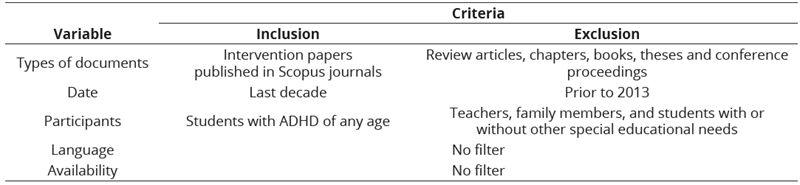
In the first stage, we identified a total of 78 documents. By selecting those that had been published in the last ten years, we selected 49 items, 40 of which were papers. After reading the title and abstract, five were discarded because they did not relate to PE or were not conducted in a school context. A total of 32 full papers were therefore assessed. Of these, 22 were finally selected for analysis because they described interventions involving students with ADHD. Figure 1 shows the four-stage document selection process.
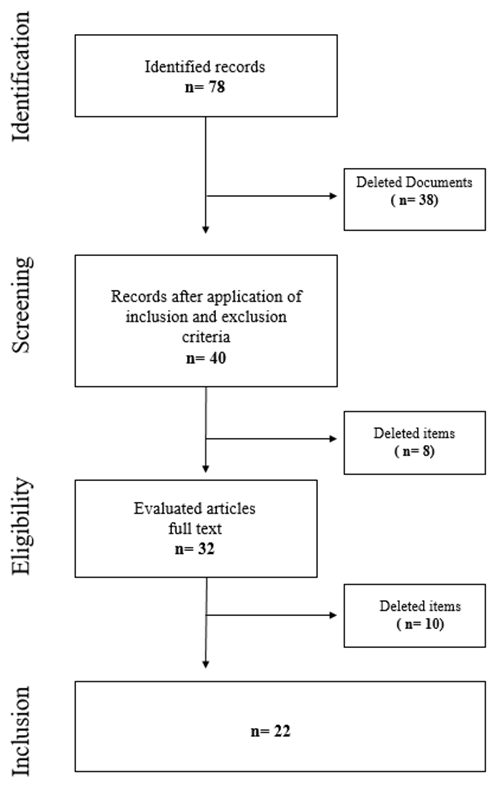
Figure 1
Framing Scores for Different Reward Sizes
Drucker et al. (2016) defined selection bias as the failure to identify all available documents or data on a topic. In this paper, the type of outcomes achieved by students with ADHD was not set as an inclusion criterion, i.e., studies were included for analysis regardless of whether the interventions had an effect or not, or whether this effect was positive or negative. This reduces publication bias, whereby only studies with statistically significant results are more likely to be analysed (Khan et al., 2022; Sutton et al., 2000).
The following variables, which emerged from the researchers' independent reading of the papers, were included in the content analysis (Table 2).
Variables Analysed
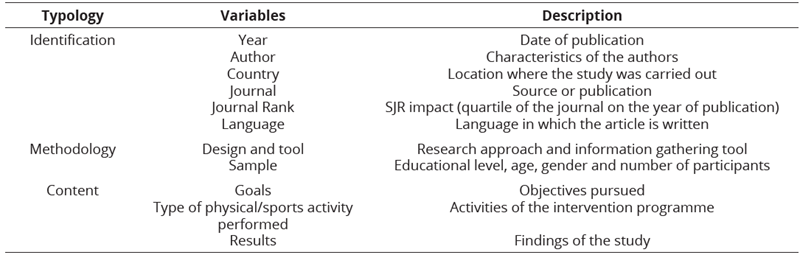
Note. SJR= SCImago Journal Ranking refers to the impact of the journal in Scopus.
Results
This work analysed identification, methodology, and content variables.
With regard to identification, we took into account the authors, date of publication, country, journal (and rank), and language.
Firstly, we must note that a total of 81 authors contributed to the 22 papers analysed. There are no major differences in the number of men and women involved, as the percentage is close to 50% for each sex. It is worth noting the number of papers in which all the authors are of the same sex (with two papers are signed by women only and eight are signed by men only). However, the rate of collaboration is high: all papers are written by three or more authors, with the exception of two signed by a single author – Reche García (2016), who analysed the potential of extracurricular fencing, and Jun (2023), who focused on achievement motivation – and another by two authors on interactions between Chinese students (Qi & Wang, 2018). The paper with the largest number of authors is Gökçen et al. (2013), signed by more than 10 authors. This paper analyses the choice of sports activities among students in higher education. All identified authors are occasional producers with one or two published articles (the authors with two published documents are M. Vila de Gregorio, N. Grizenko, R. Joober, S. Wilkinson, E. Inglés, V. Labrador and F.J. Hernández.
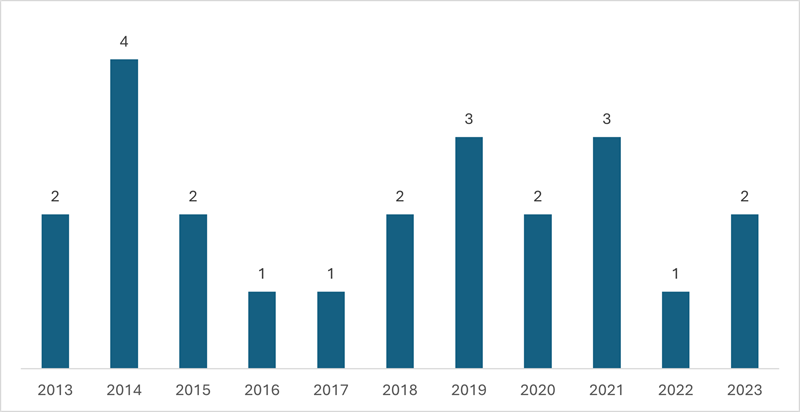
Figure 2
Articles Published by Year
Focusing on where the studies were carried out (Figure 3), the weight of countries such as Spain (Labrador-Roca et al., 2019; Labrador-Roca et al., 2020; López-Sánchez et al., 2015; Reche García, 2016; Villa de Gregorio et al., 2022; Villa de Gregorio et al., 2023) and the USA (Bowling et al., 2017; Hoza et al., 2020) is significant, with five papers each published on this topic. Canada ranks third with two papers (Harvey et al., 2014; Wilkinson et al., 2013), together with China (Jun, 2023; Qi & Wang, 2018). A further 10 countries have published an article on PE with students with ADHD in the last decade, e.g., Australia, Turkey or Brazil.
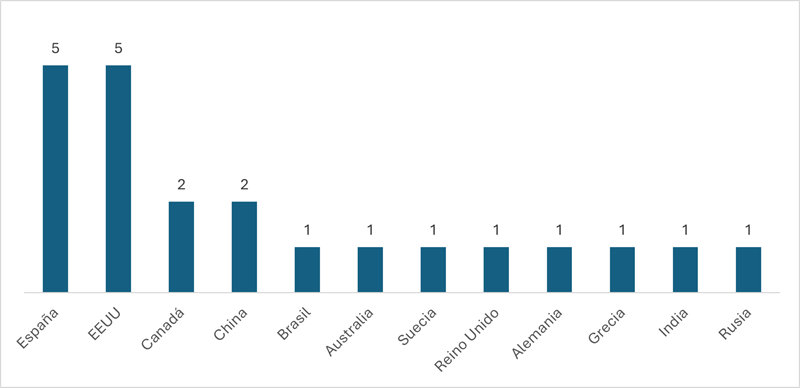
Figure 3
Countries of Intervention
We did not find any clustering of articles in the same journal, except in the case of Physical Education and Sports Pedagogy, which published four of the articles analysed (Harvey et al., 2014; Qi & Wang, 2018; Thoren et al., 2021; Wilkinson et al., 2013). The diversity of the sources identified, related to the fields of physical education and sport, psychology or medicine, is therefore striking and reflects the transversal nature of the object of study, given that attention to diversity is everyone's business. In terms of the rank of these journals, measured by the quartile listed in the SCImago Journal Rank (SJR), the following stand out in Q1: Physical Education and Sport Pedagogy, Journal of Child Psychology and Psychiatry and Allied Disciplines, Frontiers in Psychology, and Mental Health and Physical Activity.
Finally, the predominant language for the dissemination of results in this field is English, which is used in 77.3% of the total number of articles analysed.
Secondly, with regard to the methodological variables, we considered the research design, the tools used to collect the information, and the characteristics of the sample. In terms of research design and paradigm, all the studies analysed met the inclusion requirement of having carried out an intervention. Most (64%) used a positivist-quantitative paradigm through the use of questionnaires (e.g., Jun, 2023; Villa de Gregorio et al., 2022, 2023), while a minority of interpretive studies (18%) used interviews and/or field diaries (e.g., Wilkinson et al., 2013; Labrador-Roca et al., 2019). A few studies (14%) used mixed designs (e.g., Harvey et al., 2014; Qi & Wang, 2018). Among the 64% of quantitative studies, only 29% had a control group (e.g., Bowling et al., 2017; Reche García, 2016) and 43% conducted pre- and post-tests (e.g., Jarraya et al., 2019; López-Sánchez et al., 2015). Furthermore, 86% of the analysed studies used questionnaires – 32% of them to detect symptoms or diagnose ADHD) (e.g., Hoza et al., 2020; Tsimaras et al., 2014), 21% to assess motor skills (e.g., Harvey et al., 2014; Jeyanthi et al., 2021) or self-perception of motor competence (Makunina et al., 2021), and 16% to assess behavioural aspects (e.g., Bowling et al., 2017; Labrador-Roca et al., 2020) or social interaction (Qi & Wang, 2018). Finally, we also found one study assessing the level of cognitive development (Hoza et al., 2020), another to determine preferences between different elements of the learning process (Villa de Gregorio et al., 2022), another to assess self-perceptions of body image (López-Sánchez et al., 2015), and one to compare attitudes towards the inclusion of a student with ADHD in PE lessons (Pedersen et al., 2014).
Regarding the characteristics of the sample in the different studies, 15% of the studies conducted interventions exclusively with male student samples (e.g., Jun, 2023; Jeyanthi et al., 2021; López-Sánchez et al., 2015), while 62% analysed both sexes (e.g., Villa de Gregorio et al., 2022; 2023; Thoren et al., 2021). One study focused on teachers (Wilkinson et al., 2013), while 19% did not specify gender (e.g., Labrador-Roca et al., 2019; 2020) and no study focused exclusively on women. In terms of age and stage of participants, 10% studied pre-school children (e.g., Hoza et al., 2020; Jarraya et al., 2019), 46% were conducted in primary schools (e.g., Taylor et al., 2019; López-Sánchez et al., 2015), 23% in high schools (e.g., Bowling et al., 2017; Qi & Wang., 2018), and 14% in university or other higher education institutions (e.g., Gökçen et al., 2013; Makunina et al., 2021). Furthermore, almost 70% of studies used a sample whose members had already been diagnosed with ADHD, and 50% of those used two groups, one with an ADHD diagnosis and one without (e.g., Hoza et al., 2020; Thoren et al., 2021).
Thirdly, in terms of content, we distinguish between the objectives to be achieved, the physical/sport activities used, and the outcomes of the studies analysed. Most studies (60%) focused on analysing the effects of the interventions on different psychological variables, such as achievement motivation or improvement of attention symptoms, hyperactivity, and desirable or undesirable behaviours (e.g., Bowling et al., 2017; Labrador-Roca et al., 2020; Villa de Gregorio et al., 2023). On the other hand, 17% of the studies focused on analysing social issues for both improved inclusion and cooperative learning (e.g., Qi and Wang, 2018; Thoren et al., 2021, Wilkinson et al., 2013), 13% analysed improvements in motor skills (Jeyanthi et al., 2021), body image (López-Sánchez et al., 2015) or motivation to participate in physical activities (Harvey et al., 2014). Finally, two studies analysed teacher training or tried to improve teacher resources for teaching students with ADHD (Pedersen et al., 2014).
Regarding the type of physical/sport activity performed, 20% of the studies carried out their interventions within regular PE lessons, without specifying their content (e.g., Thoren et al., 2021), 17% of the studies used multisport games (e.g., Makunina et al., 2021; Villa de Gregorio et al., 2022; 2023), 13% performed isolated exercises or stage circuits (e.g. Hoza et al., 2020; Jeyanthi et al., 2021), 13% performed psychomotor games or physical activity scrapbooking (e.g., Harvey et al., 2014; Jarraya et al., 2019; Rodrigues Costa et al., 2015). Finally, some studies used specific sports, such as football (Jun, 2023), fencing (Reche García, 2016), virtual cycling (Bowling et al., 2017) or tennis (Tsimaras et al., 2014).
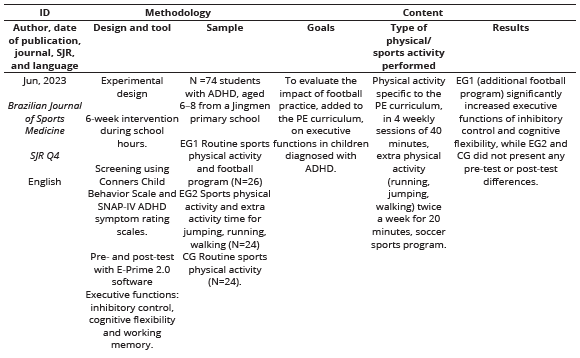
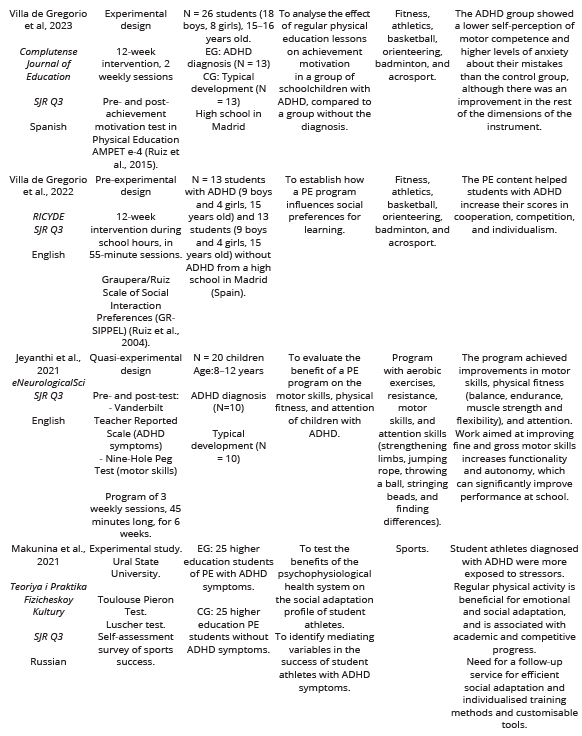
Regarding the results, we observed that among the studies that carried out an intervention with some kind of physical or sport activity to improve psychological variables in people with ADHD, most (77%) found improvements in executive function, inhibitory control and ADHD symptomatology (e.g., Hoza et al., 2020; Jun, 2023; Jeyannthi et al., 2021; Reche García, 2016). The main problems emerged when comparing participants with people without ADHD, as people with ADHD showed higher levels of anxiety (Makunina et al., 2021; Villa de Gregorio et al., 2023) and lower self-perceptions of motor competence (Villa de Gregorio et al., 2023), no improvement in undesirable behaviours (Labrador-Roca et al., 2019; 2020) or improvements that were lost at the end of the intervention process (Bowling et al., 2017).
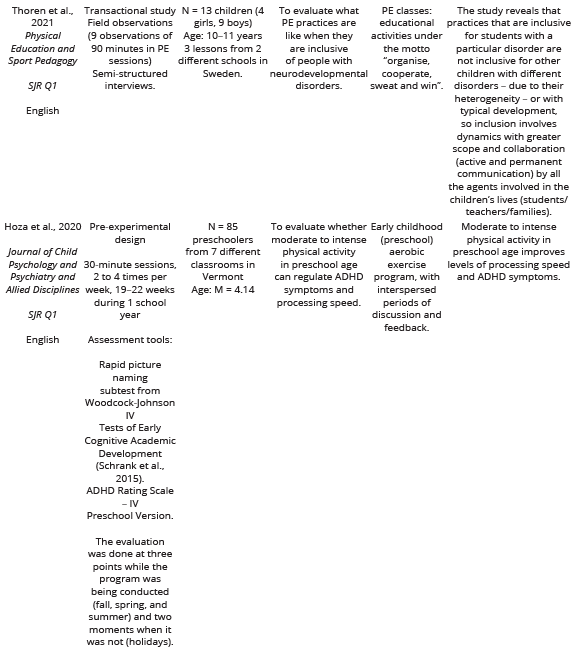
Regarding studies that analysed social skills for both improved inclusion and learning, only 40% reported benefits for improving cooperation, competence and individualism, or participation (Taylor et al., 2019; Villa de Gregorio et al., 2022), while other studies reported problems for educational inclusion (Qi & Wang, 2018; Thoren et al., 2021). In this regard, Wilkinson et al. (2013) indicated that although students valued positively strategies such as service learning to improve inclusion, teachers' pedagogical training was perceived as inadequate. This is in line with the findings of other research, which indicated that better organisation of teaching resources and more teacher training led to higher levels of inclusion (Pedersen et al., 2014).
Finally, all studies that analysed the effects of interventions involving physical activity or sport on motor skills or self-perceptions of body image reported benefits in physical fitness (Jeyanthi et al., 2021), body image (López-Sánchez et al., 2015) or motivation for motor scrapbooks (Harvey et al., 2014).
The following table presents the main results of the variables mentioned in each of the 22 articles analysed.
Results of the Studies Analysed
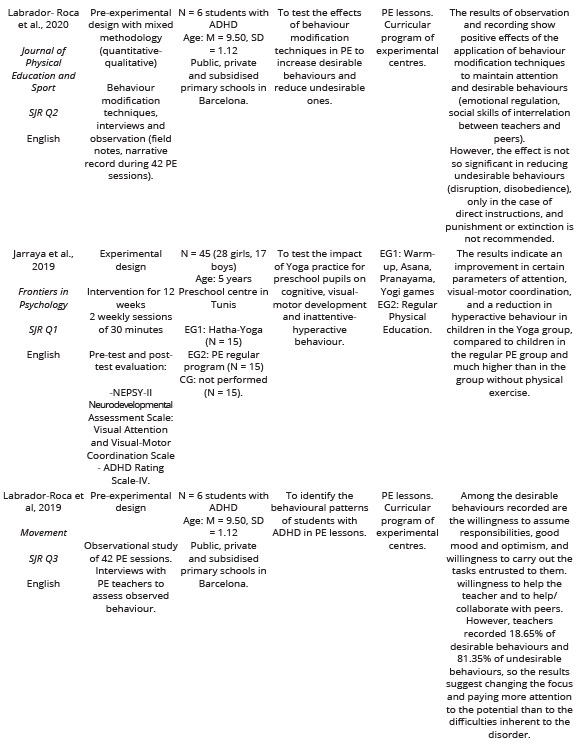
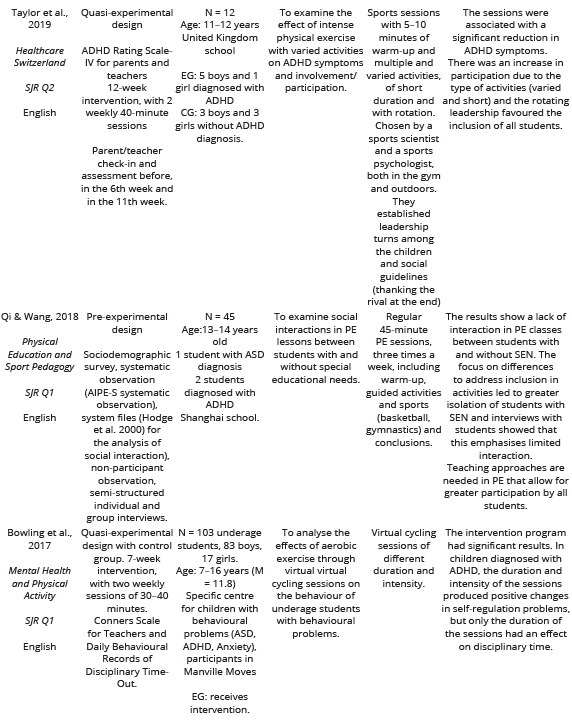
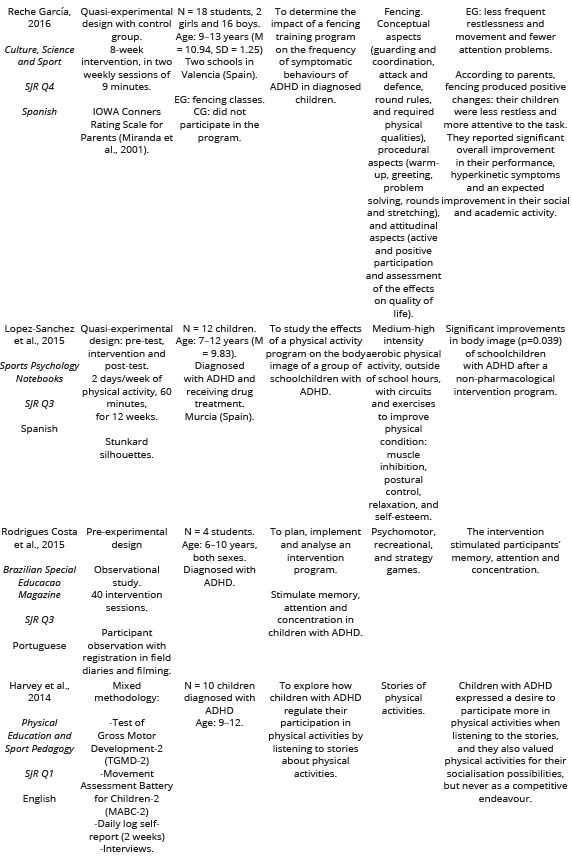
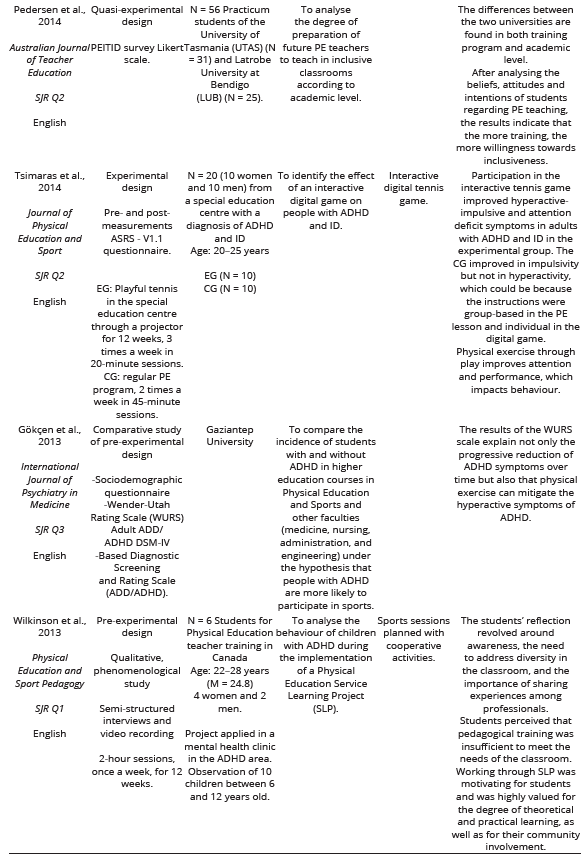
In terms of date of publication (Figure 2), there are no major differences in the number of articles published over during the last ten years.
Discussion
This work was based on publications deposited and available in Scopus, to complement previous studies that used WOS (da Silva and Maia, 2024; Quesada et al., 2023) or other databases such as Redalyc, Dialnet, Scielo or Google Scholar (Vélez and Uribe, 2023).
Considering the bibliometric variables, the results of this study show that studies have been carried out in different countries from different continents, although the USA is predominant, as in other studies focused on PE, such as the one by Yaakop et al. (2023) on teaching knowledge.
Furthermore, no upward or downward trends were found in the number of publications per year, in contrast to the temporal growth of publications found in recent studies, as in the case of the work by Tuero et al. (2023), focused on sexual diversity in PE, through the analysis of publications centred on the trans collective, or in that by Marín et al. (2022) on exergames.
On the other hand, there is a high level of collaboration in scientific publications on the subject, with articles often signed by three or more authors, as in previous studies analysing the general inclusion of all students in the field of PE (Marín and Ramón-Llin, 2021).
However, as in other studies carried out in the field of education, such as that by Marín and Vidal (2019), the impact of the publications studied is low compared to what often happens in other fields of knowledge, such as health sciences.
In this study, the publications were not concentrated in a few journals, forming a solid core, as in other studies where the concentration of publications on the subject in certain journals was evident (Gámez-Calvo et al., 2024).
With regard to the gender perspective in the analyses, in this study we have found a balance between the contributions of male and female researchers, compared to the results obtained in the analysis of publications published over two decades in the journal Retos, specifically focused on physical education, sport and recreation, in which men represented 70% of the total papers (Ramos-Álvarez et al., 2024).
In terms of the participants in the studies analysed, primary school students are the main target group for PE interventions, as has been found in previous studies, for example, when the focus was on the use of exergames in education (Marín et al., 2022).
In terms of the results obtained with students with ADHD, the benefits of participating in physical/sport activities stand out. Learnings go beyond motor skills to other social and personal skills. In the same vein, Bernate and Puerto (2023) concluded that PE could have an impact on the development of students' civic competences.
Conclusions
This study was carried out to analyse the state of the art and the effects of physical education on students with ADHD. Interventions using different types of physical activity showed positive effects on symptom improvement in those diagnosed with ADHD, as well as on their physical condition, self-perception of body image and motivation for motor activity. Problems were identified in achieving educational inclusion in mixed ability groups, with teacher training and organisation of resources identified as key factors.
Therefore, in line with previous studies, we conclude that information about inclusion and in particular about the diversity of the student population is essential (Alcoser et al., 2023) and that teachers' attitudes towards disability are key to achieving inclusion (Gámez-Calvo et al., 2024).
Although Scopus is a reference database in the social sciences and for publications in the area of education, future studies could consider conducting searches that include other databases, such as Web of Science or Dialnet, as the use of a single database could limit the scope of this work. Furthermore, this study did not use a specific tool to measure the methodological quality of the papers included in the analysis. The use of a tool such as AMSTAR-2 (Ciapponi, 2018) could have great potential for future research.
Also, in order to advance in this field, we encourage future studies to present longitudinal analyses from which interpretations can be made to analyse the interventions in the longer term and to analyse the barriers and facilitators of inclusion, as well as the analysis of cognitive-behavioural interventions or combined with pharmacological treatment to analyse the effectiveness and impact that PE can have on these students.
Ethics Committee Statement
Not applicable because it is a literature review study, with no live intervention.
Conflict of Interest Statement
There is no conflict of interest.
Funding
This research was funded by the Consellería de Innovación, Universidades, Ciencia y Sociedad Digital, emerging project GV 2021-158.
Authors' Contribution
Conceptualization J.R; Methodology D.M.; D.M.; Validation A.T. y D.M.; Formal Analysis A.T., J.R. y D.M.; Investigation A.T., J.R. y D.M.; Resources A.T., J.R. y D.M.; Data Curation A.T., J.R. y D.M.; Writing – Original Draft A.T., J.R. y D.M.; Writing – Review & Editing A.T., J.R. y D.M.; Visualization A.T., J.R. y D.M.; Supervision A.T., J.R. y D.M.; Project Administration A.T., J.R. y D.M.; Funding Acquisition J.R. All authors have read and agree with the published version of the manuscript.
Data Availability Statement
Data available on request from the correspondence author (jesus.ramon@uv.es).
Referencias
Alcoser, S. D. I., Backes, A. F., Alencar, A., & do Nascimento, J. V. (2023). Modelos de enseñanza del deporte: Un estudio bibliométrico. Retos. Nuevas Tendencias en Educación Física, Deportes y Recreación, 50, 936–942. https://doi.org/10.47197/retos.v50.97357
American Psychiatric Association. (2013). Guía de consulta de los criterios diagnósticos del DSM-5. American Psychiatric Publishing. https://doi.org/10.1176/appi.books.9780890425657
Bejerot, S., Ståtenhag, L., & Glans, M. R. (2022). Below average motor skills predict victimization from childhood bullies: a study of adults with ADHD. Journal of Psychiatric Research, 153, 269-275. https://doi.org/10.1016/j.jpsychires.2022.07.019
Benzing, V., & Schmidt, M. (2019). The effect of exergaming on executive functions in children with ADHD: A randomized clinical trial. Scandinavian Journal of Medicine & Science in Sports, 29(8), 1243–1253. https://doi.org/10.1111/sms.13446
Bernate, J., & Puerto, S. C. (2023). Impacto de la Educación Física en las competencias ciudadanas: Una revisión bibliométrica. Ciencia y Deporte, 8(3), 507–522. http://dx.doi.org/10.34982/2223.1773.2023.v8.no3.0014
Bowling, A., Slavet, J., Miller, D. P., Haneuse, S., Beardslee, W., & Davison, K. (2017). Dose-response effects of exercise on behavioral health in children and adolescents. Mental Health and Physical Activity, 12, 110–115. https://doi.org/10.1016/j.mhpa.2017.03.005
Carriedo, A. (2014). Beneficios de la Educación Física en alumnos diagnosticados con Trastorno por Déficit de Atención con Hiperactividad (TDAH). Journal of Sport & Health Research, 6(1), 47–60. https://www.researchgate.net/profile/Alejandro-Carriedo/publication/259753504_Beneficios_de_la_Educacion_Fisica_en_alumnos_diagnosticados_con_Trastorno_por_Deficit_de_atencion_con_Hiperactividad_TDAH/links/0deec52d9577f493c5000000/Beneficios-de-la-Educacion-Fisica-en-alumnos-diagnosticados-con-Trastorno-por-Deficit-de-atencion-con-Hiperactividad-TDAH.pdf
Ciapponi, A. (2018). AMSTAR-2: Herramienta de evaluación crítica de revisiones sistemáticas de estudios de intervenciones de salud. Evidencia, Actualización en la Práctica Ambulatoria, 21(1), 4–13. https://doi.org/10.51987/evidencia.v21i1.6834
da Silva, K., & Maia, E. C. (2024). Análise bibliométrica sobre Transtorno de Déficit de Atenção e Hiperatividade no Brasil no período de 2018 a 2022. Revista Contemporânea, 4(4), e3689. https://doi.org/10.56083/RCV4N4-067
Drucker, A. M., Fleming, P., & Chan, A. W. (2016). Research techniques made simple: Assessing risk of bias in systematic reviews. Journal of Investigative Dermatology, 136(11), e109–e114. https://doi.org/10.1016/j.jid.2016.08.021
Fernández-Andrés, M. I., Tárraga-Mínguez, R., & Sanz-Cervera, P. (2019). Alumnat amb trastorn per dèficit d’atenció amb hiperactivitat. In D. Marín & A. Mañá (Eds.), Intervenció psicoeducativa en alumnat amb necessitats específiques de suport educatiu (pp. 115–131). Tirant Humanidades.
Gámez-Calvo, L., Gamonales, J. M., Hernández-Beltrán, V., & Muñoz-Jiménez, J. (2024). Análisis bibliométrico de los estudios sobre actitudes hacia la discapacidad e inclusión en profesores de educación física. Retos. Nuevas Tendencias en Educación Física, Deportes y Recreación, 54, 188–197. https://doi.org/10.47197/retos.v54.102984
García, I., Gallardo-López, J. A., & López-Noguero, F. (2020). La inteligencia emocional y la educación emocional en la escuela: Un estado de la cuestión a través del análisis bibliométrico de la producción científica en Scopus (2015–2019). In J. A. Marín, G. Gómez, M. Ramos, & M. N. Campos (Eds.), Inclusión, tecnología y sociedad (pp. 220–231). Dykinson.
Gökçen, C., Ünal, A., Alpak, G., Çöpoglu, U. S., Abakay, U., Bayar, H., & Bülbül, F. (2013). Is there any relationship between ADHD symptoms and choosing sports education at the university? International Journal of Psychiatry in Medicine, 46(2), 169–178. https://doi.org/10.2190/PM.46.2.d
Harvey, W., Wilkinson, S., Pressé, C., Joober, R., & Grizenko, N. (2014). Children say the darndest things: Physical activity and children with attention-deficit hyperactivity disorder. Physical Education and Sport Pedagogy, 19(2), 205–220. https://doi.org/10.1080/17408989.2012.754000
Hoza, B., Shoulberg, E. K., Tompkins, C. L., Martin, C. P., Krasner, A., Dennis, M., Meyer, L. E., & Cook, H. (2020). Moderate-to-vigorous physical activity and processing speed: Predicting adaptive change in ADHD levels and related impairments in preschoolers. Journal of Child Psychology and Psychiatry, 61(12), 1380–1387. https://doi.org/10.1111/jcpp.13227
Jarraya, S., Wagnr, M., Jarraya, M., & Engel, F. A. (2019). Twelve weeks of kindergarten-based yoga practice increases visual attention, visual-motor precision and decreases behavior of inattention and hyperactivity in 5-year-old children. Frontiers in Psychology, 10, 796. https://doi.org/10.3389/fpsyg.2019.00796
Jeyanthi, S., Arumugam, N., & Parasher, R. K. (2021). Effectiveness of structured exercises on motor skills, physical fitness and attention in children with ADHD compared to typically developing children: A pilot study. eNeurologicalSci, 24, 100357. https://doi.org/10.1016/j.ensci.2021.100357
Jun, C. (2023). Impacts of soccer on executive function in boys with ADHD. Revista Brasileira de Medicina do Esporte, 29, 1–4. https://doi.org/10.1590/1517-8692202329012022_0771
Khan, K. S., Bueno-Cavanillas, A., & Zamora, J. (2022). Revisiones sistemáticas en cinco pasos: II. Cómo identificar los estudios relevantes. Medicina de Familia. SEMERGEN, 48(6), 431–436. https://doi.org/10.1016/j.semerg.2021.12.006
Labrador-Roca, V., Hernández, F. J., & Inglés, E. (2019). Estudo dos modelos de comportamento do estudante com TDAH na classe de educação física. Movimento, 25(1), e25042. https://doi.org/10.22456/1982-8918.81877
Labrador-Roca, V., Hernández, F. J., & Inglés, E. (2020). The effects of educational intervention on the behaviour of students with ADHD. Journal of Physical Education and Sport, 20(5), 2595–2606. https://doi.org/10.7752/jpes.2020.05354
Llopis, R. (2014). Comportamientos disruptivos del alumnado diagnosticado con TDAH en las clases de educación física. In R. Llopis Goig, C. López de Subijana Hernández, J. Aldaz Arregui, M. J. Monteagudo Sánchez, P. Martos Fernández, M. A. Ispizua Uribarri, & A. Martín (Eds.), Crisis, cambio social y deporte (pp. 299–306). Nau Llibres.
López-Sánchez, L., Sánchez, G. F. L., & Suárez, A. D. (2015). Efectos de un programa de actividad física en la imagen corporal de escolares con TDAH. Cuadernos de Psicología del Deporte, 15(2), 135–142. https://doi.org/10.4321/s1578-84232015000200015
Makunina, O. А., Bykov, Е. V., Kharina, I. F., & Svetlakova, М. V. (2021). Psychophysiological criteria of social adaptation of students-athletes. Teoriya i Praktika Fizicheskoy Kultury, 11, 75–76.
Marín, D., & Vidal, M. I. (2019). Tecnologías para el aprendizaje y el conocimiento: Un estudio bibliométrico. ReiDoCrea, 8(2), 37–50. https://www.ugr.es/~reidocrea/8.2-3.pdf
Marín, D., Ramón-Llin, J., & Guzmán, J. F. (2022). Exergame en educación: Mapeando la investigación. Retos. Nuevas Tendencias en Educación Física, Deportes y Recreación, 44, 64–76. https://doi.org/10.47197/retos.v44i0.90127
Marín-Suelves, D., & Ramón-Llin, J. (2021). Educación física e inclusión: Un estudio bibliométrico. Apunts. Educación Física y Deportes, 37(143), 17–26. https://doi.org/10.5672/apunts.2014-0983.es.(2021/1).143.03
Miranda, A., Amado, L., & Jarque, S. (2001). Trastornos por déficit de atención con hiperactividad: Una guía práctica. Aljibe.
Page, M. J., McKenzie, J. E., Bossuyt, P. M., Boutron, I., Hoffmann, T. C., Mulrow, C. D., Shamseer, L., Tetzlaff, J. M., Akl, E. A., Brennan, S. E., Chou, R., Glanville, J., Grimshaw, J. M., Hróbjartsson, A., Lalu, M. M., Li, T., Loder, E. W., Mayo-Wilson, E., McDonald, S., … & Moher, D. (2021). The PRISMA 2020 statement: An updated guideline for reporting systematic reviews. BMJ, 372, (71). https://doi.org/10.1136/bmj.n71
Pedersen, S. J., Cooley, P. D., & Hernandez, K. (2014). Are Australian pre-service physical education teachers prepared to teach inclusive physical education? Australian Journal of Teacher Education, 39(8), 51–62. https://doi.org/10.14221/ajte.2014v39n8.4
Qi, J., & Wang, L. (2018). Social interaction between students with and without disabilities in general physical education: A Chinese perspective. Physical Education and Sport Pedagogy, 23(6), 575–591. https://doi.org/10.1080/17408989.2018.1485139
Quesada, G. M. D., García-Martínez, D., Jiménez-Jiménez, J. F., & Luque, G. T. (2023). Análisis bibliométrico sobre los estudios de medición de la actividad física por medio de dispositivos inteligentes en edad escolar. Retos. Nuevas Tendencias en Educación Física, Deportes y Recreación, 48, 145–152. https://doi.org/10.47197/retos.v48.96303
Ramos-Álvarez, O., García-Romero, C., & Arufe-Giraldez, V. (2024). 20 años de investigación científica de la revista Retos, nuevas tendencias en Educación Física, Deportes y Recreación: Análisis bibliométrico. Retos. Nuevas Tendencias en Educación Física, Deportes y Recreación, 54, 355–361. https://doi.org/10.47197/retos.v54.102798
Reche García, C. (2016). La esgrima extraescolar como propuesta didáctica en TDAH. Cultura, Ciencia y Deporte, 11(33), 217–224. https://doi.org/10.12800/ccd.v11i33.766
Rivera, A. L., & Remón, Á. L. C. (2017). Beneficios de la actividad físico-deportiva en niños y niñas con TDAH. EmásF: Revista Digital de Educación Física, (44), 63–78. https://dialnet.unirioja.es/servlet/articulo?codigo=5807535
Rodrigues Costa, C., Moreira, J. C. C., & Seabra, M. O. (2015). Estratégias de ensino e recursos pedagógicos para o ensino de alunos com TDAH em aulas de educação física. Revista Brasileira de Educação Especial, 21(1), 111–126. https://doi.org/10.1590/S1413-65382115000100008
Ruiz, L. M., & Villa, M. (2023). ¡Niño, estate quieto!: Beneficios de la educación física para el TDAH. INDE Publicaciones.
Ruiz, L. M., Graupera, J. L., Rico, I., & Mata, E. (2004). Preferencias participativas en educación física de los chicos y chicas de la educación secundaria mediante la escala GR de participación social en el aprendizaje. Motricidad, 12, 151–168.
Ruiz-Pérez, L. M., Moreno-Murcia, J. A., Ramón-Otero, I., & Alias-García, A. (2015). Motivación de logro para aprender en educación física: Adaptación de la versión española del test AMPET. Revista Española de Pedagogía, 260, 157–175. https://www.revistadepedagogia.org/cgi/viewcontent.cgi?article=2615&context=rep
Sánchez, P., & Cohen, D. S. (2020). Trastorno por déficit de atención con hiperactividad en la infancia y adolescencia. Pediatría Integral, 24(6), 316–324. https://www.pediatriaintegral.es/wp-content/uploads/2020/xxiv06/02/n6-316-324_PetraSanchez.pdf
Santolalla, P. M. (2022). Actividad física para la mejora de las funciones cognitivas en niños y niñas con TDAH: Una revisión bibliográfica. Habilidad Motriz: Revista de Ciencias de la Actividad Física y del Deporte, (58), 6–17.
Sutton, A. J., Duval, S. J., Tweedie, R. L., Abrams, K. R., & Jones, D. R. (2000). Empirical assessment of effect of publication bias on meta-analyses. BMJ, 320(7249), 1574–1577. https://doi.org/10.1136/bmj.320.7249.1574
Taylor, A., Novo, D., & Foreman, D. (2019). An exercise program designed for children with attention deficit/hyperactivity disorder for use in school physical education: Feasibility and utility. Healthcare, 7(3), 102. https://doi.org/10.3390/healthcare7030102
Thoren, A., Quennerstedt, M., & Maivorsdotter, N. (2021). What physical education becomes when pupils with neurodevelopmental disorders are integrated: A transactional understanding. Physical Education and Sport Pedagogy, 26(6), 578–592. https://doi.org/10.1080/17408989.2020.1834525
Tsimaras, V., Papaioannou, M., Proios, M., Fotiadou, E., Kokaridas, D., & Kotzamanidou, M. (2014). The effect of a digital interactive game in distractibility, hyperactivity and impulsivity in individuals with attention deficit hyperactivity disorder and intellectual disability. Journal of Physical Education and Sport, 14(4), 500–506. https://doi.org/10.7752/jpes.2014.04077
Tuero, C. E., Carballo-Leyenda, B., & Rioja-Martínez, R. (2023). El colectivo trans y la educación física: Una aproximación bibliométrica. Revista Internacional de Educación para la Justicia Social, 12(1), 13–29. https://doi.org/10.15366/riejs2023.12.1.001
Vélez, Y. C., & Uribe, G. (2023). Revisión documental de la producción científica sobre el trastorno de déficit de atención e hiperactividad (TDAH) y el rendimiento académico en estudiantes universitarios.
Villa de Gregorio, M., Barriopedro, M. I., & Ruiz, L. M. (2023). Motivación de logro y aprendizaje en Educación Física. Un estudio con escolares de educación secundaria con trastorno por déficit de atención/hiperactividad. Revista Complutense de Educación, 34(3), 529–539. https://doi.org/10.5209/rced.79564
Villa de Gregorio, M., Ruiz, L. M., & Barriopedro, M. I. (2022). Preferencias sociales de aprendizaje en educación física entre estudiantes de Secundaria con Trastorno por Déficit de Atención/Hiperactividad (TDAH). RICYDE: Revista Internacional De Ciencias Del Deporte, 18(68), 113-126. https://doi.org/10.5232/ricyde2022.06804
Villa, M., & Méndez, C. (2021). TDAH y educación física: Definiendo un perfil psicosocial para su atención educativa. In R. Macinas Chávez (Eds.), Universidad, innovación e investigación ante el horizonte 2030 (p. 327). Egregius.
Villa, M., Barriopedro, M. I., & Ruiz, L. M. (2020). Motor competence difficulties and attention deficit and hyperactivity disorder (ADHD) among secondary students. Cuadernos de Psicología del Deporte, 20(2), 47–62. https://doi.org/10.6018/cpd.360491
Wilkinson, S., Harvey, W. J., Bloom, G. A., Joober, R., & Grizenko, N. (2013). Student teacher experiences in a service-learning project for children with attention-deficit hyperactivity disorder. Physical Education and Sport Pedagogy, 18(5), 475–491. https://doi.org/10.1080/17408989.2012.690385
Yaakop, N., Koh, D., & Yasin, R. M. (2023). Tendencias globales del conocimiento docente de Educación Física: Un análisis bibliométrico. Retos. Nuevas Tendencias en Educación Física, Deportes y Recreación, 49, 174–188. https://doi.org/10.47197/retos.v49.97291
Author notes
aCorrespondence: Jesús Ramón-Llin, jesús.ramon@uv.es
Additional information
Short title: PE and ADHD: State of the art
How to cite this article: Tijeras-Iborra, A., Ramón-Llin, J., y Marín-Suelves, D. (2025). Physical Education in students with ADHD: state of the art. Cultura, Ciencia y Deporte, 20(64), 2287. https://doi.org/10.12800/ccd.v20i64.2287


